


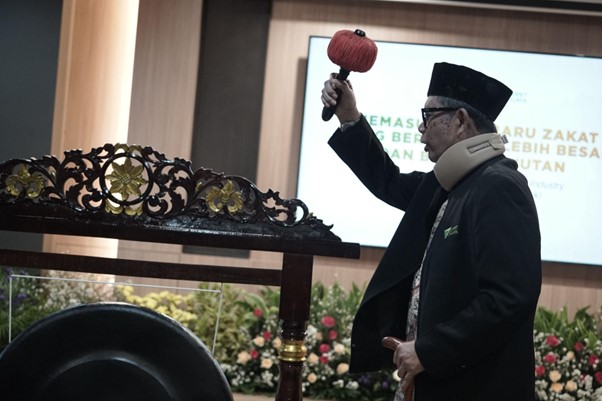
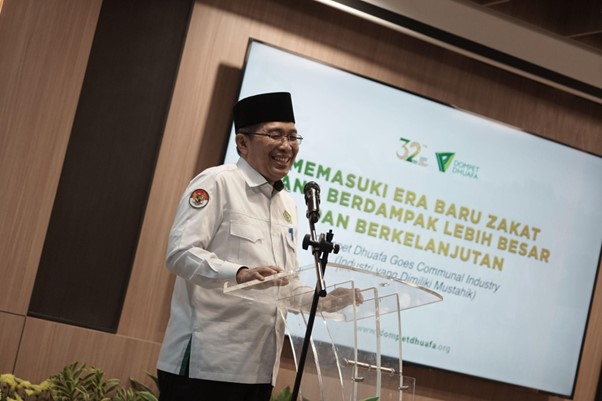
JAKARTA -— As it approaches its 32nd anniversary, Dompet Dhuafa held a Focus Group Discussion (FGD) titled “Entering a New Era of Zakat with Greater and More Sustainable Impact” on Tuesday (July 1, 2025) at the Dompet Dhuafa Cultural Center in Jakarta.
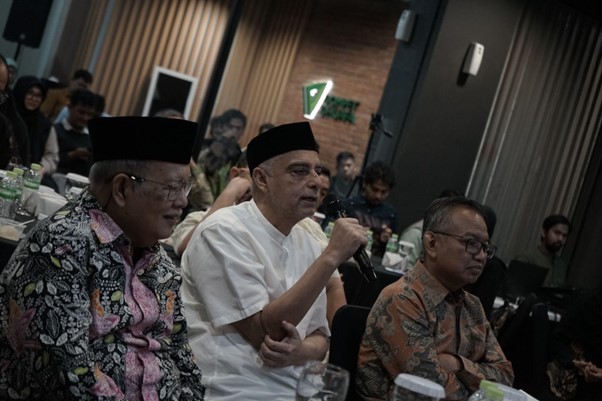
The FGD focused on encouraging mustahik (zakat recipients) to transform into sustainable industry players to formulate a new direction in zakat management, particularly in the productive economy, through the development of a communal industry model. The FGD was also attended and participated in by a number of important figures from the government, academia, LAZ, and the media, such as Noor Achmad, Chairman of BAZNAS Republik Indonesia,
Jaih Mubarok, Professor of Islamic Law at UIN Sunan Gunung Djati, Yudi Latif, Member of the Board of Trustees of the Dompet Dhuafa Republika Foundation, Wildan Dewayana, and Haryo Mojopahit, Managing Director of IDEAS.
In addition, several respondents were also present, including Erick Yusuf, Deputy Chairman of LSPBI MUI, Board of Trustees of MES DKJ, Mursida Rambe, Head of KSPPS BMT MT Beringharjo, and Haidar Bagir, Expert Council of Dompet Dhuafa.
The national economic situation, which is currently under pressure, marked by widespread layoffs, limited job opportunities, and rising poverty rates, is the main backdrop for this discussion.
Read also: The Pulse of the Pineapple Industry: A Source of Hope for the Community

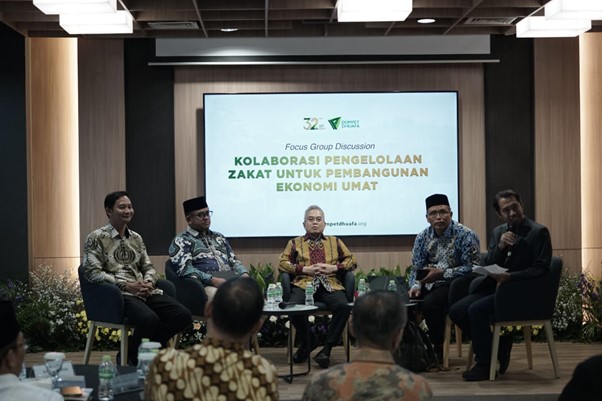
As an Islamic philanthropic organization with over three decades of experience, Dompet Dhuafa feels compelled to take on a more significant role through the distribution of zakat in the form of impactful economic programs.
To address this challenge, Dompet Dhuafa has introduced a new concept called Dompet Dhuafa Goes Communal Industry, which is an industry model owned and managed by the beneficiaries. This concept represents a more “advanced” form of productive zakat implementation, emphasizing the concepts of shared ownership and community empowerment through industry-based initiatives.
Read also: Simultaneous Blood Donation Drive Across the Archipelago Ahead of Dompet Dhuafas Anniversary
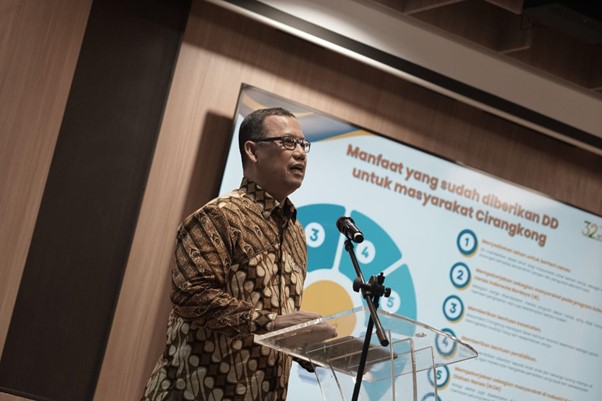
“In program management, it is time for us to shift to an empowerment orientation, so that communal industry is an industry owned jointly by a community in which cooperation takes place to increase income and welfare. In this case, the community we mean is the mustahik. How do we start moving to the empowerment level in an industrial orientation?” said Ahmad Juwaini, Chairman of the Dompet Dhuafa Republika Foundation, in his speech.
In this phase, the empowerment approach is implemented with the spirit of philantropreneurship, a term that combines the values of philanthropy and entrepreneurship. This approach is believed to be a strategic step to maximize the utilization of zakat, not only to meet the basic needs of beneficiaries but also to encourage their economic independence.
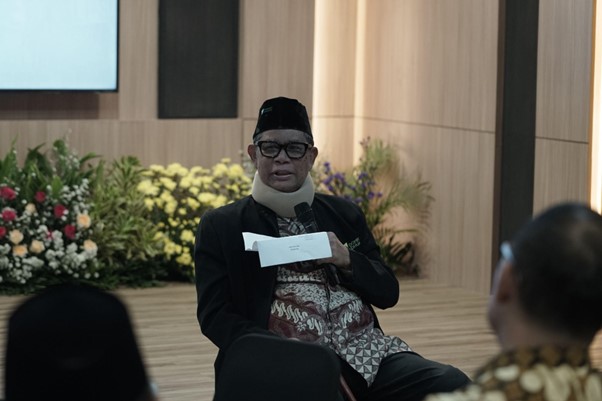
“Dompet Dhuafa has entered the era of philantropreneurship, combining philanthropy and entrepreneurship, but more specifically, sociotechnopreneurship. This is not just about raising funds, but how Islamic philanthropic institutions serve the poor through cultural empowerment and habit formation,” added Parni Hadi, Initiator and Chairman of the Board of Trustees of Dompet Dhuafa.
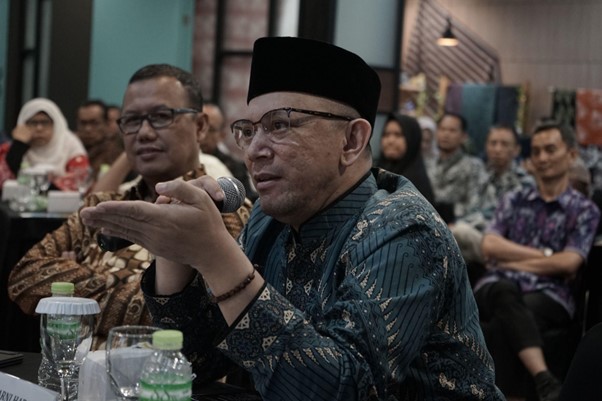
On the other hand, zakat fund management is also directed towards promoting the principles of efficiency and effectiveness as a form of accountability to muzakki (zakat payers). With this spirit, Dompet Dhuafa is committed to continuing to strengthen the role of philanthropy in community management and social fund development in a more sustainable manner.
“It is time for us to take on a role that is not merely charitable, but one that embodies the spirit of philanthropy—empowering others,” added Ahmad Juwaini.
Like the Pineapple Processing Community Industry (IKON), which is a productive zakat-based economic breakthrough initiated by Dompet Dhuafa and located in Subang, West Java. This initiative introduces a communal industry model. Previously, pineapples from this region were only sold raw in traditional markets. However, through IKON, pineapples are processed into two value-added products: pineapple jam and pineapple concentrate. These products target not only the domestic industrial market but also the export market, thereby opening up broader economic opportunities for beneficiaries as both business operators and industry owners.
The Chairman of the National Zakat Management Board of the Republic of Indonesia, Noor Ahmad, stated that this movement needs to be formulated collectively, in line with the government’s aspirations to eradicate poverty, particularly extreme poverty. It is time to work together to create pathways for the poor to transform into donors. Through collaboration among LAZs, the potential for empowerment will grow significantly.
“We must collectively focus on how a poor Muslim can be lifted out of poverty, how empowerment can lead to the transformation of mustahik into muzakki. There is a movement and a change from being a mustahik to becoming a muzakki,” said Noor Ahmad during an online video conference.
In line with this, to strengthen this movement, Waryono Abdul Ghofur, Director of Zakat and Waqf Empowerment at the Ministry of Religious Affairs of the Republic of Indonesia, said that a clearer roadmap is needed for the communal industry.
“We need to share responsibilities to avoid overlap in how the state and institutions operate; collaboration is essential. National Zakat Institutions (LAZ) must strengthen collaboration and share responsibilities. This way, assistance to the poor can be provided from start to finish,” said Waryono.
Dompet Dhuafa expresses its hope that this initiative will serve as a starting point for cross-institutional collaboration and innovation in maximizing the potential of zakat. Not merely as consumptive aid, but as productive capital capable of driving the economy of beneficiaries toward self-reliance. Dompet Dhuafa is committed to making zakat a strategic tool in building economic justice and strengthening the social resilience of Indonesian society. (Dompet Dhuafa)
Text and Photos: Anndini Dwi Putri
Editor: Dhika