


CIREBON, WEST JAVA — When the dry season hits, several points in Indonesia experience extreme drought. Mainly in areas with minimal water infiltration, such as Cupang Village and Guwa Kidul Village, which are located in Gempol District, Cirebon, West Java. In response to this, Dompet Dhuafa together with Samudera Peduli presented the Water Well as a solution to overcome the drought.
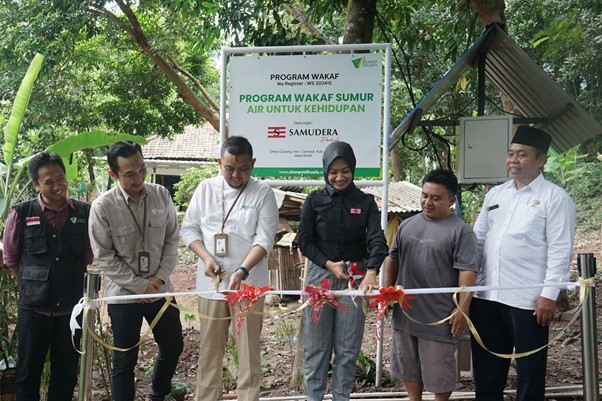
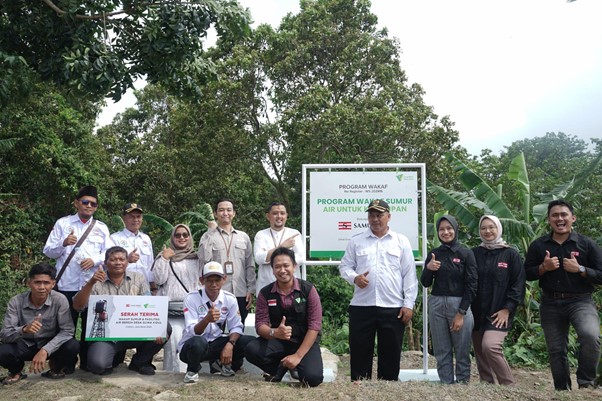
The inauguration of the water wells at the two points was held on Wednesday (19/2/2025) at the Cupang Village Office. With great enthusiasm, the residents flocked to attend the event. The event was attended by the Head of the West Java Branch of Dompet Dhuafa, Yogi Achmad Fajar; Head of the Waqf Development and Investment Institute of Dompet Dhuafa, Prima Hadi Putra; and General Manager of Fundraising at Dompet Dhuafa Waqf, Ali Bastoni.
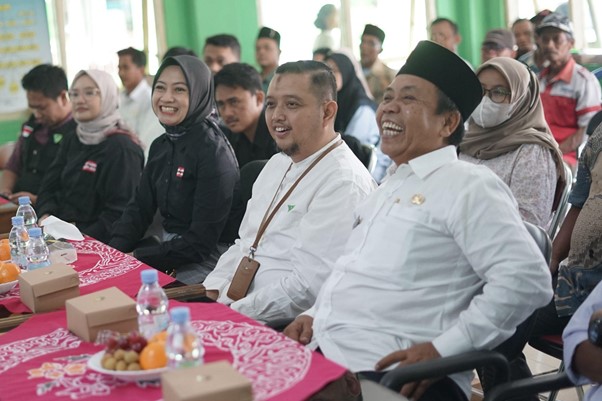
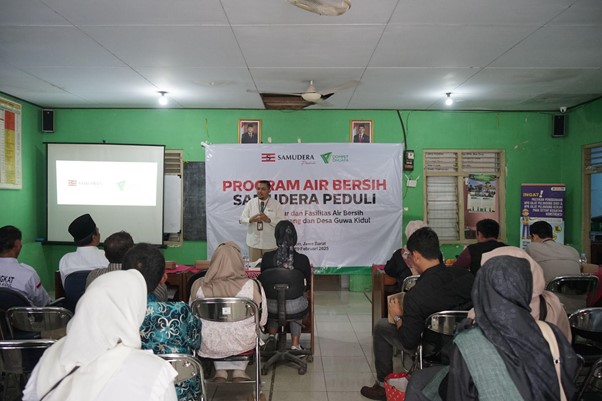
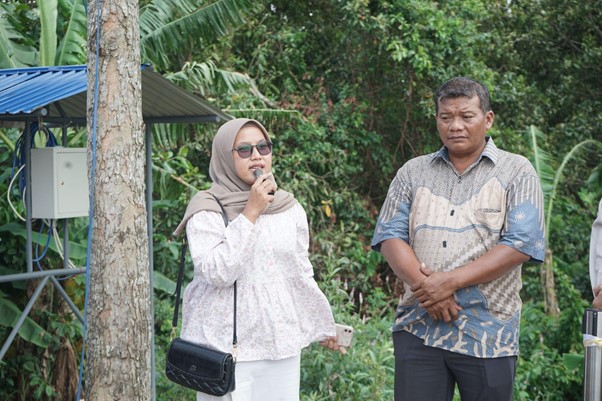
Meanwhile, from the Samudera Peduli Foundation, the Board of Directors and Program Managers, Artika Fasya and Rismeita Fitri Setiyanti, were also present, as well as the residents represented by the Head of Cupang Village, Karji; and the representative of the clean water group manager of Guwa Kidul Village, Ghufron.
The Managing Board of the Samudera Peduli Foundation, Artika Fasya, expressed her gratitude and thanks for the collaboration of the inauguration of the Water Wells in Cupang Village and Guwa Kidul Village to all those involved. She advised that the assets of the Water Well be used properly and become a source of blessings for many parties, especially local residents.
Read also: Help Overcome Drought in Cilacap, Dompet Dhuafa Distributes Clean Water
“After an assessment was carried out by us and Dompet Dhuafa, two points were finally found that were in dire need of clean water. Many parties were involved, including the residents. Hopefully, this clean water source through the Water Well can also bring blessings to the residents, to Mr. Sanusi as the waqf donor, as well as to Samudera Peduli and Dompet Dhuafa,” he said.
The Water Well Waqf Overcomes Drought in Cupang Village, Cirebon
The soil in Cupang Village is limestone, which is why the area experiences drought. The lack of infiltration in the soil is also exacerbated by mining, which makes the main water sources dry up even more. One of the residents, Castini (40), admits that there is only one spring for the local community.
“We take turns filling up with water, one person is given an hour. That’s only enough for one bucket. It’s not enough for washing, sometimes my child can’t take a bath because there is no water,” explained Castini.
Responding to this problem, the leader of Dompet Dhuafa West Java and program manager, Yogi Achmad Fajar, said that his party together with the Dompet Dhuafa and Samudera Peduli teams conducted assessments at several well points using the geothermal method. Unexpectedly, the discovery of a water source was in the yard of Sanusi (45), a resident of Cupang Village who then donated his land to become a source of clean water for the community there.
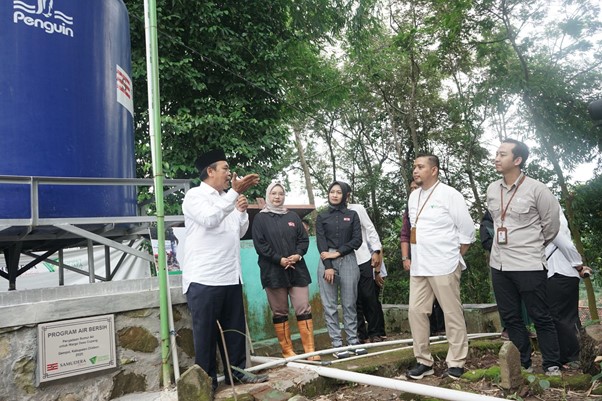
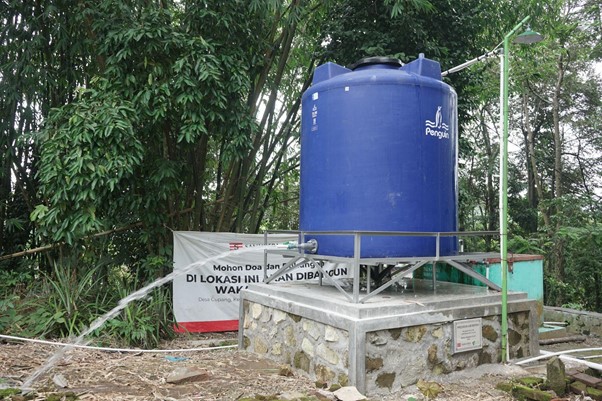
Through the collaboration of Dompet Dhuafa and Samudera Peduli, experts were deployed to begin the excavation process for 45 days. With a depth of 30 meters, the well is capable of producing 2 liters of water per second, which is collected in a 5000-liter tank. The well has 90 house connections (SR) which serve 100 families and a mosque.
Read also: Psychosocial Assistance and Support from Dompet Dhuafa Continues to Flow for Puuwatu Fire Survivors
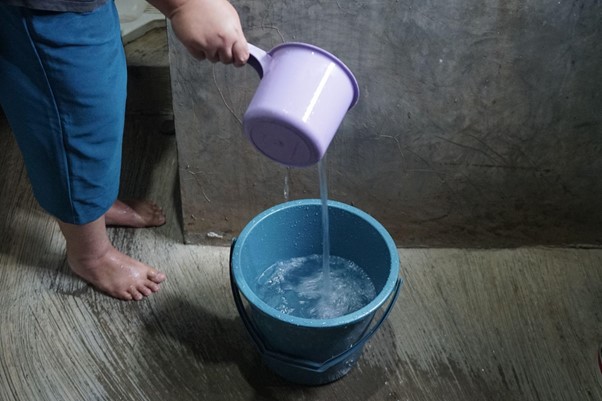
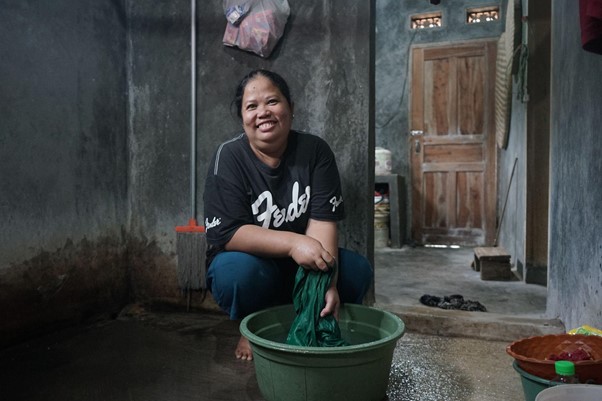
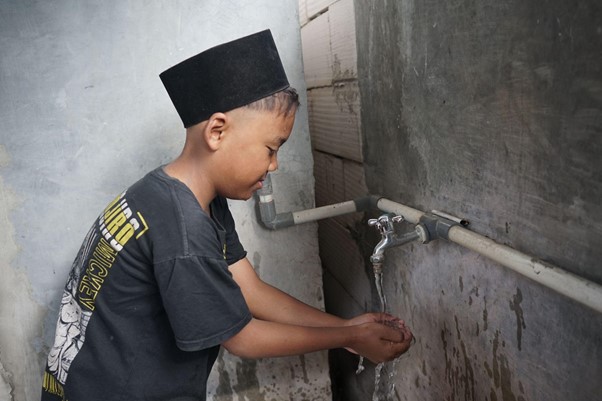
Now the people of Cupang Village can access clean water directly and free of charge through the tap that has been connected to their homes. Sanusi, as the landowner and beneficiary, said that there is now an abundant supply of clean water. Now, in less than an hour, the tank is already full.
“After finding out that there was a water source behind my house, I immediately gave up my land to be built a well for the community’s water source. This is for the common good in facing drought. I am very grateful to Dompet Dhuafa and Samudera Peduli for making this (water well) happen. Wow, now the water is very abundant, unlike in the past,” said Sanusi excitedly.
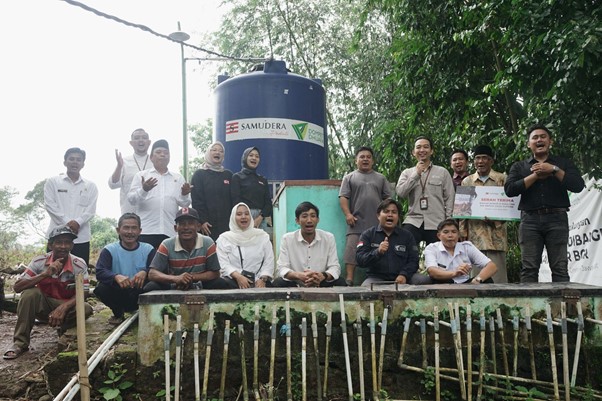
The Head of the Waqf Development and Investment Institution Dompet Dhuafa, Prima Hadi Putra, explained that the inauguration of this water well is a waqf ecosystem that results in a Clean Water Program Service. Waqf itself is the separation of property in the form of assets which are then used for broad and sustainable benefits.
“Of course this is a charitable legacy for the friends of Samudera Peduli. This well will benefit the local community. The meeting between Samudera Peduli and Mr. Sanusi has resulted in a double blessing. Furthermore, this waqf can also be developed productively and to empower the local community. Hopefully it can spread to other places,” he explained.
Productive Waqf as a Strategic Step to Empower Local Communities
Guwa Kidul Village is the second location for the construction of a water well by Dompet Dhuafa and Samudera Peduli. Unlike the water well in Cupang Village, this time Dompet Dhuafa is collaborating with the Sumber Toya Community Working Group (KKM), which has been responsible for managing the use of infiltration water sources since 2019. This community working group was established independently to accommodate the water interests of the local community.
Previously, the main water source for Guwa Kidul Village was insufficient for the needs of the population, which has 340 households, three Islamic boarding schools, one school, and six prayer rooms. However, Rifah, the secretary of the Sumber Toya community working group, said that the water pump that his party manages only produces a small amount of cloudy water.
With these conditions, Dompet Dhuafa and Samudera Peduli, through the Clean Water Service waqf program, then conducted an assessment that continued with the process of building a 50-meter-deep water well. The well produces 4 liters of water per second.
Rifah explained that his party set a price for clean water. This is because water management requires electricity costs, expert personnel, and pump maintenance costs. He absorbs labor from the indigenous people of Guwa Kidul. He also pays workers’ wages according to the surplus obtained. Of course, this makes the waqf of the Water Well assets from Dompet Dhuafa and Samudera Peduli productive and empowering the surrounding community.
“Initially 340 SR, now it’s 350 SR. We set tiered prices or cross-subsidies. We adjust to the economic conditions. The first 10 liters cost 3 thousand, then 4 thousand, then 5 thousand. For Islamic boarding schools and schools, we set the price at 4 thousand. Sometimes there are people whose economic power has declined, and we usually give them relief to pay at other times,” explained Rifah.
Read also: Dompet Dhuafa Distributes Emergency Aid to Thousands of Bandung Earthquake Refugees
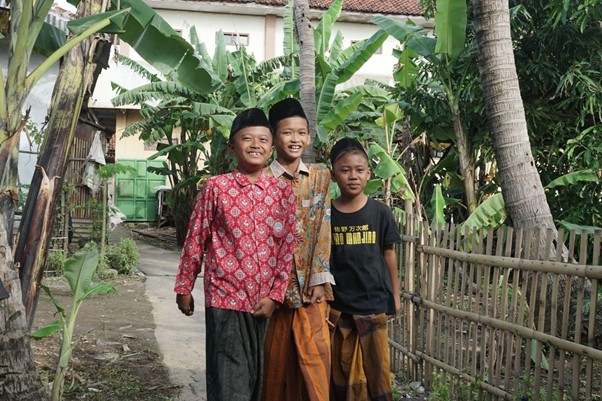
Abdul Muhaimin Mas’ud, as the manager of the Al-Fatimah Guwa Kidul Islamic boarding school and beneficiary, said that previously he could not rely entirely on the water pump belonging to KKM Sumber Toya because the pump only released a small amount of water. This meant that he had to buy water from elsewhere at a very high price.
“There are people who sell water by the tank. The price is 150 thousand (per tank). There are 50 students here and they use up 6 tanks in a week. Since there has been assistance with water pumps from Dompet Dhuafa and Samudera Peduli, we only pay 700 thousand to a million. It’s more economical. The water is also flowing and clean. Congregational prayer and other productive activities are easier,” explained the man who is familiarly called Ustaz Abdul.
Aldo, one of Ustaz Abdul’s students, shared his story. He and his friends often don’t have time to shower before school. Occasionally he has difficulty finding water for ablution to perform congregational prayers.
“Yes, I have not showered. Sometimes it’s difficult to pray in congregation, so I do ablution in another mosque,” said Aldo, who is now in fifth grade.
In the end, Rifah hopes that this endowment program can generate a good surplus for the welfare of the community itself. As well as opening up opportunities for dry areas in other parts of Indonesia. (Dompet Dhuafa)
Text and photos: Hany Fatihah Ahmad
Editor: Dhika