


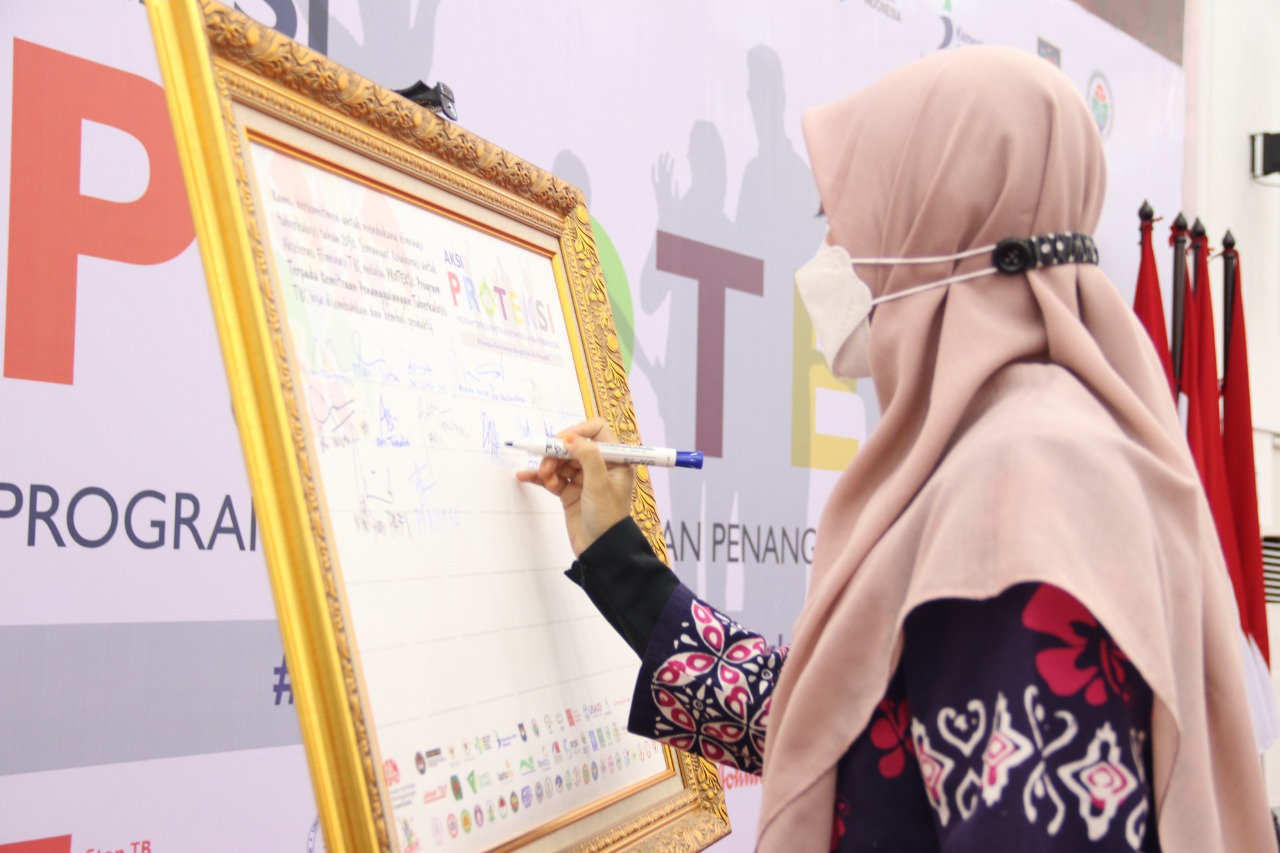
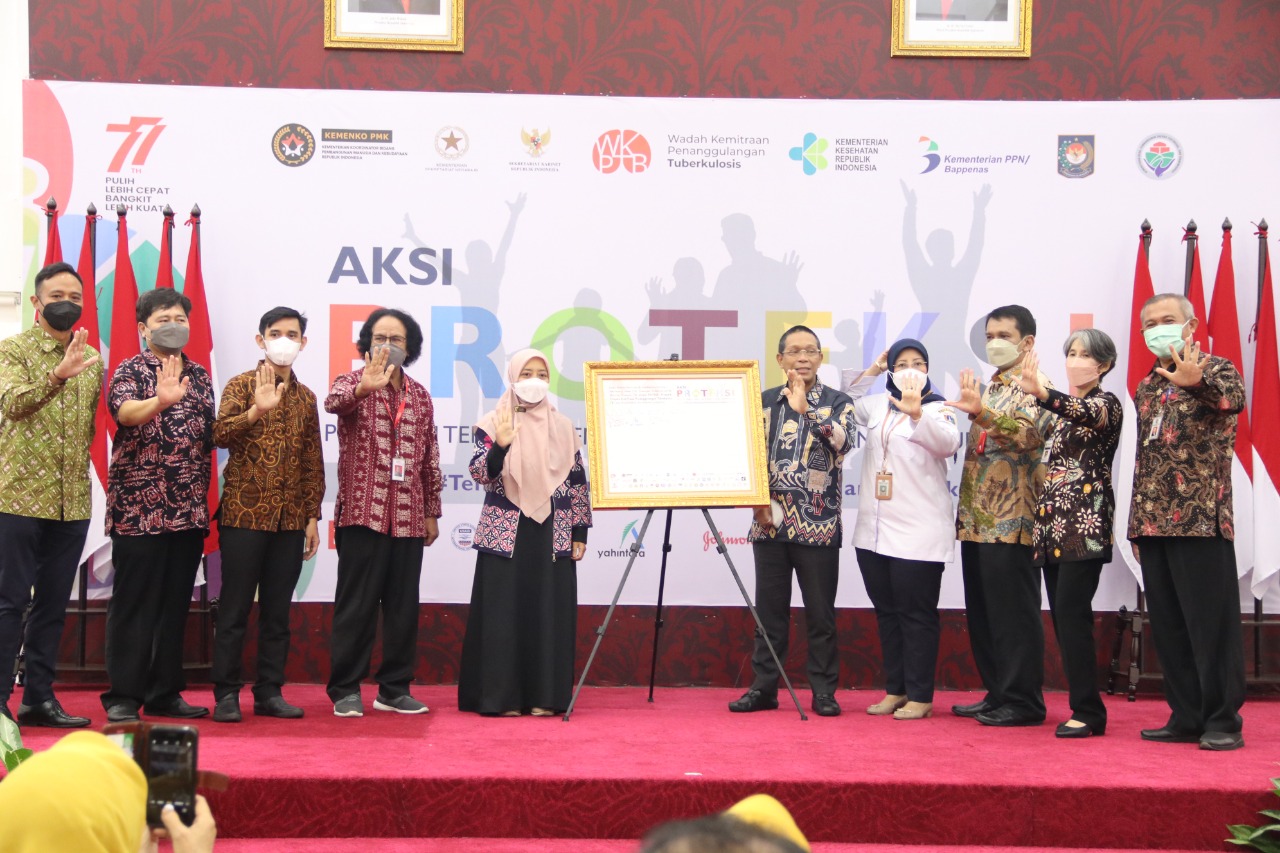
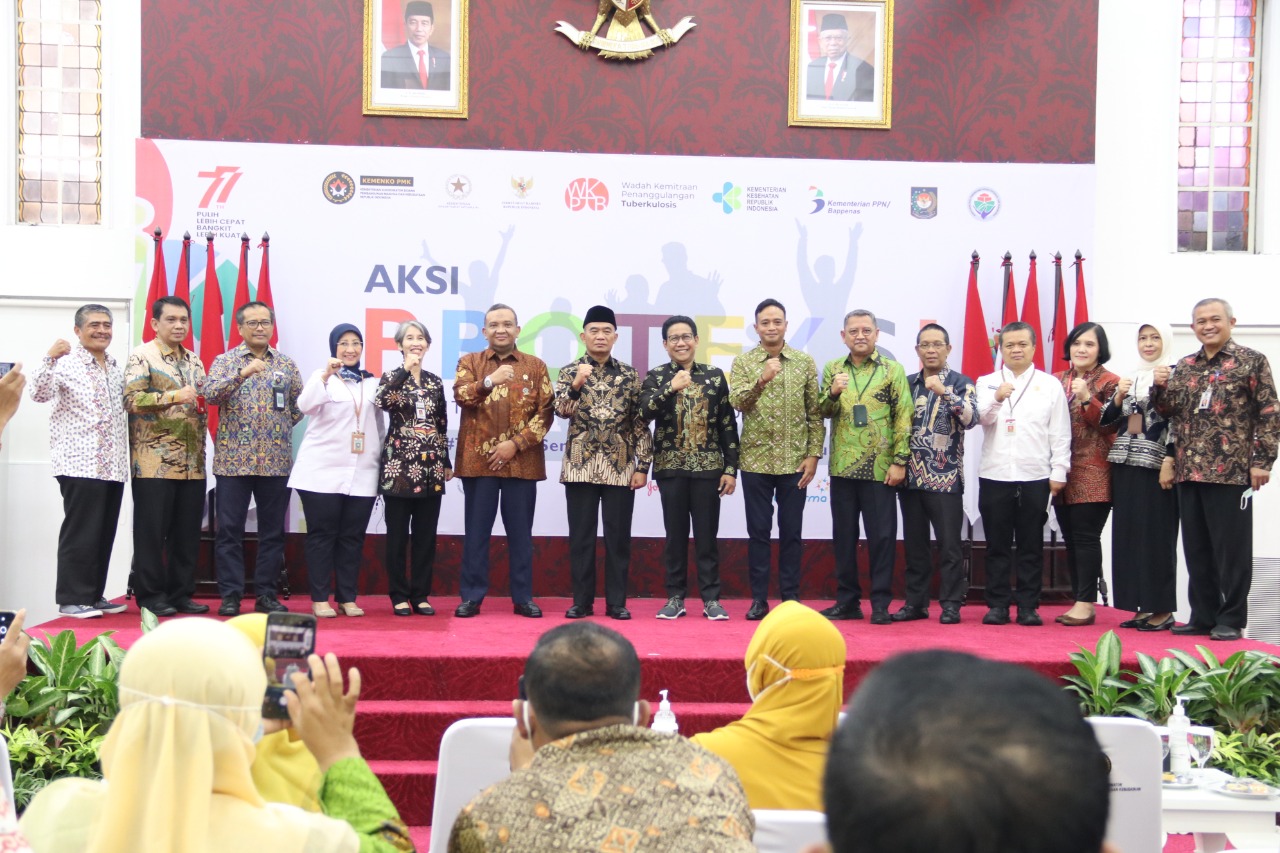
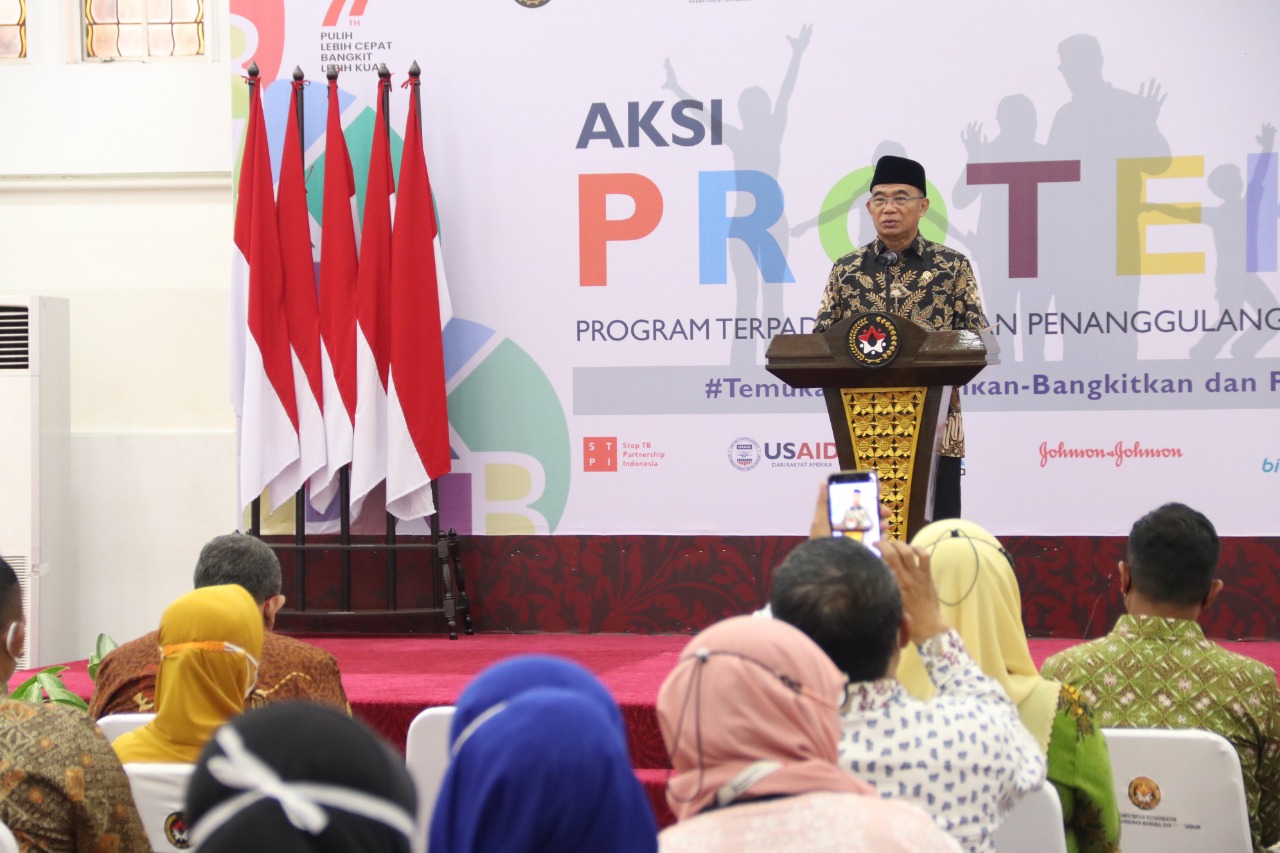
JAKARTA — Dompet Dhuafa participated in the launch of the PROTECTION (Integrated Tuberculosis Control Partnership Program) action initiated by the Indonesian Coordinating Ministry for Human Development and Culture. And on Wednesday (31/8/2022), the action plan activities for the implementation of TB control efforts in Indonesia took place at the Coordinating Ministry for Human Development and Culture Building, Jl. Merdeka Barat, Jakarta.
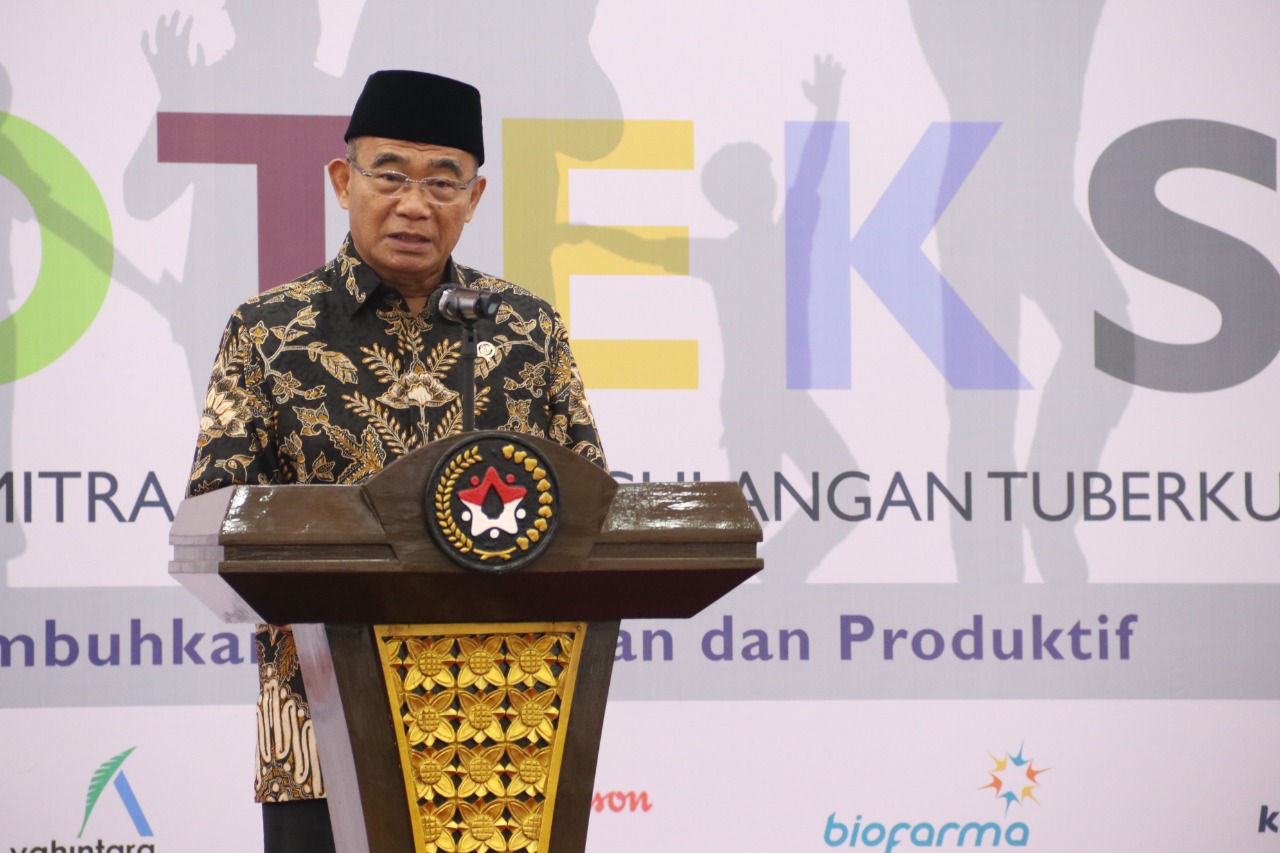
The Coordinating Minister for Human Development and Culture, Muhajir Effendi, explained in his remarks that TB is a shared responsibility for the government and the community. Therefore, community participation plays an important role in prevention, control and mitigation.
“Presidential Regulation No. 67 of 2021 concerning the control of Tuberculosis has mandated increased collaboration and coordination as well as increased participation of stakeholder communities and other multisectors in TB control,” explained Muhajir.
According to Presidential Regulation No. 67 of 2021, the Minister of Health and all ranks act as the chief executive of the tuberculosis control acceleration team together with 15 ministers and heads of non-ministerial agencies who are members of the TB.
“The tasks are, first, to strengthen the joint commitment with the central and local governments. Second, to increase access to quality TB services that favor patients. Third, to intensify health efforts in the context of TB control,” said Muhajir.
GM of the Dompet Dhuafa Health Division, Dr. Yeni Purnamasari, MKM, said that Dompet Dhuafa is taking part in efforts to combat tuberculosis in Indonesia. This time, Dompet Dhuafa is joining in area 2, which is community empowerment, and also in area 4, which is mitigation, psychosocial support, and economic empowerment of TB patients.
“Dompet Dhuafa is a member of the partnership sector in sector 2 for community empowerment. It is also the chair of sector 4, which is in the field of mitigation, psychosocial, and economic empowerment of TB patients in a tuberculosis control partnership forum, which was initiated and coordinated by the Coordinating Ministry for Human Development and Culture,” explained Dr. Yeni.
In the technical field strategy, includes promotive, preventive, complementary curative and rehabilitative. The technical field strategy of the Tuberculosis Control Partnership Forum (WKPTB) for community participation in tuberculosis control in accordance with Article 29 of Presidential Regulation No. 67 of 2021.
Authority actions in the field of mitigating the psychosocial impact and economic empowerment of patients and families affected by TB include mental health screening for TB patients, mental and spiritual health coaching, prevention of stigma and discrimination, community-based economic empowerment, business assistance such as micro, small and medium enterprises (MSMEs), provision of capital assistance and vocational training.
Apart from Dompet Dhuafa, this fourth area includes other institutions including the Aisyiyah Central Executive Health Council, Stop TB Partnership Indonesia (STPI), the Indonesian Tuberculosis Patients Organization Association (POP TB), the Indonesian Tuberculosis Eradication Association (PPTI), Lazis Mu and other partners.
As a concrete manifestation of protection, Dompet Dhuafa collaborates with POP TB to empower TB patients to produce salted egg products. These salted eggs are made by TB patients as a form of economic empowerment and have been distributed and will continue to be accompanied until they are productive again.
Furthermore, Dr. Yeni said that the ministry, institutions, partners from various civil society organizations, professions and other partners are working together to create a protection program to support the elimination of TB by 2030 with the tagline “find, cure, revive and be productive”.
“The hope is that we can help TB patients from the moment they are found, through counseling, treatment, and then we strive for economic empowerment and psychosocial support that will support successful treatment, while also helping them to become empowered and productive again,” said Dr. Yeni.
Muhajir also mentioned other tasks related to increasing research, development, and innovation in the field of TB control. Finally, increasing the participation of communities, stakeholders, and other multisectors in TB control and, lastly, strengthening program management. (Dompet Dhuafa)