


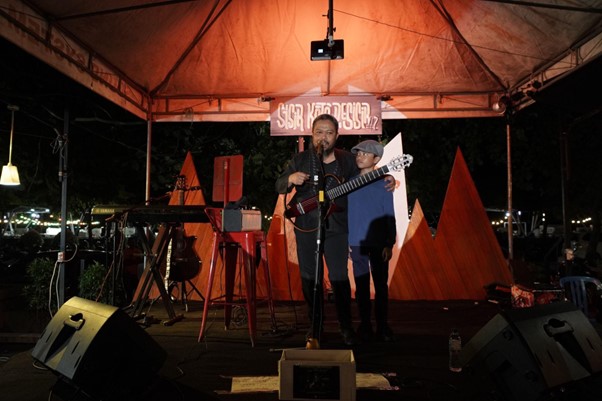
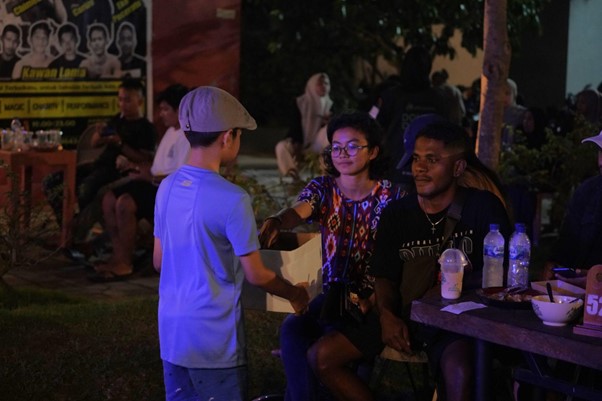
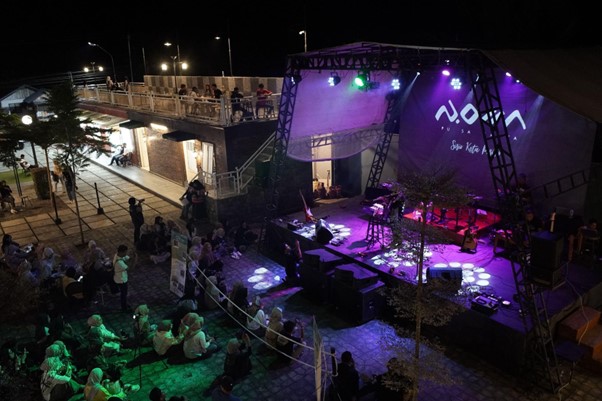
MASOHI, MALUKU — On a simple stage on Ina Masohi Beach, Maluku, the voice of Pusakata touched the hearts of the audience. However, that night, it was not only songs such as “Akad” and “Ruang Tunggu” that stole the show, but also a small figure walking among the audience carrying a donation box. That child is the beloved son of Mohammad Istiqomah Djamad, the man behind the stage name Pusakata, who was invited to witness firsthand how music can be a vehicle for spreading kindness.
“I want my son to see that music isn’t just about the stage and the spotlight,” said Is, Pusakata’s nickname. “It can also be a way to spread goodness.”
Read also: Is Pusakata and other musicians voice humanity in Sound of Humanity
Read also: Dai Dompet Dhuafa Breaks the Silence on Samosir Coast
This movement also received full support from two figures who played an important role in the success of the campaign: Ican, a content creator from Maluku who is widely known through his Instagram account @13ican, and Asep Souisa, a police officer from the West Seram Police who actively promoted this movement through various digital channels and his presence in the field. Their presence underscores that cross-professional and cross-platform collaboration is indeed possible to advocate for education in coastal areas.
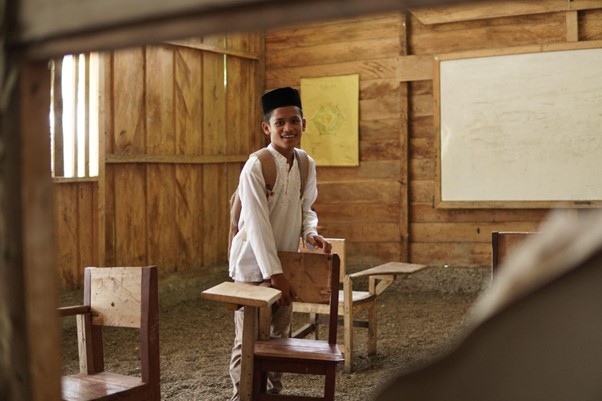
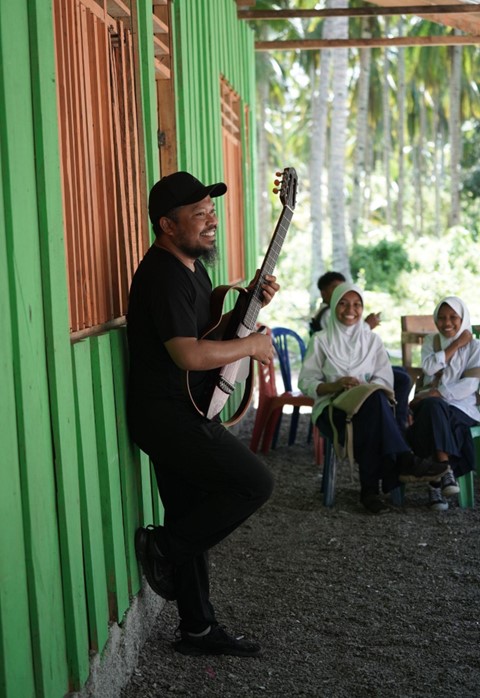
The presence of the child is an important symbol in the social campaign titled “Sisir Kota Pesisir Kedua,” a collaborative movement aimed at building schools in coastal areas of Indonesia. This time, Pusakata, together with Dompet Dhuafa and a number of collaborators, is targeting the construction of MTs Al Ishlah in Pasanea Village, North Seram. The school is in a dire condition, with classroom walls made of damaged and holey wooden planks, disrupting students’ learning activities. The benches are small and fragile, made from makeshift wood. There is no library room, let alone a bathroom. This inadequate educational condition must be improved.
Read also: Is Pusakata and other musicians voice humanity in Sound of Humanity
Previously, the first phase of this campaign successfully helped build the Taman Sejarah Islamic Junior High School in West Seram. With the same energy, Pusakata returned to Maluku with a message of sustainability: that social missions should not stop at one point of success.
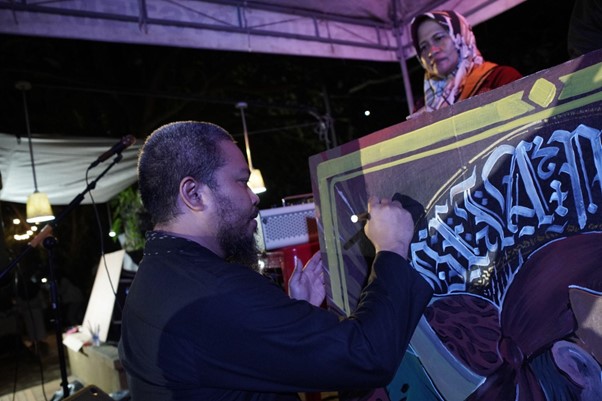
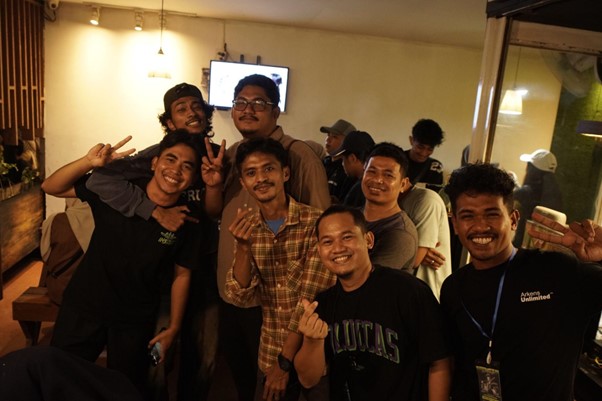
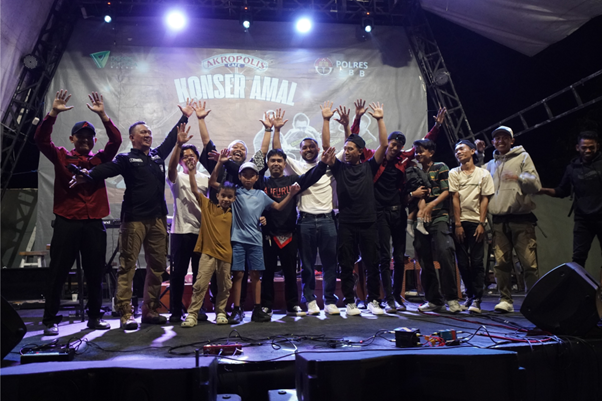
Several charity concerts were held at Raissa Cafe, Sianida Cafe, Sarabba Cafe in Masohi, and Akropolis Cafe in West Seram.
These concerts were not merely musical performances but also served as a gathering place for hope for coastal children. Amid the bustling crowd, the child who inspired Pusakata’s stage name stepped forward to collect donations from the audience, carrying a donation box with a mix of shyness and enthusiasm.
Read also: Dompet Dhuafas Support for Palestine Echoes at the Sound of Humanity Event
Pusakata’s performance was accompanied by a number of local musicians such as Zuleske, Nino & Friends, Khafiwas, and poet Eko S. Poceratu, who shook the room with his poem entitled “Natsar Pendidikan Maluku” (Education in Maluku). The verses of his poem expressed his concerns about the unequal state of education in Maluku, which still requires serious attention:
“Don’t be proud to say Maluku
When your own brothers are still eating off rocks
Write it on the rocks
Still being deceived one by one
So let’s help Maluku
With what you have”
Beyond music and poetry, the charity concert also featured a podcast session between Pusakata and Asep Souisa, a member of the Seram Bagian Barat Police Department known for actively advocating social issues through TikTok. In their conversation, education was the central topic—particularly the stark disparities still evident on Seram Island, the eighth-largest island in Indonesia.
Read also: Is Pusakata and other musicians voice humanity in Sound of Humanity
The total funds raised from the two charity concerts amounted to Rp33,242,133. These donations came from an art auction, ticket sales, mobile donation boxes, and QRIS transactions. All funds were allocated to support the construction and renovation of MTs Al Ishlah, which is in a very poor condition—with walls made of wooden planks, no library, and even no toilets.
What Pusakata did was more than just a charity concert. It revived the spirit of community cooperation and social empathy through music. By involving his children in the process, Is seemed to teach that values of goodness are not meant to be preached, but rather exemplified and passed down.
Sisir Kota Pesisir is not just about building schools but also about building a generation that cares. And that night, on Seram Island, a new generation was learning directly from the stage: that a voice, when used with the heart, can become a light. (Dompet Dhuafa)
Text and Photos: Fitin Agustin, Ayudia Chaeroni, Dedi Fadlil
Editor: Dedi Fadlil