


The rising price of plastic, triggered by global disruptions in the supply of raw materials due to geopolitical conditions in the Middle East, has become a hot topic on social media. Some of these discussions take the form of creative content, such as parodies showing how food packaging and online shopping packaging can be replaced with banana leaves as a more economical alternative.
On the other hand, the trend of using banana leaves as packaging is also said to inspire people to genuinely switch to eco-friendly products. After all, plastic remains ubiquitous in daily life.
In fact, plastic waste takes hundreds to thousands of years to decompose completely. This inevitably causes various negative impacts on the environment; improper disposal—such as burning—can pollute the air, while burying it in the ground can contaminate the soil.
Nevertheless, since many plastic-based products used daily are single-use items, the accumulation of plastic waste is unavoidable.
According to data recorded by the Ministry of Environment and Forestry (KLHK), as of 2021, household activities remain the largest contributor to national waste, accounting for 42.23 percent. This waste problem continues to persist alongside the annual increase in population growth.
Read also: DDV Promotes Fun Animal Qurbani Distribution Without Plastic Waste
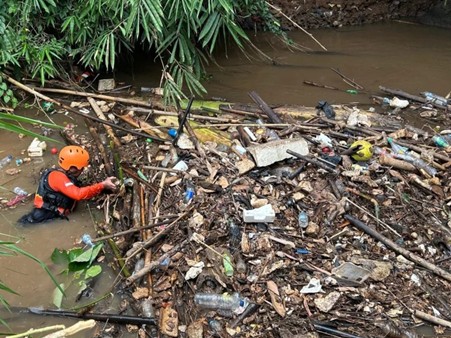
In Indonesia itself, proper waste management has not yet been widely implemented. The accumulation of plastic waste mixed with organic waste is still a common sight, leading to even worse environmental pollution.
A study from Gadjah Mada University titled “Women’s Empowerment from an Ecofeminist Perspective: A Case Study of the Wirosaban Mandiri Waste Bank in Yogyakarta City” notes that women, together with their communities, are capable of mobilizing the public to develop environmental awareness through education.
The study also notes that women’s role in this context is part of an effort toward gender equality, positioning them as agents of change in environmental conservation.
Women, who tend to be active in their communities, can educate the public on properly managing household waste. These efforts in household waste management can foster a collective awareness among the community to help protect the environment.
Meanwhile, during various international Earth Day observances, the term “Mother Earth” is used as a metaphor to describe the Earth as the source of life that needs to be cared for and respected.
According to earthday.org, the metaphor of the Earth as Mother Earth is akin to a mother who nurtures, protects, teaches, and provides everything for life. However, her energy and resources are limited and unsustainable if we only take without giving back.
Read also: DD Volunteer Holds Garbage Siege Action in NTT, Plastic Waste and Food Scraps Dominate
Similarly, the Earth—our home, whose air we breathe and whose food sustains us—will not be sustainable if we do not care for and protect it.
From an ecofeminist perspective, the metaphor of Mother Earth is linked to women’s experience of nurturing life; thus, women play a vital role as agents of change in protecting the environment.
In line with this, the spirit of emancipation championed by Raden Ajeng Kartini also encourages women to play an active role in social change—including environmental issues—so that women’s roles extend beyond domestic activities.
Through her ideas, Kartini encouraged women to achieve equality in social life by becoming active agents capable of offering solutions to various societal challenges, including environmental conservation.
Thus, the metaphor of Mother Earth in Indonesia can be interpreted through women’s concrete actions in environmental conservation, driven by Kartini’s spirit of emancipation. These concrete actions also coincide with consecutive commemorative dates: April 21 as Kartini Day and April 22 as Earth Day.
In this regard, Dompet Dhuafa, through its Disaster Management Center (DMC) and Community Service Agency (LPM), is promoting concrete actions alongside remarkable women to address waste management issues as part of efforts to preserve the environment.
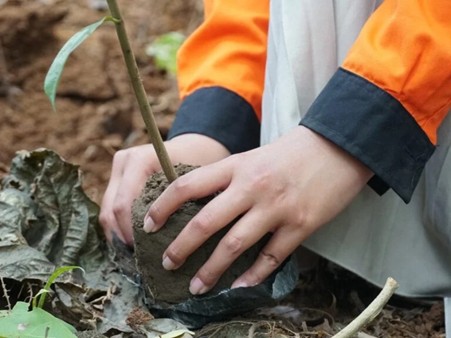
Through a program titled “From Mothers for the Earth: Raising Awareness on Wise Household Waste Management,” Dompet Dhuafa is encouraging mothers who are members of the Ummahat Religious Study Group Empowerment (PMTU)—a program supported by Dompet Dhuafa’s Community Service Agency (LPM)—to become community leaders in environmental conservation.
In its implementation, this program is not only educational but also empowers mothers sustainably so that they can encourage behavioral changes in the community regarding household waste management.
The program will launch on Earth Day, specifically on April 22, 2026, involving PMTU members from the Jatiasih area in Bekasi. Let’s join hands with these amazing mothers to protect our planet. Make your best contribution through s.id/ibubumi. (Dompet Dhuafa)
Text and photos: LPM
Editor: Dhika