


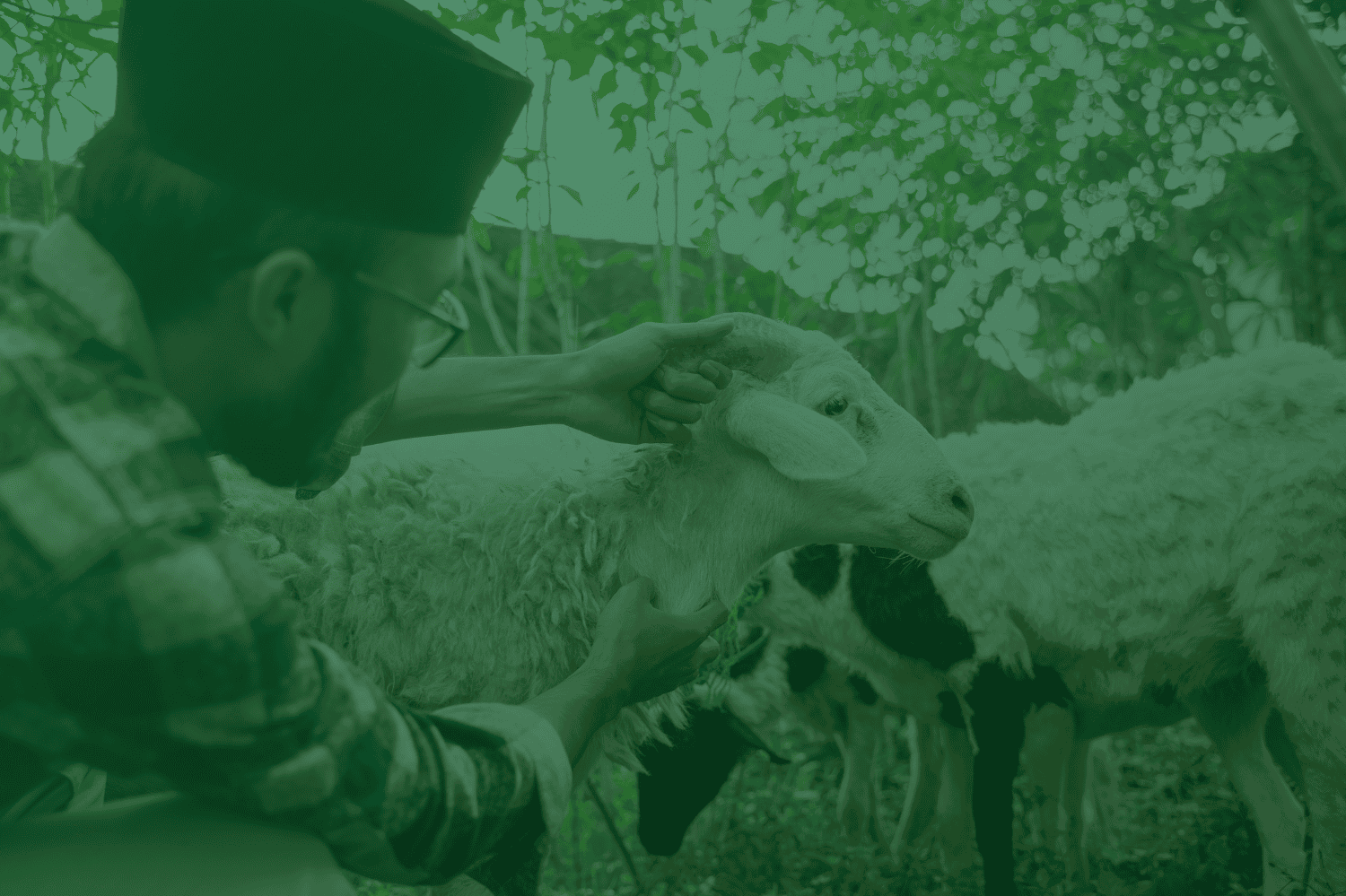
As the month of Zulhijah begins, Muslims around the world start preparing to perform the qurban ritual. Interestingly, people’s enthusiasm is not limited to making sacrifices for themselves or for family members who are still living.
Many of them also think of family members who have passed away. A deep longing drives them to channel the rewards of the sacrifice by making a sacrifice in the name of those who have died. However, what is the actual view of Islamic jurisprudence on this matter?
The Ruling on Qurbani for People Who Have Passed Away
According to the book Practical Fiqh of Qurbani by Abu Aniisah Syahrul Fatwa bin Lukman, the ruling on performing qurbani for people who have passed away cannot be generalized. We must examine it carefully based on three conditions or circumstances, namely:
1. Permissible, If the Deceased Is Included Along with the Living Family Members
In principle, the Sharia law regarding sacrifice is intended for those who are still living in this world. However, if you intend to perform a sacrifice for yourself and your entire family, and then include deceased family members in that intention, then this is valid and permissible.
For example, the head of the household sacrifices a goat or contributes to the cost of a cow with the intention: “This sacrifice is for me and my family (including grandparents or parents who have passed away).” This practice has a strong basis in the actions of the Prophet Muhammad (peace be upon him). When he was about to slaughter his sacrificial animal, he prayed:
…In the name of Allah, O Allah, accept this from Muhammad, the family of Muhammad, and the ummah of Muhammad
“In the name of Allah, O Allah, accept this sacrifice from Muhammad, the family of Muhammad, and the ummah of Muhammad.”
(HR Muslim no. 1967)
In this supplication, the scope of the Prophet Muhammad’s family and ummah naturally includes both those who are still alive and those who have passed away.
2. It Should Be Avoided If the Qurban Is Exclusively Intended for the Deceased
The second scenario is when someone purchases a sacrificial animal and intends it unilaterally or independently solely for the deceased, without involving the living. For example, a child buys a goat and intends it 100 percent solely for his late father, while the child himself has not yet performed the sacrifice that year.
Such a situation is considered inappropriate and should be avoided. The main reason is that neither the Prophet Muhammad (peace be upon him) nor the early generations of the Companions ever set an example of a sacrifice dedicated solely to the deceased.
Regarding this phenomenon, the prominent scholar Sheikh Ibn Uthaymeen offered a rather sharp critique:
“One of the common errors in our society is that people flock to perform the sacrifice for the deceased, whether as a gift of reward or to fulfill a will, yet at the same time they neglect themselves and their living family members. They overlook the primary guidance of the Sunnah and close the door to reward for themselves. Truly, this is a lack of understanding. If only they understood that the correct Sunnah is for a person to perform the sacrifice in the name of themselves and their family, then that intention automatically encompasses both the living and the deceased. And know that Allah’s bounty is truly vast.”
3. Obligatory If a Will Was Made Before Death
The ruling changes to permissible, even obligatory, if before taking his last breath, the deceased had the opportunity to make a will or leave instructions that a portion of his estate be used to purchase an animal for the qurban. In this context, the heirs are obligated to fulfill this trust using the deceased’s estate (before it is distributed as an inheritance).
The obligation to uphold and carry out this testamentary trust is emphasized by Allah SWT in the Qur’an:
فَمَنْۢ بَدَّلَهٗ بَعْدَمَا سَمِعَهٗ فَاِنَّمَآ اِثْمُهٗ عَلَى الَّذِينَ يُبَدِّلُوْنَهٗۗ اِنَّ اللّٰهَ سَمِيْعٌ عَلِيْمٌۗ
“Whoever alters the will after having heard it—the sin of such an act falls upon those who alter it. Indeed, Allah is All-Hearing, All-Knowing.”
(QS. Al-Baqarah: 181)
Let’s embrace the blessings of Zulhijah by perfecting this year’s sacrifice ritual with the best intentions for ourselves and our beloved families. Perform and share your qurban through digital.dompetdhuafa.org/kurban. (Dompet Dhuafa)
Text and photos: Roseta
Editor: Dhika