


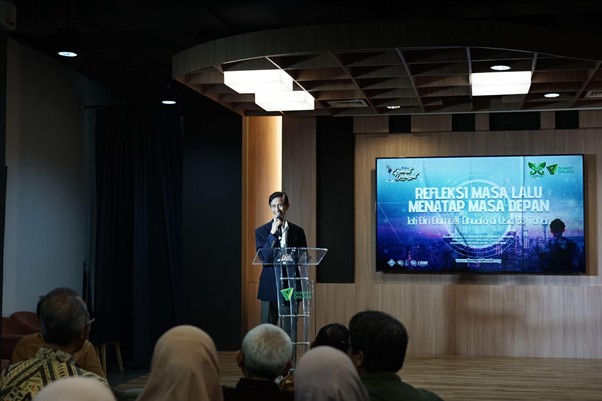
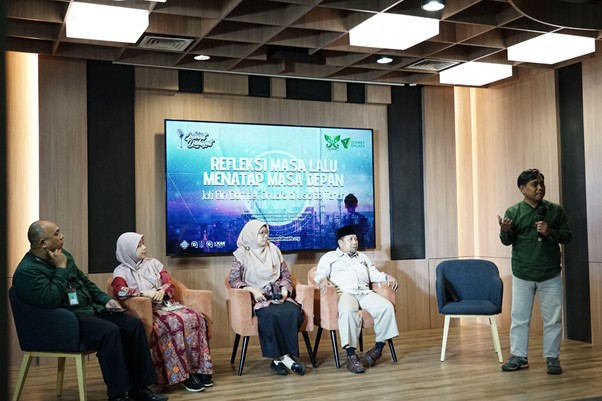
JAKARTA —— To mark its 33rd anniversary, the Dompet Dhuafa Republika Foundation (YDDR) held an event entitled “Reflecting on the Past, Looking to the Future: DD’s Identity at 33” at the Dompet Dhuafa Cultural Centre on Thursday (26 June 2026). This event served as an opportunity to retrace the historical roots of Dompet Dhuafa’s founding, whilst reaffirming the commitment to upholding the values and struggles of its founders in building society through the Islamic philanthropy movement.
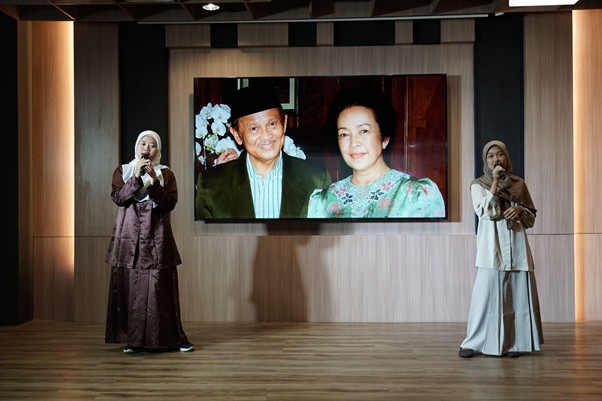
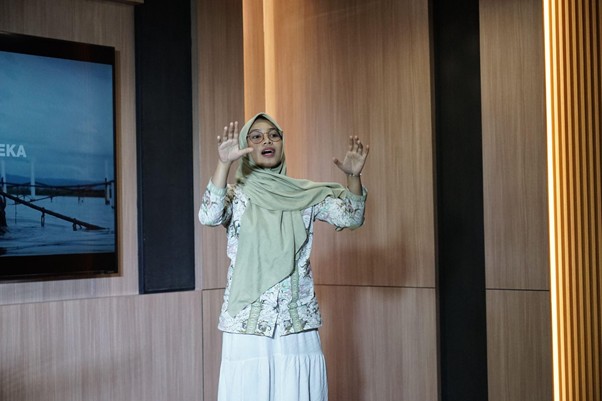
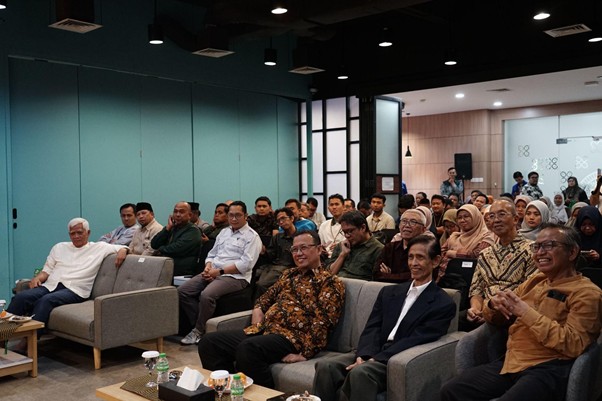
The programme began with performances of the songs Cinta Sejati and Sepasang Mata Bola, followed by the opening ceremony and the singing of the national anthem Indonesia Raya and the Dompet Dhuafa March. A solemn atmosphere pervaded the Dompet Dhuafa Cultural Centre as patrons, board members, programme implementation partners and Dompet Dhuafa staff took part in a series of reflections highlighting the organisation’s historical journey and future direction.
Under the theme “Reflecting on the Past, Looking to the Future: Dompet Dhuafa’s Identity at 33”, this event served not only as an opportunity to commemorate Dompet Dhuafa’s journey since its inception, but also to reflect on the historical connections between the third President of the Republic of Indonesia, BJ Habibie, the Indonesian Muslim Scholars Association (ICMI), the Republika daily newspaper, and the establishment of Dompet Dhuafa as a philanthropic organisation that continues to contribute to the nation’s development.
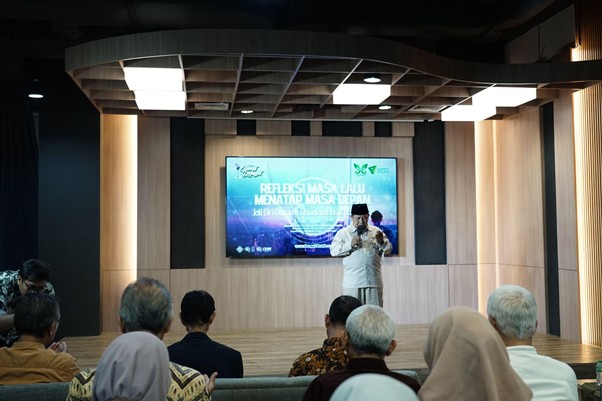
The Chairman of the Board of the Dompet Dhuafa Republika Foundation (YDDR), Dr Ahmad Juwaini, emphasised in his speech that the values bequeathed by BJ Habibie remain a vital foundation for Dompet Dhuafa’s journey to this day. According to him, one of the key principles that must continue to be upheld is the balance between Faith and Piety (Imtaq) and Science and Technology (Iptek).
“In all its activities, Dompet Dhuafa must reflect efforts to continuously develop the quality of the community’s Imtaq whilst utilising technological advancements to improve the quality of life and welfare of the community,” said Ahmad Juwaini.
He explained that technological progress and digital developments need to be utilised to bring added value to various empowerment programmes, thereby enabling a sustainable improvement in the quality of life of beneficiaries.
Ahmad Juwaini also reiterated a message frequently conveyed by Dompet Dhuafa’s founder, Parni Hadi, regarding the historical chain of events leading to the organisation’s establishment.
“Dompet Dhuafa exists because of Republika. Republika exists because of ICMI. ICMI exists because of Mr Habibie,” he said.
In his view, this statement is not merely a historical reminder, but a reminder that BJ Habibie’s grand vision must continue to be implemented in the various community empowerment initiatives carried out by Dompet Dhuafa.
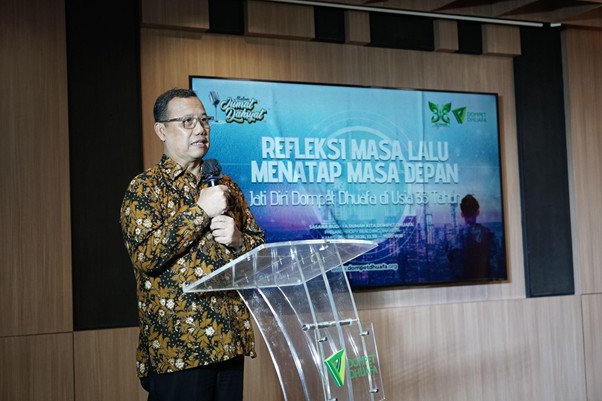
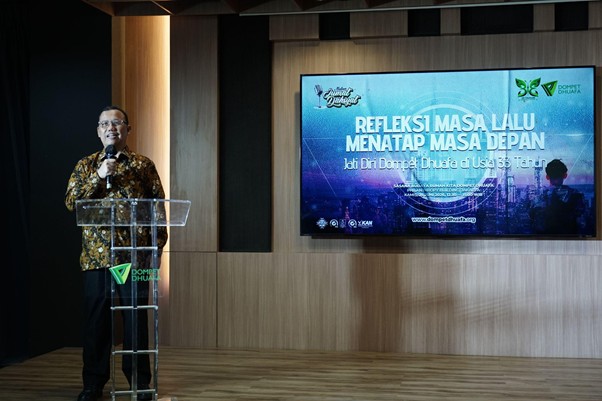
Reinforcing this view, Andi Makmur Makka, Advisor and Curator of the YDDR Cultural Centre, stated that since its inception, Dompet Dhuafa has never strayed from the spirit bequeathed by BJ Habibie, particularly in the development of human resources and the empowerment of the community.
“Mr Habibie’s spirit regarding human resource development, community empowerment, and the harmonisation of faith and science remains a living foundation in Dompet Dhuafa’s journey,” said Andi Makmur Makka.
According to him, the productive management of zakat, infaq, sadaqah and waqf (Ziswaf) is a manifestation of BJ Habibie’s philosophy, which integrates faith, science and technology as a unified whole in building society. He also added that the existence of the YDDR Cultural Centre forms part of the effort to preserve the values, ideas and legacy of the founders’ struggle so that they may continue to inspire future generations.
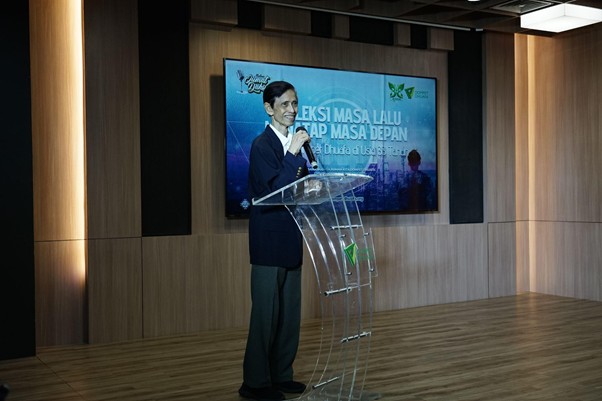
This idea was then explored in greater depth by Yudi Latif, a patron of Dompet Dhuafa, in his presentation entitled “Towards a New Dimension of National Development according to the Ideas of Mr BJ Habibie”. He invited participants to look back at the 1990s as a period when Islam, modernity and intellectualism converged in a significant moment through the founding of ICMI.
According to Yudi, BJ Habibie was an intellectual capable of bridging the gap between scientific knowledge and humanistic values. He described Habibie as the embodiment of ‘third culture’—a scientist who not only mastered science and technology but was also able to communicate scientific ideas to the public in a simple and easily understandable manner.
Furthermore, Yudi emphasised that national development is not a struggle that can be completed within a single generation. Quoting BJ Habibie’s thoughts, he explained that development is a ‘historical continuity’ carried out through a relay of struggle across generations.
“Development is not a one-off struggle. Today, we are taking up the baton of the previous generation’s struggle, and our task is to pass it on to the next generation,” explained Yudi.
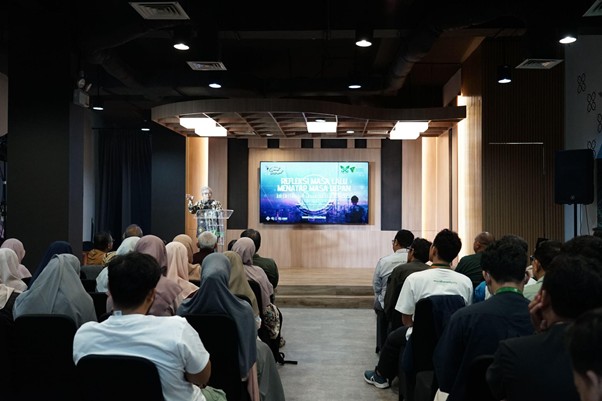
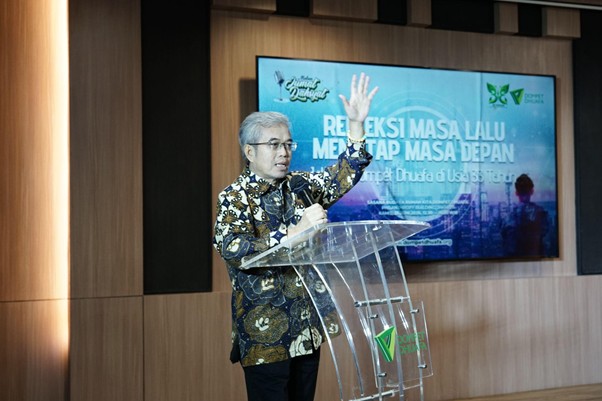
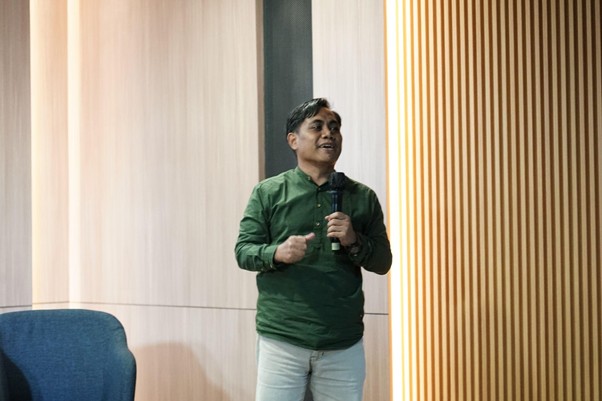
Following this reflection session, the event continued with presentations on the focus and impact of Dompet Dhuafa’s four Multi-Programme Partnerships (MPPs): Education and Culture; Health; Economy; and Social, Da’wah and Humanitarian Affairs. Led by Agung Pardini from IDEAS, this session demonstrated how the values bequeathed by the founders continue to be realised through various empowerment programmes that bring tangible benefits to the community.
The reflection also left a deep impression on the participants in attendance. One such reflection was shared by Agung Pardini, a researcher at IDEAS, who described the event as a crucial moment to revisit the organisation’s historical roots whilst reinforcing the direction of Dompet Dhuafa’s future endeavours.
“There would be no Dompet Dhuafa without Harian Republika. There would be no Republika without ICMI, and there would be no ICMI without Mr Habibie. Today marks the reflection on Dompet Dhuafa’s 33rd anniversary. It is fascinating to combine this with our tribute to a president who was also an intellectual, Mr BJ Habibie, who always emphasised the importance of innovation and human resource development,” said Agung.
He added that the mandate entrusted to Dompet Dhuafa to manage zakat funds continues to be realised through empowerment programmes aimed at creating a self-reliant and empowered society. In his view, reflective activities such as this are also important so that the younger generation can understand the history and identity of Dompet Dhuafa as a philanthropic movement born out of a spirit of intellectualism and a commitment to the community.
Read also: Simultaneous Blood Donation Campaigns Across the Archipelago Ahead of Dompet Dhuafa’s Anniversary
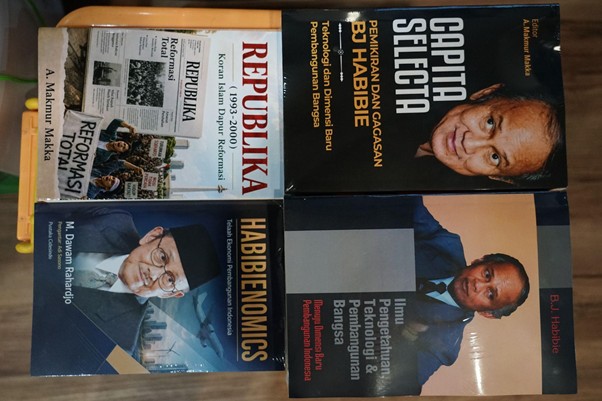
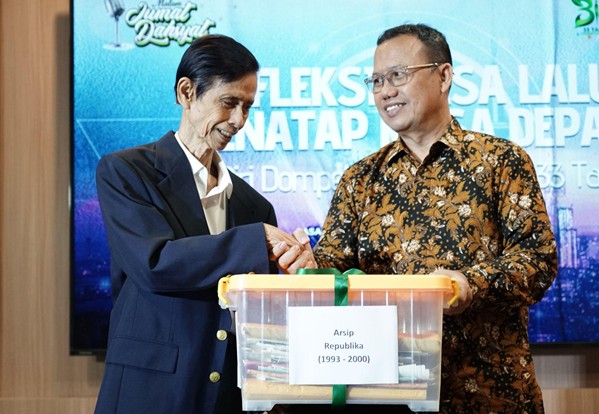
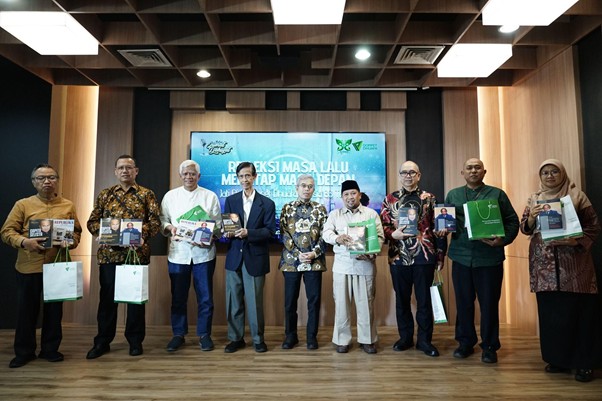
The series of events then continued with the handover of a number of books on the ideas of BJ Habibie, including Science, Technology & National Development: Towards a New Dimension of Indonesia’s Development, A Review of Habibie’s Perspective on Indonesian Economic and Development Thought, and Republika, the Islamic Newspaper of the Reform Era. In addition, the static archive of the *Republika* daily newspaper covering the period 1993–2000 was also handed over to the YDDR Library as part of an effort to preserve the historical memory of the founding of Dompet Dhuafa whilst safeguarding the intellectual legacy that forms part of the organisation’s journey.
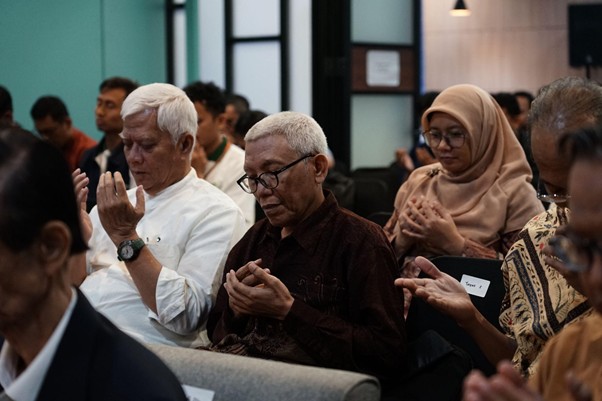
The event then concluded with a joint prayer led by Ahmad Shonhaji for the founder of Dompet Dhuafa, Parni Hadi, as well as prayers for the late BJ Habibie and Ainun Besari Habibie, as a mark of respect for their services and contributions to the nation and to the journey of Dompet Dhuafa.
As it enters its 33rd year, Dompet Dhuafa is not only celebrating its long journey as an Islamic philanthropic organisation, but also reaffirming its identity as a movement rooted in the integration of Islamic values, science, technology and community empowerment. Through this reflection, Dompet Dhuafa hopes that the legacy of thought passed down by its founders, including BJ Habibie, will continue to live on and serve as an inspiration in bringing about greater benefits for Indonesia. (Dompet Dhuafa)
Text and photos: Nurul
Editor: Dhika