


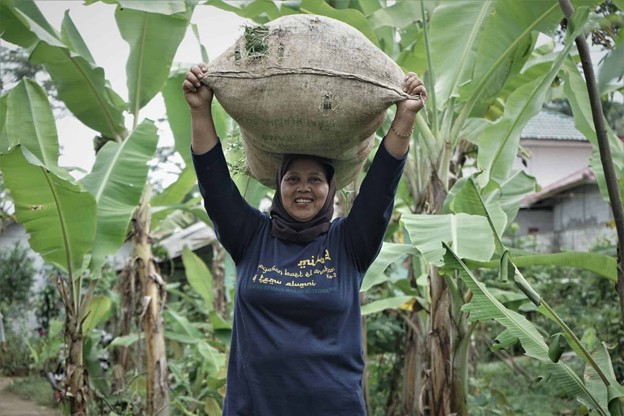
JAKARTA — Every April 21, Indonesians celebrate Kartini Day. Kartini is a national heroine who fought for women’s emancipation. One of Kartini’s big dreams was equality for all women in Indonesia.
Kartini’s struggles included promoting equal access to education, political and economic opportunities, and equal social status for women and men in society.
So, how did Kartini strive to realize her dreams at that time? Although Kartini was born into a Javanese noble family, she was not entirely a person showered with privileges.
Far from it, young Kartini was forced to drop out of school at the age of 12. At that time, around the 1890s, there was a tradition that could not be broken by society, known as “dipingit” for women.
This tradition required women to spend their days confined to the house, limited to the well, kitchen, and bed, as the Javanese of old would say. Kartini felt this was unfair to women, as it perpetuated ignorance and structural poverty that affected women.
Read also: Memories flooded, Kartinis testimony of seeing her house hit by Galodo
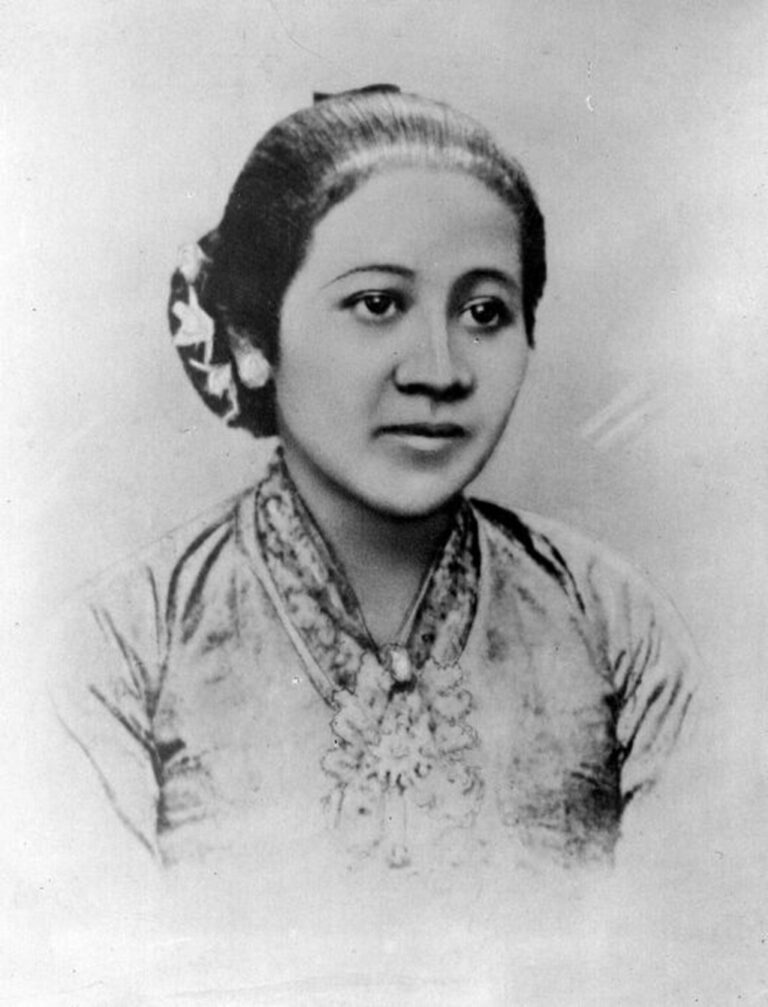
Kartini did not give up on her circumstances. She actively read Dutch books and newspapers. She learned about how to advance the way indigenous women thought. The young Kartini actively wrote about her struggles in letters, which were later compiled into a phenomenal work titled Habis Gelap Terbitlah Terang (After Darkness Comes Light).
She wrote to various influential figures, from public officials at the Ministry of Culture and Religion to her pen pals in the Netherlands. Kartini shared her experiences of facing seclusion and her demands for equality for women.
“Our efforts have two goals: to contribute to the advancement of our nation and to pave the way for our sisters to achieve a better life, one that is more befitting of human dignity,” wrote Kartini Nellie van Kol in 1901 in Emansipasi: Surat-Surat Kepada Bangsanya (Emancipation: Letters to Her People).
Until the end of her life, Kartini dedicated herself to realizing this vision. Time continues to roll on. Like a relay baton, Kartini’s torch of struggle has never ceased to pass from hand to hand. Our nation still has many tasks to fulfill in realizing Kartini’s noble dream.
Carriers of Kartini’s Torch of Struggle in the Present Day
Today, the modern world has made distance and time no longer barriers for society to champion the values of women’s emancipation. Their struggle has become boundless. Through various creative innovations, people can unite in a common cause.
One such example is Dompet Dhuafa in its empowerment initiatives across various fields, including education, economy, health, social welfare, and cultural outreach. People can work together to create an equal platform for growth, both for women and men.
Dompet Dhuafa enables every individual—regardless of gender—to access education and contribute to driving the economy. Additionally, they can participate in social outreach activities and actively contribute to promoting the well-being of the broader community.
Read also: Born from Empowerment, This Kartini is Now Empowering Others
Here is a glimpse of Kartini today, who may serve as an inspiration to us all.
1. Yuyum Susilawati – Partner of Dompet Dhuafa in Sukabumi
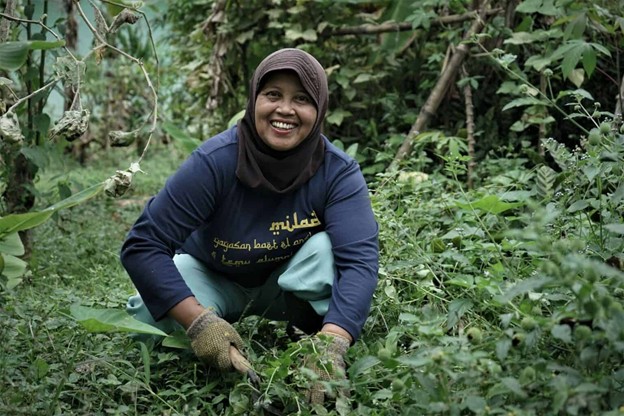
This empowered woman from Sukabumi is the backbone of her family. Despite the hardships of life, she never gave up her struggle as a farmer and livestock breeder, eventually securing an opportunity to join the Tebar Hewan Kurban (THK) program by Dompet Dhuafa in 2009.
Since then, she has learned to develop her livestock business, leading to significant improvements in her family’s economic condition.
As the only female livestock farmer actively involved in the management of the Riung Mukti Sukabumi Multi-Purpose Livestock Farmers Cooperative (KPSU), she has successfully sent both her daughters to university. Her resilient spirit serves as an inspiration to every woman in her village.
2. Samsinar – Coffee Farmer Supported by Dompet Dhuafa in Solok, West Sumatra
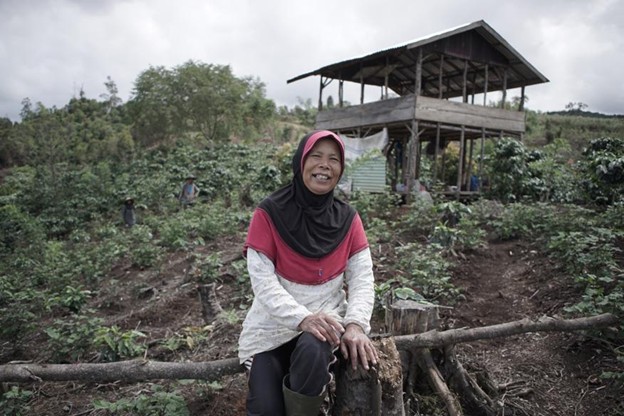
“Oh God, oh Lord, may tomorrow be successful (the coffee harvest), so that it can be an example for many people in the future. So that people (who are struggling) can be like me, no longer struggling to live in the village,” Samsinar told Dompet Dhuafa.
She is one of the women who has successfully cultivated specialty coffee—high-grade coffee—on her farm. Despite economic limitations, she took a risk by opening a farm, even though she faced mockery from villagers who didn’t believe in her efforts.
After facing numerous challenges, she gained access to training and capital from Dompet Dhuafa, enabling her to stand on her own with 25 other workers. Samsinar is one of the women who has grown and inspired others to do the same, bringing hope to many.
3. Murniati Mukhlisin – Dai Ambassador of Dompet Dhuafa in America
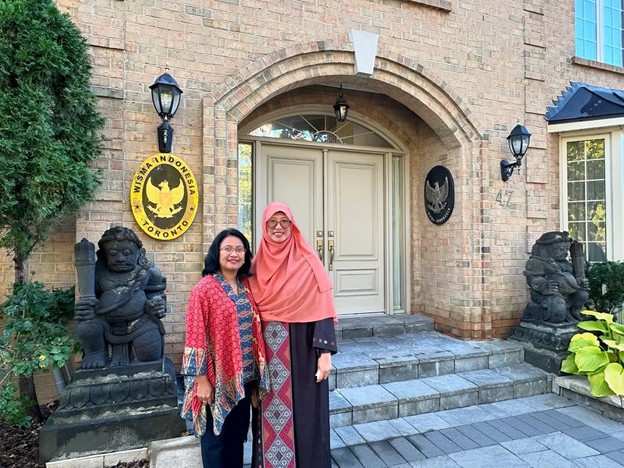
He is a professor and expert in Islamic finance who later became a Dai Ambassador delegate for Dompet Dhuafa in the Americas, covering Los Angeles, Las Vegas, San Francisco, Michigan, Boston, Washington DC, Virginia, Toronto, and Canada.
He has dedicated his life to empowering communities through his expertise. In 2024, he successfully organized discussion sessions, lectures, and delivered presentations at an Islamic finance conference at Harvard University.
The scope of her topics is diverse, ranging from the development of the halal industry—including halal food and beverages, Muslim-friendly tourism, halal cosmetics and pharmaceuticals—to Islamic media. Murniati’s presence is particularly relevant, given that the Muslim population in the United States is very small, accounting for only 1.1 percent of the total population.
Read also: National Zakat Day and Kartini Day, a Show Event for Women Zakat Heroes
4. Mbah Muko – Batik Artist Sponsored by Dompet Dhuafa from Bantul
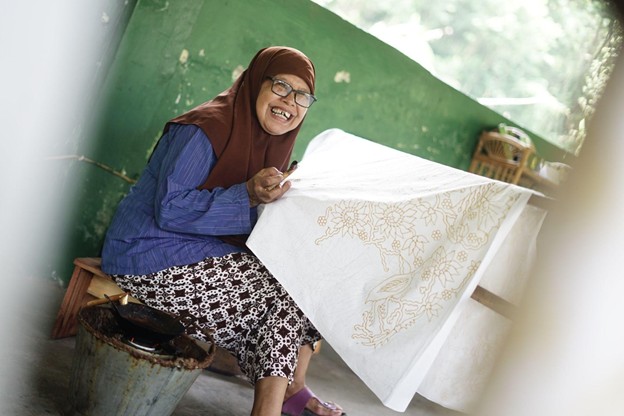
Mbah Muko—as he is affectionately known—is a batik artist who is part of the Batik Berkah Lestari (BBL) group in Bantul, DI Yogyakarta. Unexpectedly, in 2006, he and his group experienced a traumatic event: the Yogyakarta earthquake. All of his batik equipment was destroyed.
Undeterred, he worked tirelessly to recover from the devastation, eventually gaining access to support and funding from Dompet Dhuafa. He and his group started anew, beginning with nothing. Like a blank canvas, he was ready to fill it with various batik patterns.
Today, BBL is self-reliant and thriving. Orders are steady, and visitors keep coming. The community actively hosts batik workshops that attract both local and international visitors.
They are local heroes for their community, sowing seeds of hope for those in need. They are nurturing a resilient and dignified generation of the nation. Let’s weave that hope together by donating through this link. So, what’s your version of Kartini? (Dompet Dhuafa)
Text: Hany Fatihah Ahmad
Photo: DDTV
Editor: Dhika