

JAKARTA —- The celebration of Eid al-Adha, one of the major holidays in Islam, is always accompanied by the ritual of animal sacrifice. Theologically, sacrifice is a manifestation of submission to the command of Allah SWT, emulating the sincerity of Prophet Ibrahim AS and the submission of Prophet Ismail AS. However, when examined more deeply, sacrifice also has very strategic social and economic values. Sacrifice enables Muslims not only to offer the best to the Creator but also to distribute benefits to fellow human beings, especially those in marginalized social conditions.
In this context, Dompet Dhuafa, through its Tebar Hewan Kurban (THK) program, expands the social-economic dimensions of sacrifice. THK was born out of the awareness that many regions in Indonesia, especially remote areas, face a shortage of sacrificial animals. Meanwhile, in major cities, sacrificial animals often accumulate in communities that are already well-off. This disparity, if left unaddressed, is feared to exacerbate distribution inequality and even diminish the social essence of the sacrifice ritual itself.
According to data from the Ministry of Agriculture of the Republic of Indonesia in 2024, national sacrificial animal production reached 1.75 million heads per year. However, distribution is uneven, with only around 60% of sacrificial animals concentrated in urban areas. Meanwhile, data from the Central Statistics Agency in 2024 shows that 13.74% of the rural population still lives below the poverty line, while the figure in urban areas is lower at around 7.38%.
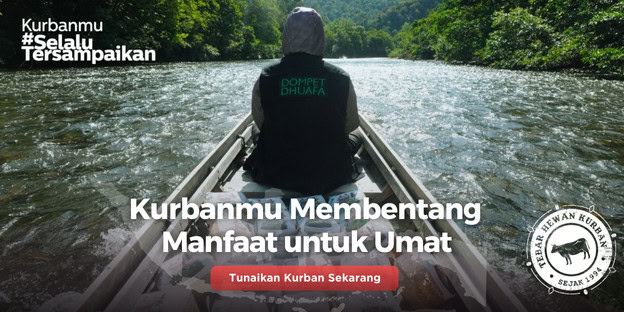
Through THK, Dompet Dhuafa strives to expand the benefits of qurbani to marginalized areas: remote regions, food-insecure areas, minority communities, and post-disaster zones. Urban qurbani donors not only fulfill their ritual obligations but also contribute to addressing social inequality at the grassroots level. As a result, the sacrifice becomes a tangible tool for strengthening social solidarity across regions, from economic hubs to underdeveloped areas.
In the 2024 THK program, Dompet Dhuafa successfully distributed sacrifices to 34 provinces and over 1,500 villages, most of which are in areas with poverty rates above the national average.
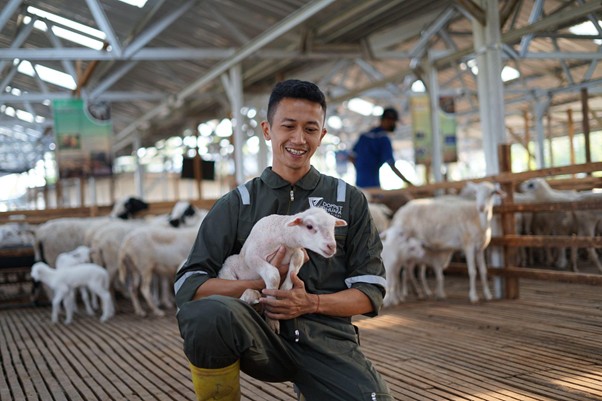
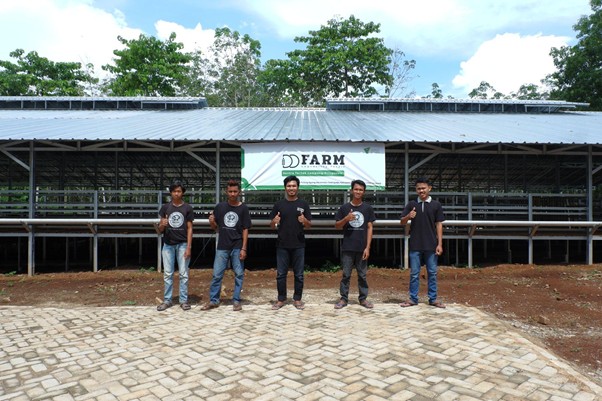
Beyond distribution, Dompet Dhuafa places significant emphasis on empowering the upstream sector, namely small-scale livestock farmers. Through the optimization of zakat, infak, sedekah, and wakaf funds, Dompet Dhuafa supports local livestock farms across various regions in Indonesia. Small-scale farmers, who were previously marginalized from the supply chain of large-scale sacrificial animal industries, now have access to contribute to the national sacrificial animal ecosystem.
This development model does not merely provide capital but also equips farmers with livestock management training, improved animal health standards, and marketing strategies. In the long term, this intervention aims to establish self-reliant, productive, and competitive community-based livestock farms.
Read also: Caroline.ids Free Car Buy, Dompet Dhuafa Distributes it to an Isolated Village in Grobogan
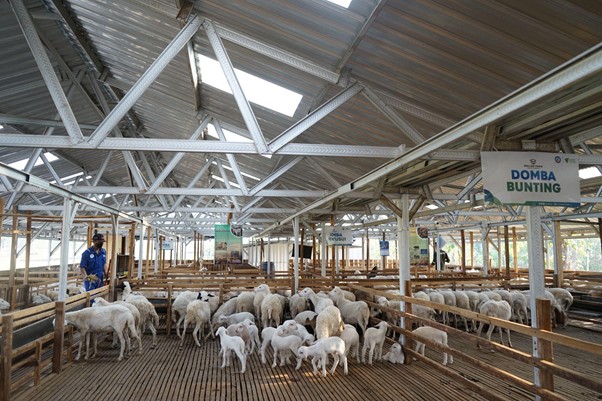
Interestingly, despite the intensive empowerment process involved in producing sacrificial animals, their selling prices remain affordable for the general public. This demonstrates that the principle of economic justice is upheld: small-scale farmers receive fair prices, while the broader community remains able to participate in the sacrificial ritual.
Dompet Dhuafa has also developed a partnership approach with livestock cooperatives. Through this scheme, farmers who previously worked independently are brought together into a stronger collective entity. The cooperative acts as a production aggregator, improving quality, negotiating prices, and opening up broader market access.
From a socio-economic perspective, this cooperative approach is highly strategic. It not only enhances farmers’ bargaining power in the market but also builds a network of solidarity among farmers. In the long term, cooperatives promote the creation of a self-reliant, sustainable, and equitable people’s economy.
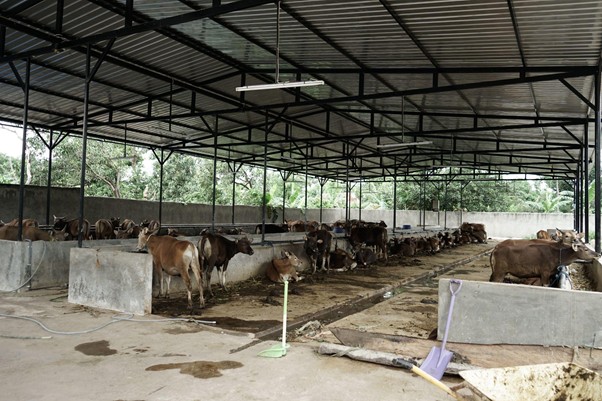
Through all these initiatives, Dompet Dhuafa is building the foundation for a sustainable qurbani model, an approach where the positive impact of qurbani does not end on the day of Tasyrik, but continues throughout the year. Qurbani is no longer seen as the peak of annual consumption, but as a catalyst for a sustainable cycle of prosperity.
Under this model, the well-being of farmers is not dependent on a single season but is built through continuously growing production capacity, open markets, and increasingly empowered farming communities. This concept aligns with the principles of sustainable development, where religious traditions are integrated with efforts to strengthen local economic resilience.
The economically empowering sacrifice initiative proposed by Dompet Dhuafa reinforces that worship has a very high social transformative dimension. Sacrifice is not merely a personal ritual between humans and their Creator, but also a social responsibility to build a more just, prosperous, and empowered society.
Read also: Haru di Rote, Indonesias Southernmost Island and the Longed-for Qurbani
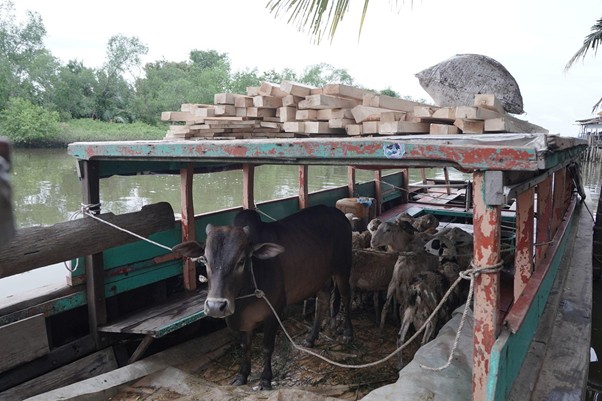
In the midst of various global challenges such as economic inequality, food crises, and climate change, empowerment models like this are becoming increasingly relevant. Sacrificial offerings can be more than just an annual tradition; they can become a social movement that brings about real change, which is then served on the dining tables of families in remote areas of the country.
In the future, the challenge for Dompet Dhuafa and all of us is how to expand and replicate this model in more places, and how to instill collective awareness that every drop of sacrificial blood is not only a testament to spiritual submission but also a sign of our commitment to fighting for social justice in the real world. Our sacrifices are not just acts of worship; they are the power to change many lives.
Let’s choose the best animals and spread the benefits across the archipelago digital.dompetdhuafa.org/kurban. (Dompet Dhuafa)
Text and photos: Riza Muthohar
Editor: Dhika