


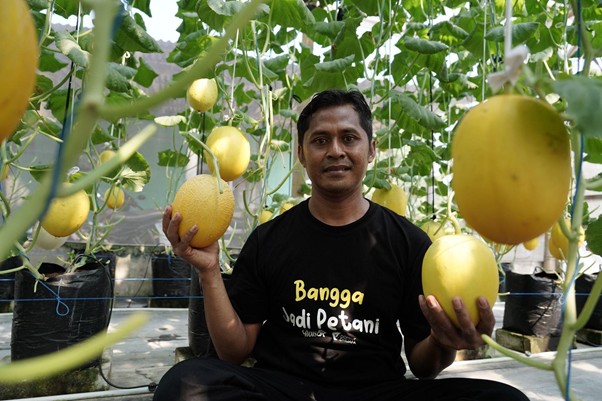
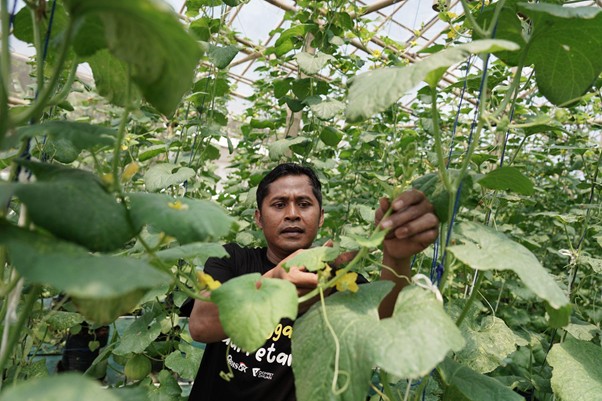
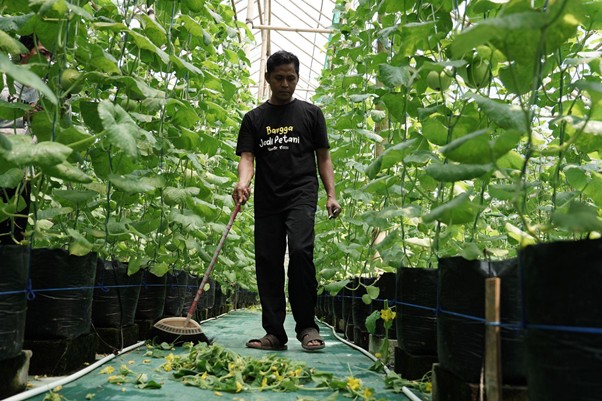
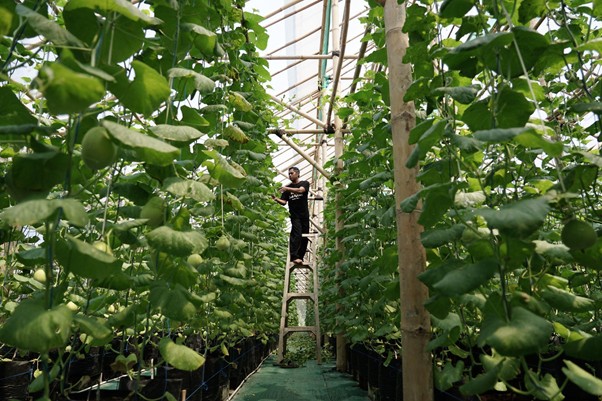
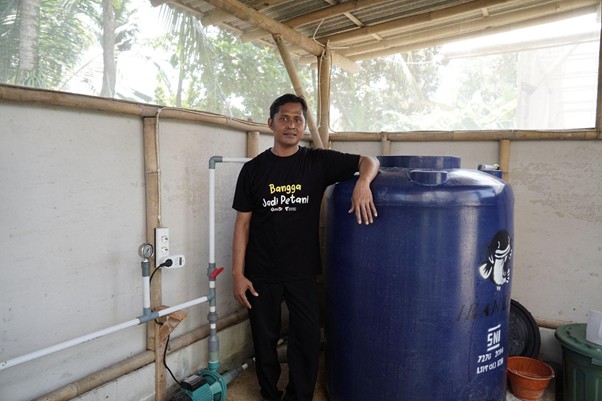
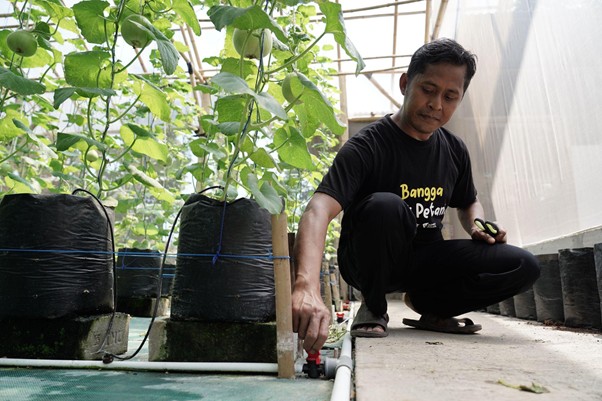
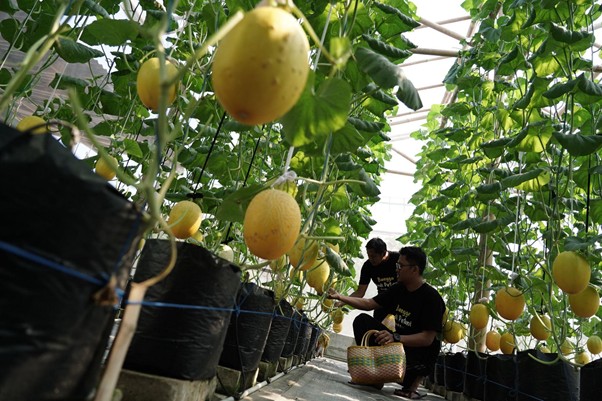
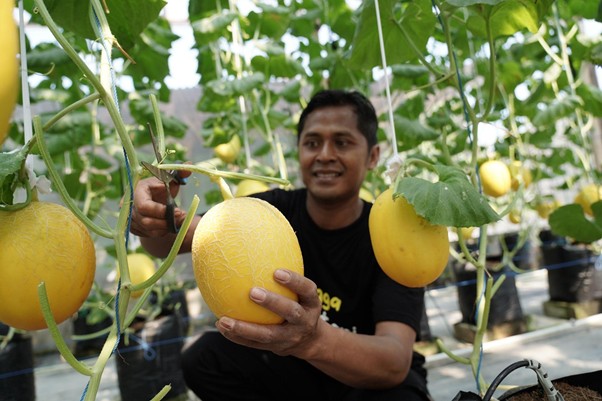
WEST JAVA — A row of greenhouses stands firmly with transparent walls that let in the afternoon sun. Inside, rows of melon plants are neatly arranged in black polybags, climbing upwards with the help of ropes. The humid air is mixed with the fresh scent of leaves. Among the plants, Samsul Huda, a middle-aged man, can be seen trimming dry leaves with a smile on his face.
For more than two years, Samsul has been cultivating hydroponic melons through a zakat empowerment program distributed by Dompet Dhuafa. Now he is a member of the Melon Langensari group, which has 12 members.
Before joining the group, Samsul’s life was very different. He worked as a restaurant guard in Banjar. The job provided him with an income, but it was not enough to support his small family.
“At that time, I used to work at a restaurant and do odd jobs. My income was uncertain. Until finally, Mr. Elan invited me to grow melons,” he said on Tuesday (9/23/2025).
Read also: Melon Farmer Elan Proves that Zakat Trust Can Expand Benefits
Despite his doubts because he knew nothing about melon cultivation, Samsul took the plunge and agreed to become a farmer. At first, he knew nothing about melons. Even though he had been a farmer before, that was not enough. Farming was not something unfamiliar to him. Since childhood, he had grown up in a farming community. However, the people of Banjar usually grew rice, corn, or papaya.
“Melons? Especially using greenhouses and hydroponics, that was new to us. From seeds to planting media to harvesting, I knew nothing. Mr. Elan taught me everything from scratch,” he said.
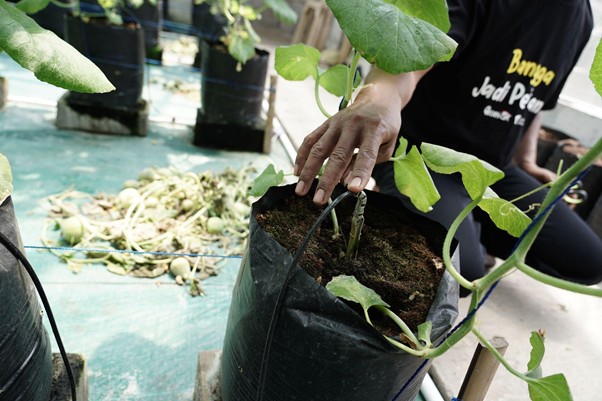
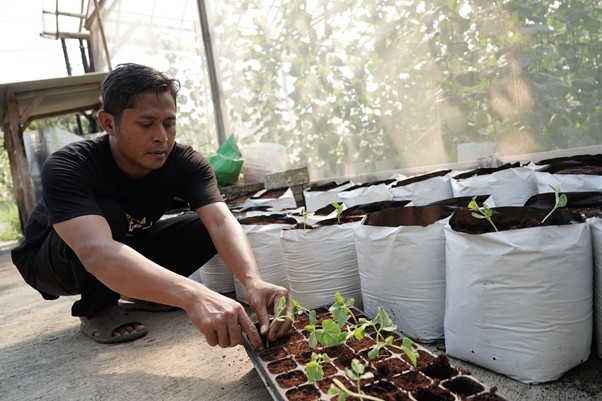
The first few days were tough. He had to learn to recognize quality melon seeds, prepare the growing medium, sow the seeds, and understand how to tie the plants so they wouldn’t fall over. Every step required caution. However, slowly, the skills became ingrained in his hands. Now, he can do it with confidence.
During the conversation, Samsul pointed to a row of melons that were starting to grow, hanging sweetly on the vines.
“I like it when I see a good harvest. It feels very satisfying. But when many of them fail, that makes me sad,” he said.
However, he remains grateful. From the proceeds of melon farming, Samsul is now able to send his two children to school. His eldest is in junior high school, and his youngest is only two years old.
“I enjoy this work because I really like it. Thank God, the results are always profitable. I can use the money for my children’s school fees,” he said with a smile.
Read also: Empowering Local Farmers, Dompet Dhuafa Introduces a Greenhouse Endowment and Conducts Sterilization
Currently, Samsul and his group cultivate five varieties of melons: Inthanon, Sweet Honey, Sweet Net, Lavender, and Demulsen. These varieties were chosen based on market demand.
“Because market interest is high and the selling price is good,” he explained.
Of the five varieties, Inthanon is his favorite. According to him, the flesh is soft, sweet, and more durable.
When stored, it does not rot quickly. That is what makes it the most popular.
One greenhouse unit managed by the group can accommodate 700 polybags. Each polybag is filled with two plants, so there are a total of about 1,400 plants per greenhouse. Although there is a 10-20 percent risk of failure, according to Samsul, this is still normal in agriculture.
Every week, the greenhouse becomes more lively. Group members gather, discuss, and exchange experiences. Some complain about pests, while others share new techniques for plant care.
“If there is a problem, we discuss it together. So everyone helps each other, no one feels alone,” said Samsul.
Elan Maulana, the group leader, always brings updates on agricultural science and technology. Sometimes they learn about more efficient drip irrigation methods, other times about how to maintain greenhouse humidity. Everything is done to improve crop quality and maintain the trust of zakat donors.
Read also: A New Lease on Life: Mr. Ade, the Pineapple Farmer, Rises Again Through IKON Dompet Dhuafa
When asked about his hopes, Samsul gazed at the row of greenhouses. “I want the results to be even better, sales to run smoothly, and to continue to be of benefit. Not just for my family, but also for the people around me,” he said softly.
Now, from being a restaurant guard, Samsul Huda has transformed into an independent hydroponic melon farmer. His journey proves that zakat, when managed well, can grow more than just crops. Zakat can grow a brighter future, prosperity, and broader hopes.
Samsul’s story is just one of thousands of stories of zakat beneficiaries who now live more prosperous lives thanks to the generosity of donors. From every rupiah of zakat you pay, business opportunities are born, jobs are created, and new hope grows for families in remote areas of the country.
Join us in this act of kindness. Pay your zakat through Dompet Dhuafa, so that more “Samsuls” can rise up, empower themselves, and become self-reliant. (Dompet Dhuafa)
Click here to pay zakat: dompetdhuafa.org/zakat
Text and photos: Riza Muthohar
Editor: Dhika