


JAKARTA –— Many people are concerned about the solemnity of the Eid al-Adha 1443 sacrifice, which is only a month away. This is because the foot-and-mouth disease (FMD) outbreak is spreading rapidly. Currently, 17 provinces have been declared affected by this livestock disease. In response to these concerns, on Tuesday (May 31, 2022), Dompet Dhuafa held a talk show with the theme “Maintaining the Quality of Sacrificial Animals Amidst the FMD Outbreak,” which took place offline at the Dompet Dhuafa Philanthropy Building, Pasar Minggu, South Jakarta, and online on the DDTV YouTube channel.
The talk show discussed preparations for sacrificial animals amid the rampant FMD outbreak, featuring three perspectives from sacrificial animal implementation agencies, news media, and livestock practitioners and academics. Additionally, the discussion was open to the public for anyone who wanted to share other perspectives.
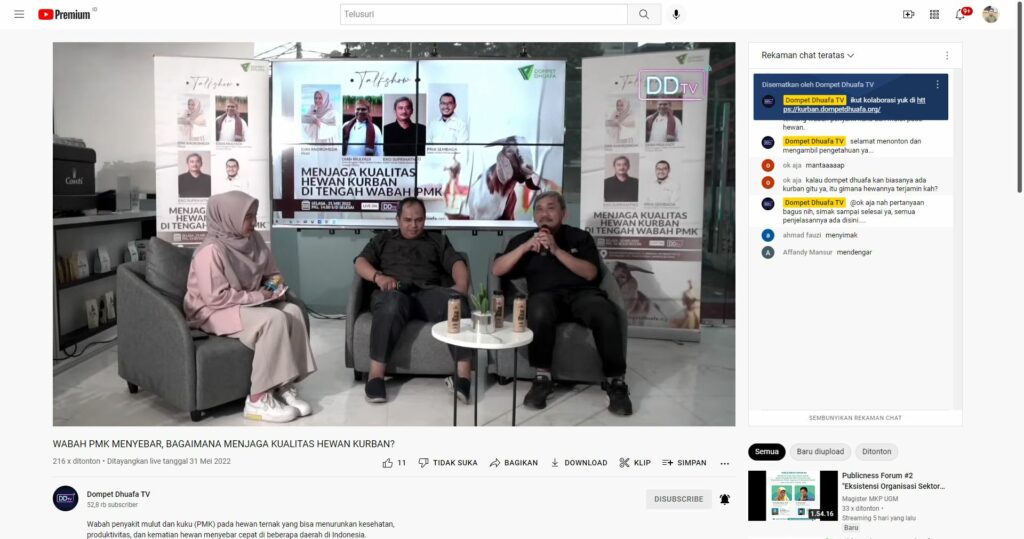
Dompet Dhuafa has DD Farms in 10 provinces with 14 barns as livestock centers to prepare sacrificial animals. The Head of the 2022 Sacrificial Animal Distribution Program (THK), Dian Mulyadi, said that since his team heard about the emergence of this disease, Dompet Dhuafa immediately took various preventive measures to prevent transmission to livestock at DD Farm. Dompet Dhauafa immediately collaborated with local government agencies, local security forces, and of course veterinarians. This is an effort to ensure that the livestock at DD Farm are fit and healthy to be used as sacrificial animals for THK 1443 H / 2022 M.
“We also apply these efforts not only at the DD Farm livestock center but also at our partner farms. We at Dompet Dhuafa are seriously handling this matter to ensure that the qurbani ritual is carried out in accordance with Islamic law and does not cause any negative impacts afterwards. We will continue to do our utmost to maintain Dompet Dhuafa’s THK as solemn as in previous years,” he explained.
He further explained that if there are indications of animals infected with PMK or other diseases, they will be immediately separated from healthy animals. Although the Indonesian Ulema Council (MUI) permits animals infected with PMK to be sacrificed as it does not affect humans, Dompet Dhuafa remains steadfast in ensuring that every sacrificial animal is completely healthy. Dian also guarantees that the sacrificial animals at Dompet Dhuafa are healthy.
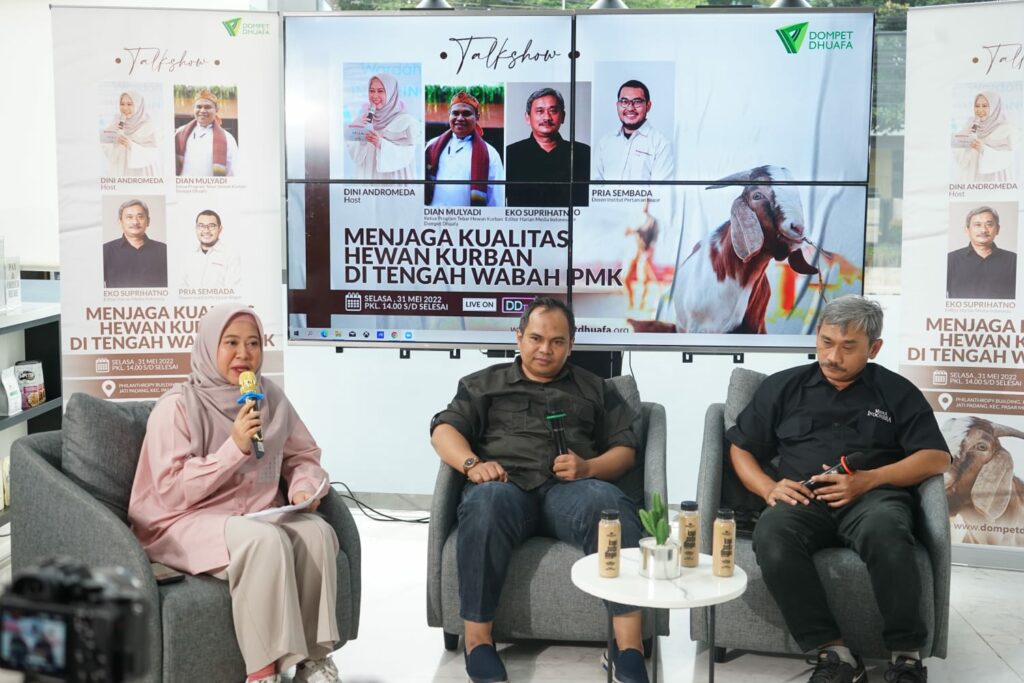
“We guarantee the public that the qurbani animals at Dompet Dhuafa are healthy,” he said.
To maintain the quality of livestock, Dompet Dhuafa conducts Quality Control (QC) in stages with assistants in each region. The QC team will check all aspects related to the animals. There will be at least three QC checks before the sacrifice. Dompet Dhuafa also provides sufficient knowledge to the assistants and farmers so that they can conduct QC themselves at any time. In addition, every partner and livestock center is encouraged to give supplements and vitamins to each animal every day to maintain their health.
Dompet Dhuafa targets 40,000 sheep and goats (doka) for THK 1443. As in previous years, the distribution of animals and sacrificial meat will target all 34 provinces in the country.
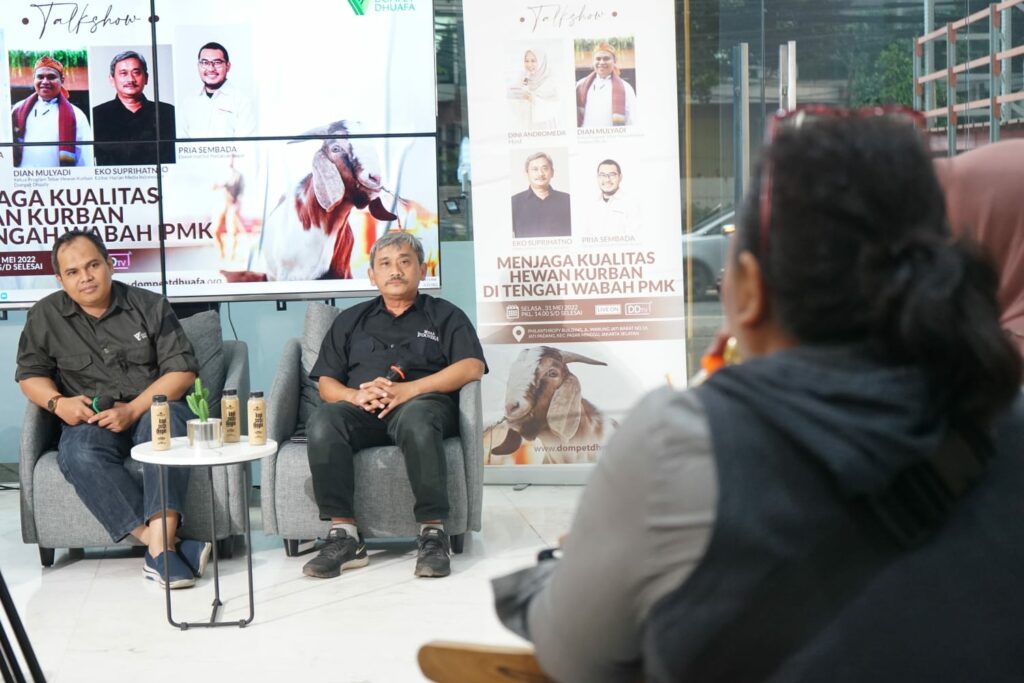
“There are still many remote areas that do not receive sacrificial meat. We also have a research institute called IDEAS, whose research shows that several major cities in Indonesia have a surplus of sacrificial meat. Therefore, Dompet Dhuafa invites donors and sacrificers to distribute sacrificial animals and meat to these areas through the Dompet Dhuafa THK program,” said Dian.
In addition to domestic efforts, Dompet Dhuafa also targets the distribution of THK in conflict-ridden countries and regions facing food crises, such as Palestine, Syria, and Bangladesh, as well as targeting Muslim minorities in countries like Myanmar. (Dompet Dhuafa / Muthohar)