


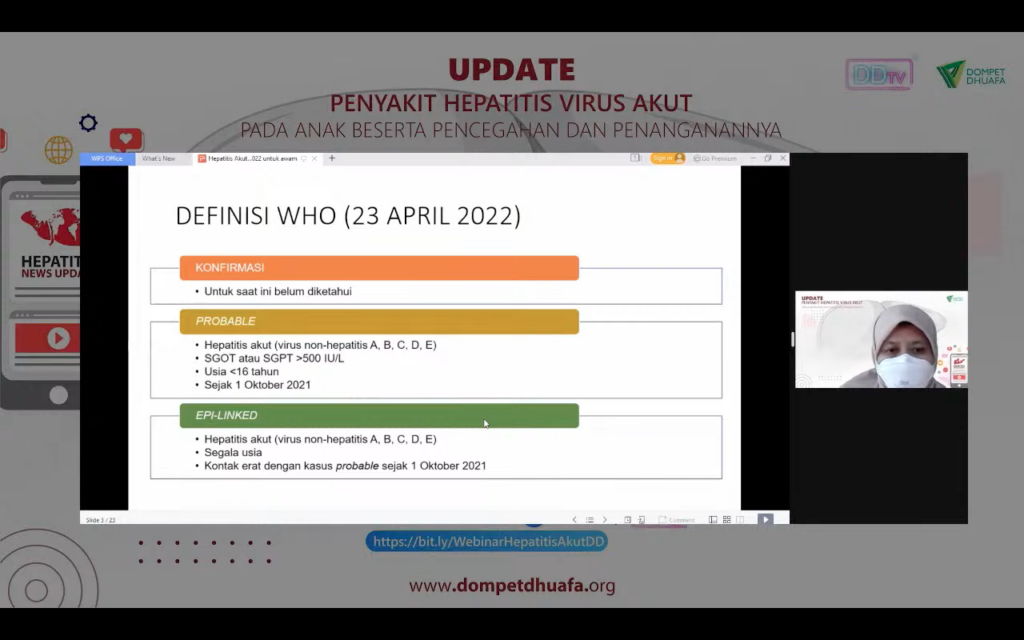
JAKARTA —-— Recently, a mysterious or acute form of hepatitis with an unknown cause has been affecting children around the world. According to WHO data as of May 1, there have been at least 228 probable cases reported from 20 countries, with more than 50 cases still under investigation.
Globally, the highest number of acute hepatitis cases has been reported in the United Kingdom, with 115 cases. Additionally, cases have also been reported in Italy, Spain, and the United States. In Indonesia, according to the Ministry of Health (Kemenkes), the disease has affected 15 children.
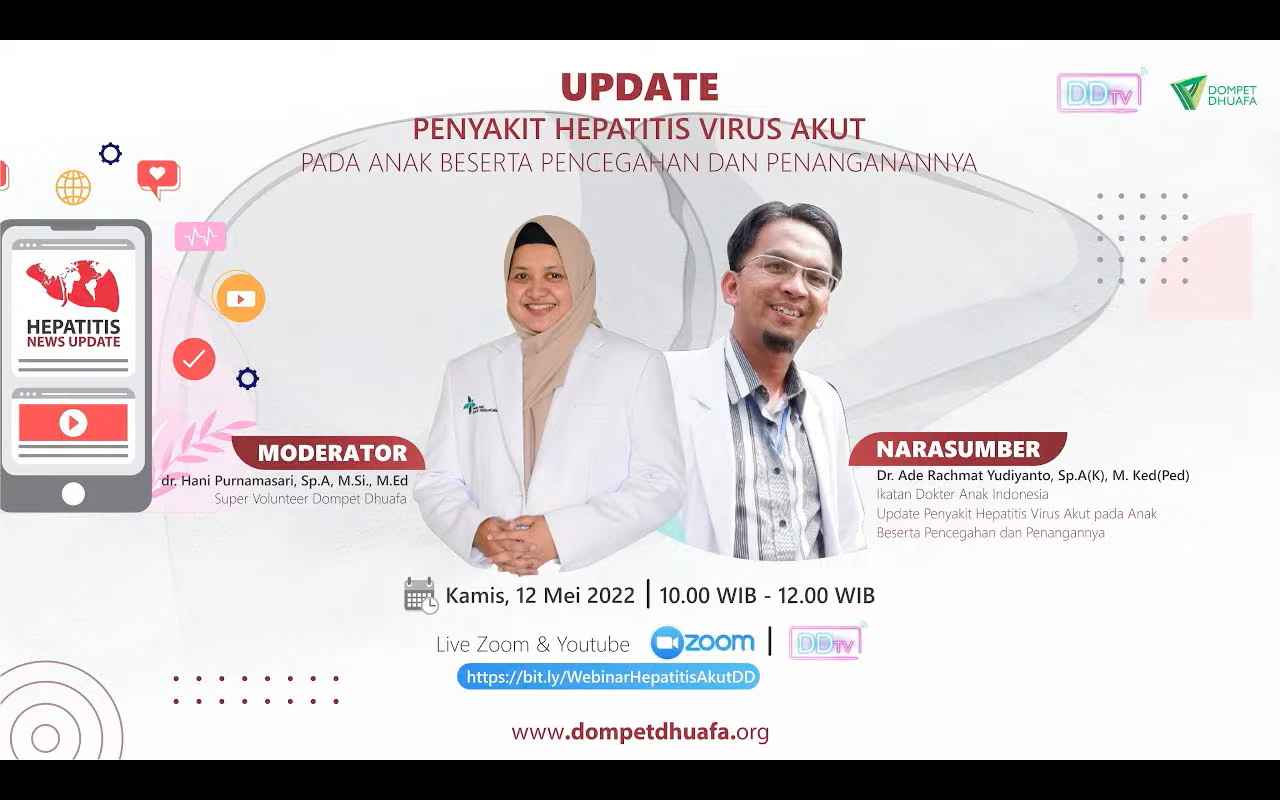
In an effort to disseminate information and education to the public, Dompet Dhuafa, through its Health Division, held a webinar and health discussion. With the theme of Acute Viral Hepatitis in Children and its Prevention and Treatment, Dompet Dhuafa opened a forum for discussion and provided updates on the current mysterious or acute hepatitis outbreak.
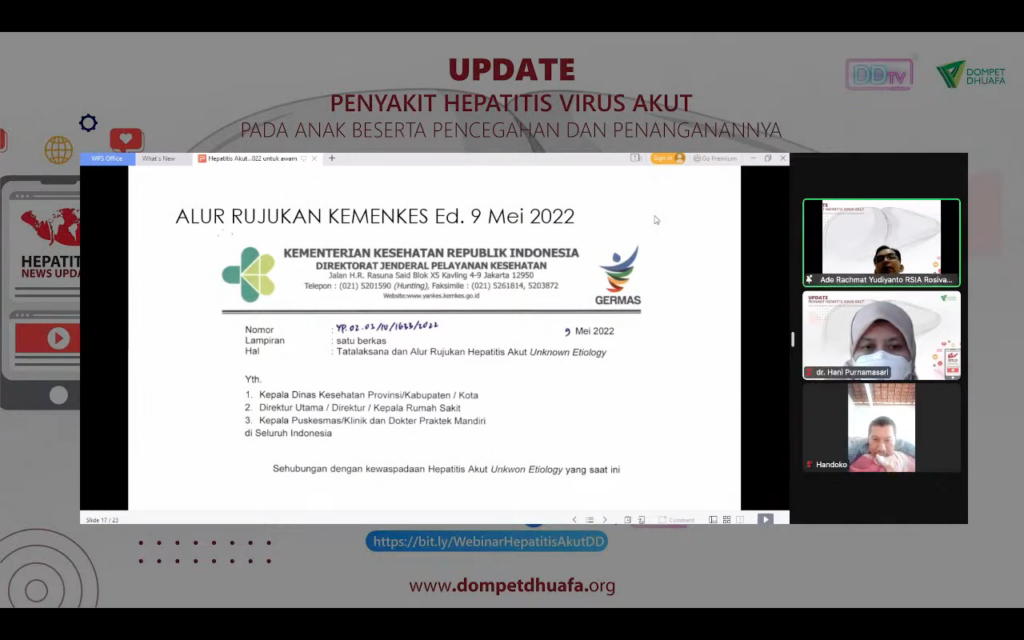
The webinar, held on Wednesday, May 12, 2022, was attended by Sifing Lestari as Senior Officer of Health Promotion at Dompet Dhuafa, Dr. Hani Purnamasari, Sp.A, who is a super volunteer at Dompet Dhuafa and acted as the event moderator, and Dr. Ade Rachmat Yudianto, Sp.A(K), M.Ked (Pediatrics) from the Indonesian Pediatricians Association (IDAI) as the speaker who will provide information about the Hepatitis phenomenon occurring in Indonesia.
In her speech, Sifing Lestari explained that Dompet Dhuafa initiated a campaign to promote and encourage the public to learn more about hepatitis.
“The public’s knowledge, commitment, and discipline in following health protocols are one of the keys to the success of Covid-19 control, so we learned from that and today Dompet Dhuafa is initiating a promotional effort to encourage the public to learn more about the potential of this acute hepatitis pandemic through the speakers and moderators here this morning. The hope, of course, is that in the future we can work together to become one of the actors or agents in preventing the spread of this disease even further,” said Lestari.

In addition, according to Dr. Hani Purnamasari, amid the ongoing Covid-19 pandemic, we are once again in a state of panic over news of a mysterious hepatitis whose cause is still unknown. “We are in the midst of a pandemic that we hope will soon be over, even though there are still a few cases, but it turns out that we are still in a state of panic over this pandemic, and we are hearing new reports about a mysterious hepatitis whose cause is still unknown,” said Dr. Hani.
Then, in his presentation, Dr. Ade Rachmat Yudiyanto explained the sequence of events surrounding the hepatitis issue, which began in October 2021 and continued until May 3, 2022. “Initially, this issue was reported by fellow doctors in Alabama, where there were five cases of children with severe hepatitis in October-November 2021. This severe hepatitis was suspected to be related to another virus. Then, on April 5, the UK also reported the same thing, so that on April 8, three other countries reported similar cases, and on April 15, 2022, the WHO said there was an outbreak of the cases reported earlier,” said Dr. Ade.
When there was a report of an outbreak, data was collected a week later from 12 countries showing 170 cases. In Indonesia, reports from April 16-30, 2022 showed a case that was suspected to be the type of case mentioned by the WHO. On May 1, 2022, there were 228 probable cases, 50 cases under investigation in at least 20 countries, and on May 3, 2022, there were a total of 163 cases in the UK, 72% of which were found to be adenovirus,” continued Dr. Ade.
Furthermore, Dr. Ade also explained how to prevent acute hepatitis, which can be transmitted through the digestive tract and respiratory tract in children. “For the digestive tract, prevention can be achieved by regularly washing hands with soap, ensuring food is thoroughly cooked and clean, not sharing eating utensils with others, avoiding contact with sick individuals, maintaining cleanliness in the home and surroundings. For the respiratory tract, prevention can be achieved by reducing mobility, wearing a mask when traveling, maintaining distance from others, and avoiding crowded areas,” explained Dr. Ade. (Dompet Dhuafa / PM)