


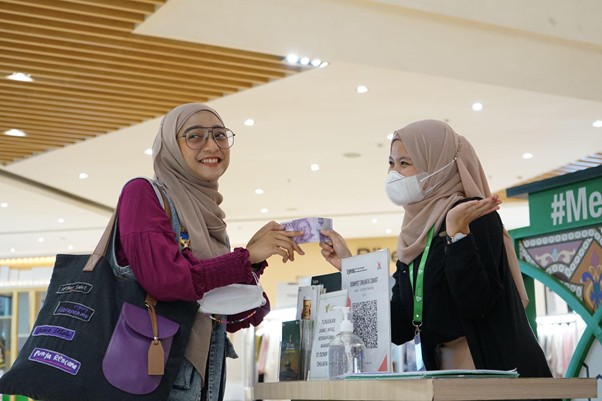
Inflation is a real challenge in managing cash waqf. If waqf funds are simply stored without being managed productively, their value has the potential to continue to decline from year to year. That is why Dompet Dhuafa, as a waqf trustee institution, has developed a productive waqf approach through an investment waqf scheme, a strategy to maintain the principal value of waqf while growing its benefits in a sustainable manner.
One concrete example of this approach can be seen in the investment waqf management program for the catfish farming sector in Parung, Bogor. At the end of 2024, Dompet Dhuafa invested Rp142 million from the surplus of its productive waqf management. These funds were not disbursed immediately, but were reinvested through a direct investment scheme with a musyarakah contract to Iwul Farm, a catfish farming business unit with more than seven years of experience.
This model allows waqf funds to function as productive business capital. The main principle is clear: the principal of the waqf must remain intact, while its benefits are distributed. In this way, the cash waqf is not only protected from inflation, but also has the opportunity to grow and generate long-term social benefits.
This waqf investment is designed to be temporary with a term of four years. In the first two years, the managing partner is required to ensure that the business reaches the Break Even Point (BEP). This means that the principal capital of the waqf amounting to IDR 142 million must be returned in full to the Dompet Dhuafa trustee.
In the following two years, the business is targeted to generate a Return on Investment (ROI) of 100 percent. The profits are divided with a scheme of 25 percent for Dompet Dhuafa and 75 percent for Iwul Farm. This scheme reflects the principle of prudence in waqf with measurable, transparent risks, and remains focused on protecting waqf assets.
In one harvest, Iwul Farm usually manages to harvest around 500 kilograms of catfish. With a harvest frequency of up to six times a month, total production can reach 3 tons per month. With an average selling price of IDR 21,000 per kilogram, the potential monthly turnover reaches IDR 63 million.
Currently, Iwul Farm manages an area of 3,000 square meters with 100 ponds, consisting of biofloc ponds and nursery ponds, and employs four people. This economic activity not only maintains the value of waqf, but also creates jobs and drives the local economy.
The owner of Iwul Farm, Ash Sunny Muhammad, said he was grateful to be involved in the management of waqf investments. According to him, the concept of waqf presents a deeper spiritual dimension than ordinary investments.
“The essence of waqf is to hold the principal and share the benefits. Therefore, we ensure that the capital is maintained, while the results can be enjoyed by those who are entitled to it,” he said.
According to him, although many parties offer investments, this is the first time he has received capital from waqf funds. For him, managing a business with waqf funds requires a higher level of caution and trust in God. This is because what is being managed is not just business capital, but a trust. He and his team also feel more connected to God because what they are managing is His money.
The profits earned by Dompet Dhuafa from this scheme do not stop at one point. According to Dini Khoirinnisa, Dompet Dhuafa’s Waqf Development Officer, part of the investment returns will be reinvested in other productive waqf programs, and the rest will be distributed to waqf beneficiaries (mauquf alaih).
“These funds will be used to support Dompet Dhuafa’s educational programs,” she explained.
This is the key to investment waqf. The benefits continue to flow, are not used up once, and are able to meet long-term social needs.
Unlike conventional waqf, which generally takes the form of immovable assets, investment waqf allows waqf funds to be managed in productive sectors such as agriculture, livestock, and micro-enterprises. Through professional management, cash waqf becomes an instrument that is adaptive to modern economic challenges, including inflation.
Dompet Dhuafa has long developed this model as part of its efforts to build community economic independence. In the future, investment waqf management will continue to be expanded to other potential sectors, such as organic agriculture, sustainable livestock farming, and renewable energy.
With this strategy, waqf is not only a charitable act of worship, but also a sustainable economic and social solution.
Dompet Dhuafa is able to maintain the principal, grow its value, and expand its benefits for those in need. (Dompet Dhuafa)
Read also:
Cash Waqf: Definition, Virtues, and Advantages

Text and photos: Riza Muthohar
Editor: Dhika