


SOUTH TANGERANG, BANTEN —— Due to the Covid-19 pandemic, many people have experienced a decline in their economic conditions, making it difficult for them to meet their daily needs, especially food. The food supply for urban communities still depends on the availability of produce from farmers in rural areas. However, farmers are not benefiting from their harvests because the prices they receive are significantly lower than those in urban areas.
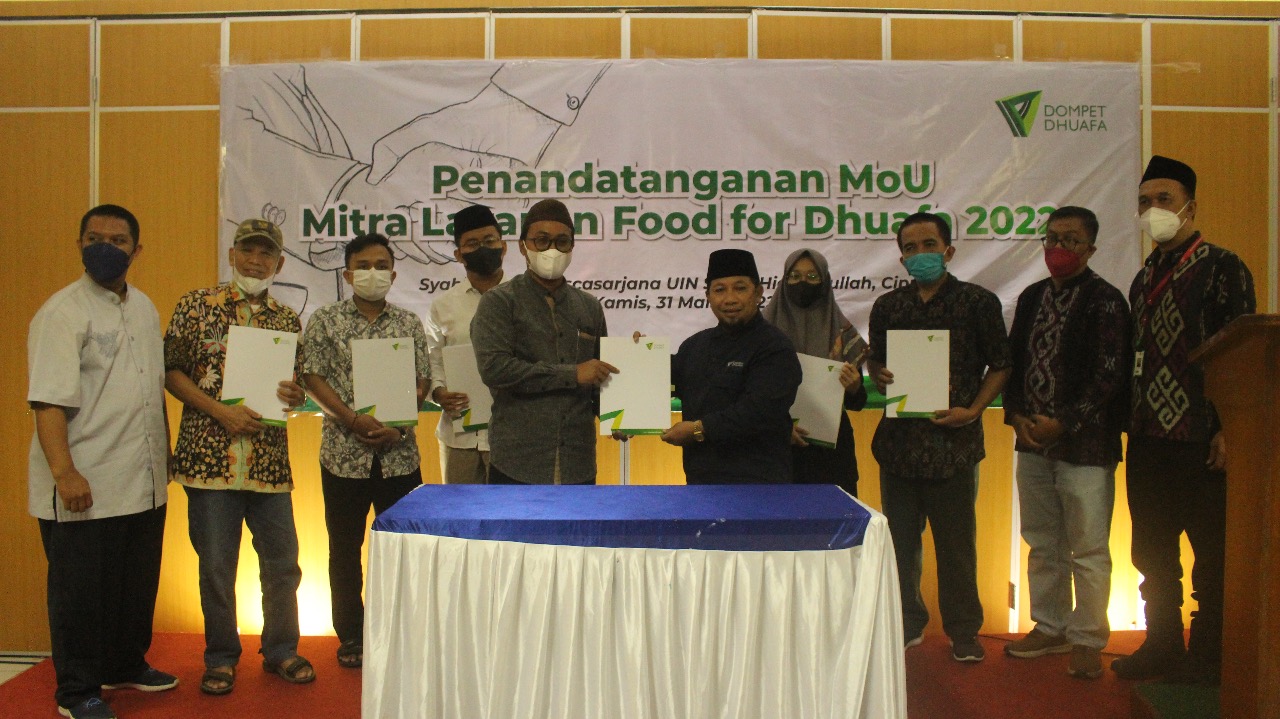
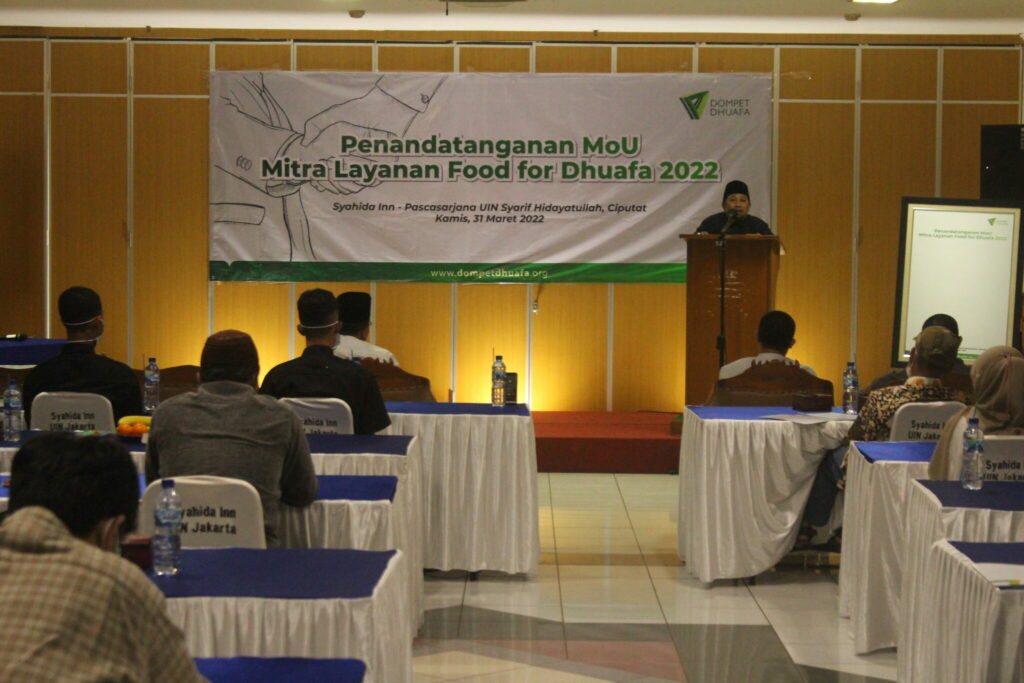
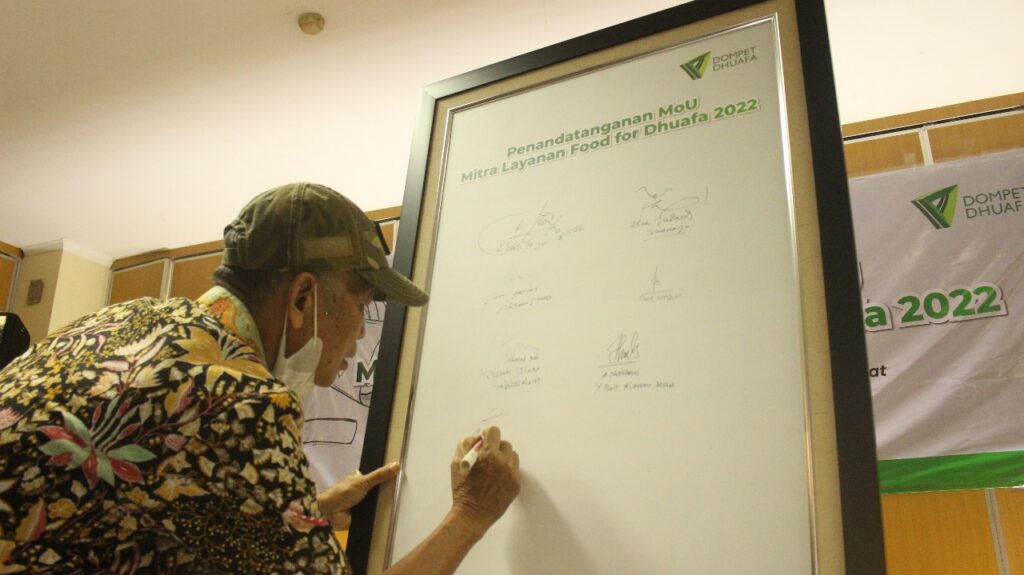
This situation led Dompet Dhuafa, through the Community Service Agency (LPM), to sign a cooperation agreement to strengthen food security during Ramadan 1443 H with community-based partners at Wisma Syahida Inn, Ciputat, South Tangerang City, Banten, on Thursday (31/3/2022).
In this food security program, Dompet Dhuafa empowers farmers to cultivate more than 1,000 hectares of rice fields throughout Indonesia. This step is an effort to form a supply chain and value chain for agricultural products, where agricultural products will have their own market, known as a closed-loop.
Explained directly by Ustaz Ahmad Shonhaji, Director of Da’wah, Culture, & Community Service at Dompet Dhuafa, the Food for Dhuafa Program is an effort to improve national food security, which was shaken by the Covid-19 pandemic. In addition, this program aims to improve the welfare of farmers as the main goal of the empowerment that will be carried out in each stage.
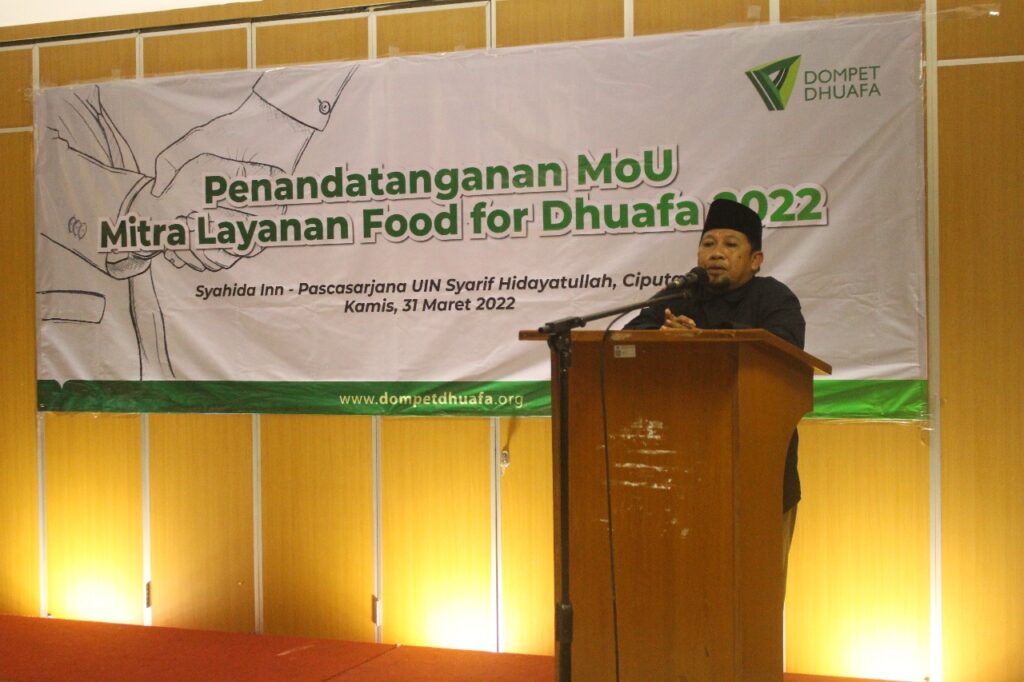
Food for Dhuafa is one of Dompet Dhuafa’s programs for national food security, in which we empower 1,000 hectares of agricultural land and empower farming communities through farmer groups in several areas that we assist in Banten, Lampung, Java, and Sumatra. The problem faced by farmers is that they always encounter difficulties in selling their harvest after the harvest. Through Food for Dhuafa, we act as an intermediary between farmer groups, farmers, and the community. This is what we call the concept of empowerment from upstream to downstream,” explained Ustaz Ahmad Shonhaji.
The involvement of partners in this program is no joke. A total of 997 partners will be directly involved in distributing food supplies to those in need. The large number of partners participating in this program is expected to expand the reach of beneficiaries throughout Indonesia.
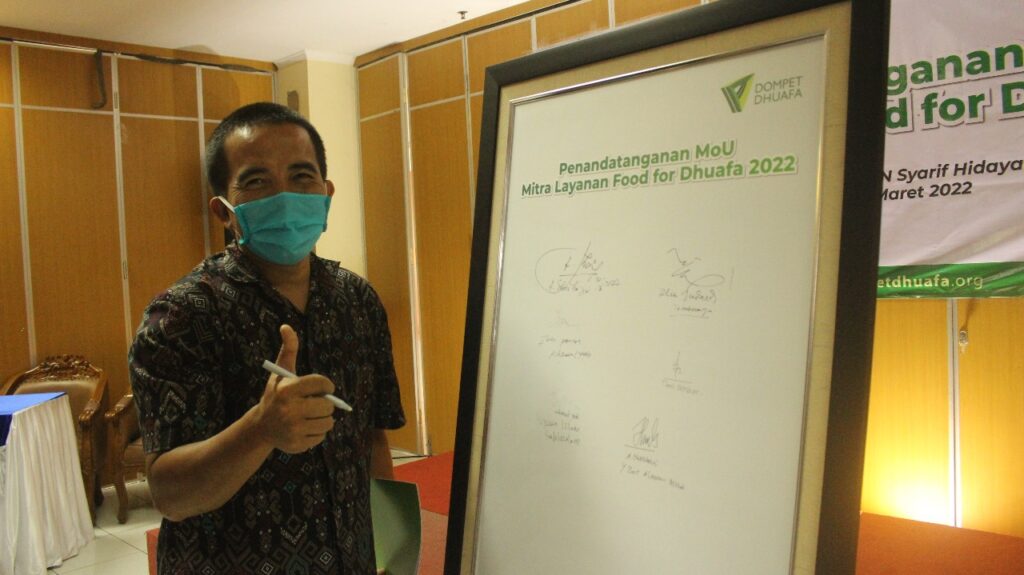
“We involve as many as 997 beneficiary partners, not individuals but partners. These partners will also be tasked with distributing to other beneficiaries. Because our concept is a strategic alliance, how we partner with the community so that the network of togetherness and the spread of goodness will have even wider benefits,” continued Ustaz Ahmad Shonhaji.
The number of partners, which is almost in the hundreds, was not chosen arbitrarily, but their credibility and integrity were the main considerations for Dompet Dhuafa to collaborate with them. As explained by Kamaludin, Senior Officer of Social Services at Dompet Dhuafa, their legality as an institution is a key requirement to ensure that aid reaches the community appropriately.
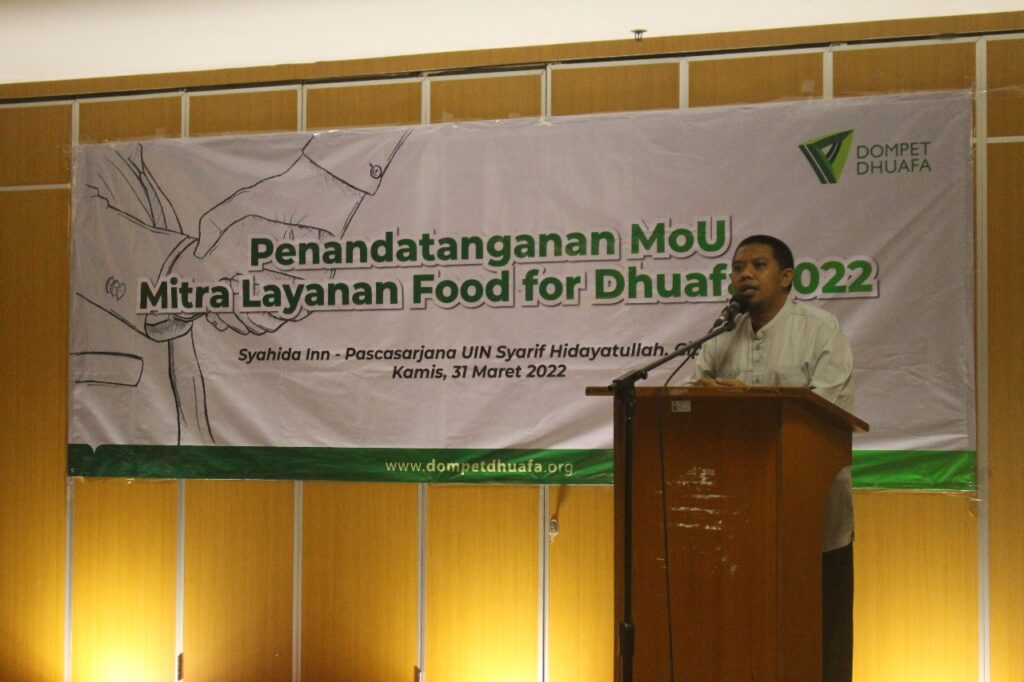
“We need legal standing. If there are mosques or communities that do not yet have a foundation deed, we ask for a letter of domicile from the neighborhood or community association to ensure that our partners are not fictitious and actually exist in the neighborhood,” said Kamaludin.
One of the partner representatives present at the event expressed his hope that the collaboration between Dompet Dhuafa and other parties would not be limited to this occasion. “We are certainly very happy to be directly involved in alleviating the burden of others, especially during Ramadan. We hope that this collaboration will not stop here but will continue through various other programs, especially food programs,” said Arwan Sutriawan, Head of the Ghofur Anwar Islamic Boarding School, which is one of the partners in the Food for Dhuafa Program. (Dompet Dhuafa / Arlen)