


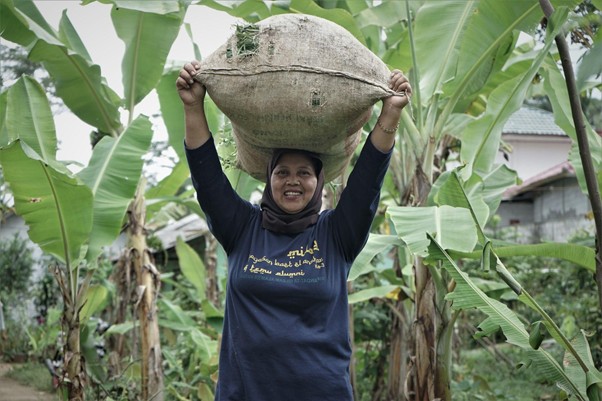
SUKABUMI, WEST JAVA —-— On April 21, 2026, Kartini Day serves as a moment to commemorate the struggles of resilient women who are not only part of history but also live among us today. These female heroes are often present in our daily lives, quietly fighting for their families and choosing to keep moving forward despite difficult circumstances.
Take Yuyum Susilawati, for example—a resilient woman from Sukabumi who proves that Kartini’s spirit lives on within her. In the livestock farming industry, a field often dominated by men, Yuyum stands out as a figure who supports her family and sends her children to school through sheep farming.
Who would have thought that from a simple pen in the land of Pasundan, Sukabumi, would emerge the story of a warrior woman who turned livestock farming into a means of creating opportunities for life. Being the backbone of the family is no easy feat, especially for a woman. That is what Yuyum faces every day. By working tirelessly as a farmer, she continues to strive to meet her family’s needs amidst various limitations.
Although the journey is full of challenges—often making it difficult to meet daily needs—Yuyum never gives up. Her tireless work and sacrifices have gradually led her to results she never imagined before.
“Alhamdulillah, my husband works in construction—when there’s work available—so we raise sheep and farm on the side, managing the vacant land,” Yuyum told the Dompet Dhuafa team on Eid al-Adha in 2023.
Read also: Born from Empowerment, This Kartini is Now Empowering Others
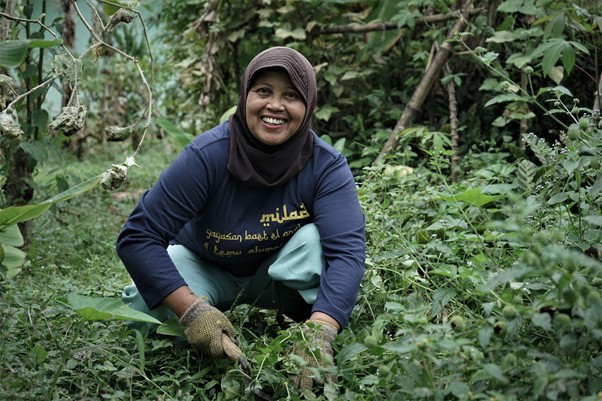
Yuyum is a livestock farmer partner and active board member of the Riung Mukti Multi-Purpose Livestock Farmers Cooperative (KPSU) in Sukabumi—a livestock empowerment partner of the Tebar Hewan Kurban (THK) program, which has been supported by Dompet Dhuafa since 2009. As a native of Sukabumi, Yuyum is known in the community as a resilient and hardworking woman.
Gradually, Yuyum’s path began to take shape when she joined as a beneficiary of Dompet Dhuafa’s Tebar Hewan Kurban (THK) program. That opportunity became a pivotal moment in her life. In 2012, Yuyum became the only female farmer affiliated with the Riung Mukti Multi-Purpose Livestock Farmers Cooperative (KPSU) in Sukabumi
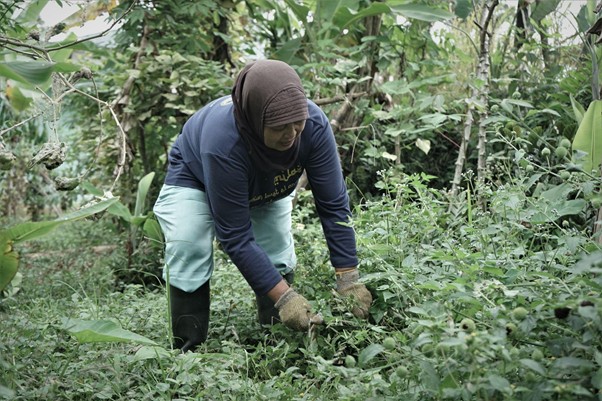
Undeterred, as a hardworking person, Yuyun is used to gathering her own feed, managing her livestock directly, and raising her family well. One of the things she is most grateful for is that, thanks to the THK program, Yuyun has been able to send both of her daughters to college.
“Alhamdulillah, through this program, I take care of the goats while my children can go to school—it truly moves me. I joined because I had no funds to send them to school. Alhamdulillah, this opened up a path. This blessing has brought so many benefits, so I’ll keep participating—my second child is now in school,” Yuyun said, her voice filled with emotion.
Thanks to her efforts, her daughter is now a teacher at the junior high school level. Previously, she majored in a D3 Education program, while her other daughter majored in banking.
“So, until now, alhamdulillah, she’s teaching and making a difference at the junior high school,” she added.
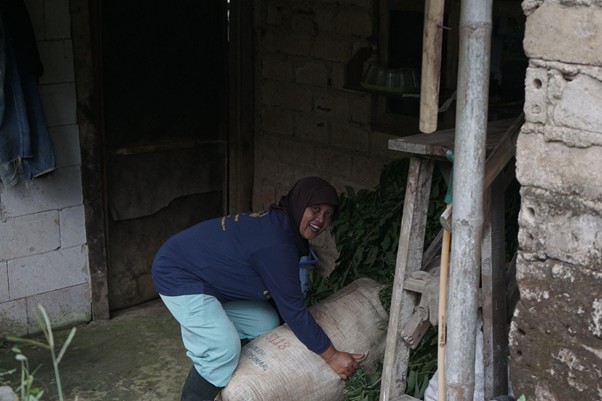
Her hard work as a livestock breeder and farmer has been enough to support her family financially; in fact, Yuyum has been able to buy two motorcycles, which she uses to make her work of cutting grass for her sheep’s feed easier, as well as to support her daily activities.
Although she is the only female farmer there, it has not dampened her enthusiasm to continue learning good farming practices, ranging from feed management, livestock health, to livestock reproduction.
Her economic situation improved significantly when Yuyum took over the management and business of her sheep farm. Yuyum, who completed only elementary school, remains committed to continuing her education through a catch-up program and has managed to send both of her daughters all the way through college.
Thanks to her perseverance and dedication to the livestock industry, Yuyum was entrusted with the role of Chairperson and has served for two years at the Panggugah Lumaku Farmers’ Group, which translates to “For Us to Unite.”
Yuyum is very grateful to be part of the Panggugah Lumaku Herders’ Group; she dreams of continuing to be a strong and empowered female herder.
“When we get together for meetings, we share our experiences. There are a dozen or so members here—herders who take care of their own goats in their respective pens,” added Yuyum.
“As for me, I prioritize having fun while we work together with the members, eating together. Just having a good time,” she continued.
In addition to being active in several organizations, Yuyum is known for her trustworthiness and quickly grasping the livestock programs at KPSU Riung Mukti, so that today Yuyum is reaping the rewards of her hard work.
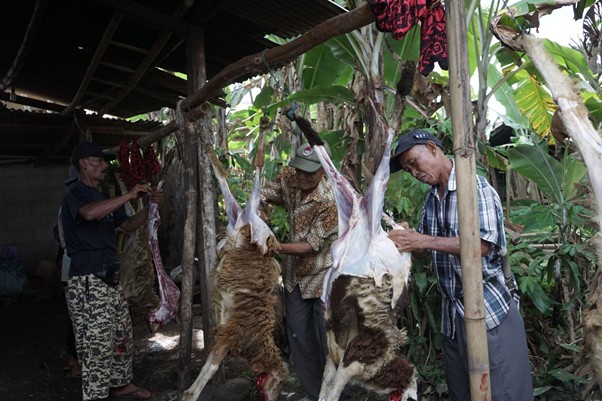
“There are many benefits for all the residents; here, Alhamdulillah, everyone gets to eat goat meat. Thank you to Dompet Dhuafa; every year, the Sacrificial Animal Distribution (THK) makes everyone here happy. They’re joyful—back then, there were still some who hadn’t eaten goat meat, but now it’s available every year. It’s been 12 years of eating goat meat consistently. Everyone is so enthusiastic during Eid al-Adha,” explained Yuyum.
Read also: THK Moves Peoples Livestock with 3 Sure Things
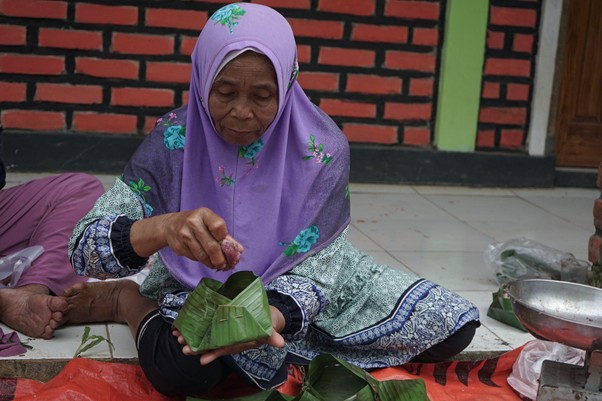
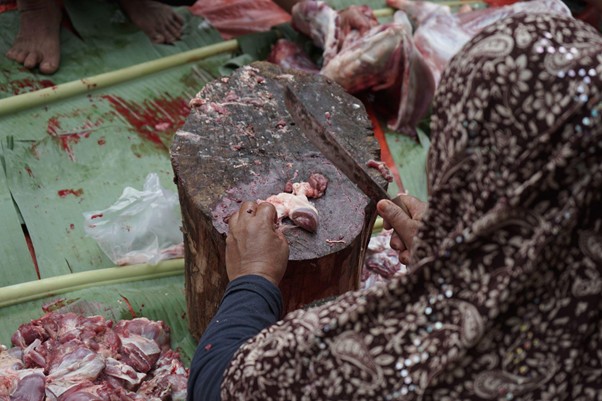
Yuyum has successfully demonstrated the potential of women in the livestock industry, proving that women are equally capable of managing livestock and their farms effectively. She has also empowered four other women to help manage the farm.
Amid the dominance of male farmers, Yuyum stands out with a different story. As one of the few women dedicated to the world of livestock farming, Yuyum’s journey in building her business, facing various challenges, and ultimately succeeding in surviving and growing as she has today, makes her a resilient and inspiring figure.
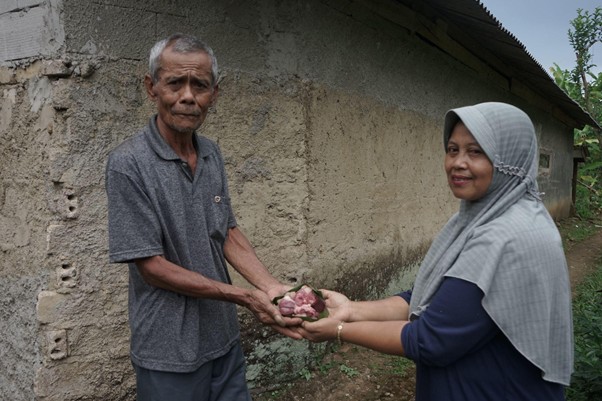
“Thank you so much; the qurbani donations from Dompet Dhuafa keep coming. May they bring great benefits, and may they increase in the future as well—hopefully everything goes smoothly,” Yuyum concluded.
Yuyum’s journey certainly hasn’t been easy. However, through Dompet Dhuafa’s THK Program, Yuyum has found the space to grow and take bigger steps. It’s not just about raising livestock, but about the courage to believe that life can change. From there, Yuyum hasn’t just survived—she’s also slowly building a better future for her family
Through the efforts of the Dompet Dhuafa THK Program, contribute to fostering more resilient women who can stand on their own two feet. Because, in truth, female heroes aren’t always remembered through history, but through their courage and struggle to keep living. (Dompet Dhuafa)
Text and photos: Anndini Dwi Putri
Editor: Dhika Prabowo