


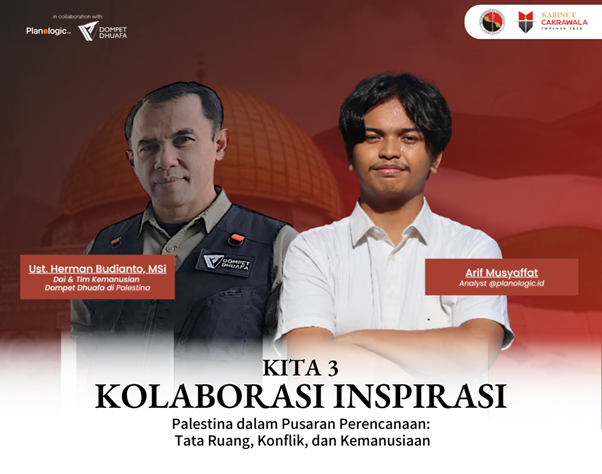
JAKARTA — “A city is not just about urban planning, but also about justice and the right to life.” This statement serves as the central theme of the webinar titled “Palestine in the Vortex of Planning: Urban Planning, Conflict, and Humanity,” held on Sunday (May 25, 2025) online by Dompet Dhuafa, the Indonesian Student Association of Urban Planners (IMPI), and Planologic.id.
In a reflective and empathetic atmosphere, the webinar served as a public forum to examine how the Palestinian conflict not only claims lives but also dismantles the social and spatial structures of cities—creating spatial inequalities, mass displacement, and the erosion of civilians’ right to life.
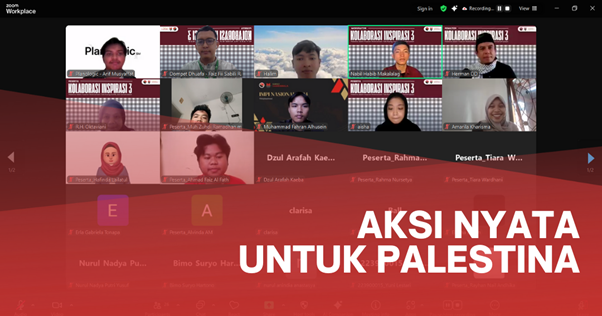
The webinar was attended by approximately 25 participants, including urban planning students, social activists, and members of the general public. Despite its modest size, the participants’ presence demonstrated that solidarity is not about numbers, but about those who attend with genuine commitment and thoughtful engagement. Dompet Dhuafa, as the initiator of the event, collaborated with IMPI (Indonesian Student Association of Urban Planners) and Planologic.id to explore Palestine from the perspectives of spatial injustice and humanitarian crisis.
Read also: Why Muslims Should Care About Palestine: A Religious and Humanitarian Perspective
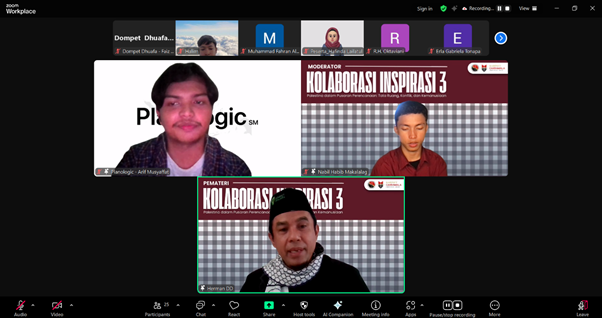
This webinar features two speakers from different backgrounds, yet complementary in addressing the Palestinian issue—both from a humanitarian and urban planning perspective. The first session was presented by Ustaz Herman Budianto, M.Si, a religious scholar and member of the Humanitarian Team at Dompet Dhuafa in Palestine, who also serves as General Manager of Legal & Risk Management at Dompet Dhuafa.
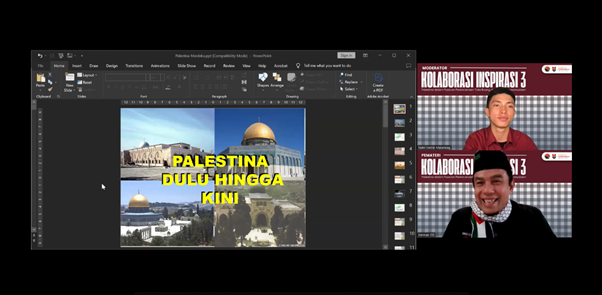
In his presentation titled “Viewing Palestine Through a Humanitarian Lens,” Ustaz Herman invites participants to delve into the long history of Palestinian occupation spanning over 77 years. He outlines how the Zionist occupation since 1948 has led to the displacement of over 800,000 Palestinians from their homes and various waves of massacres—such as the Deir Yassin tragedy (1948), Sabra & Shatila (1982), and the 2023–2024 aggression that killed tens of thousands of civilians.
More than just a reflection on history, Ustaz Herman called for concrete action by educating the public and rallying humanitarian aid for Palestine, which is currently facing open genocide. He also emphasized the role of Islamic philanthropy in alleviating the suffering of victims through the distribution of food aid, emergency health services, and educational support for affected children.
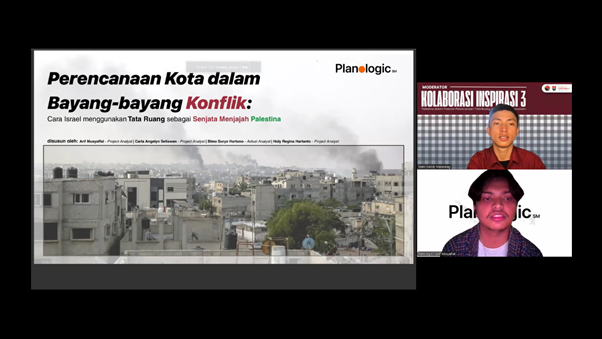
The second session was continued by Arif Musyaffat, Analyst from Planologic.id, who presented a paper titled “Urban Planning in the Shadow of Conflict: A Case Study of Palestine.” He revealed how Israel uses spatial planning as a tool for colonization and systemic oppression against Palestinians. In his presentation, Arif highlighted that cities in Palestine have undergone significant transformations post-conflict, with a permanent reduction of public spaces by 78% and changes in road structures due to military attacks.
Read also: Diplomatic Confessions of Champa Muslim Community in Vietnam to Coordinating Minister for PMK RI
He also explained how checkpoints, settler roads, and separation walls are part of spatial injustice practices that violate Palestinians’ rights to mobility, housing, and public space. He concluded with a reflection that today’s urban planners need to understand how space can be a tool of power, and how to bring about spatial justice as a form of global solidarity.
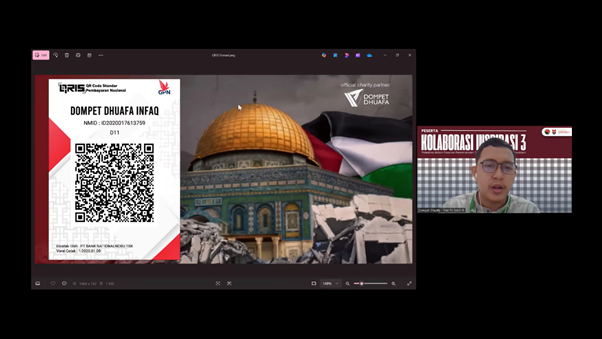
As a concrete expression of solidarity, IMPI, in collaboration with Dompet Dhuafa, invited all participants to make donations via QRIS available during the event. These donations will support Dompet Dhuafa’s various humanitarian programs in Palestine, including food assistance, healthcare, clean water, and emergency shelter.
“No donation is too small. No matter how small, insha’Allah, it will mean a lot to them,” said the MC at the end of the event.
Read also: Dompet Dhuafas Musala at SLANKs Four Satoe Night Market Concert
This webinar is not only intellectually stimulating but also touches the heart and soul. This collaboration demonstrates that student communities, humanitarian organizations, and academic communities can work together to create a solidarity movement that is not just talk, but action. Dompet Dhuafa hopes that initiatives like this can continue, whether in the form of education, public discussions, or direct humanitarian actions. Because, in essence, an ideal city is not only built with good planning, but also by people who care. (Dompet Dhuafa)
Text and photos: Faiz DD Z-Pro
Editor: Dhika