


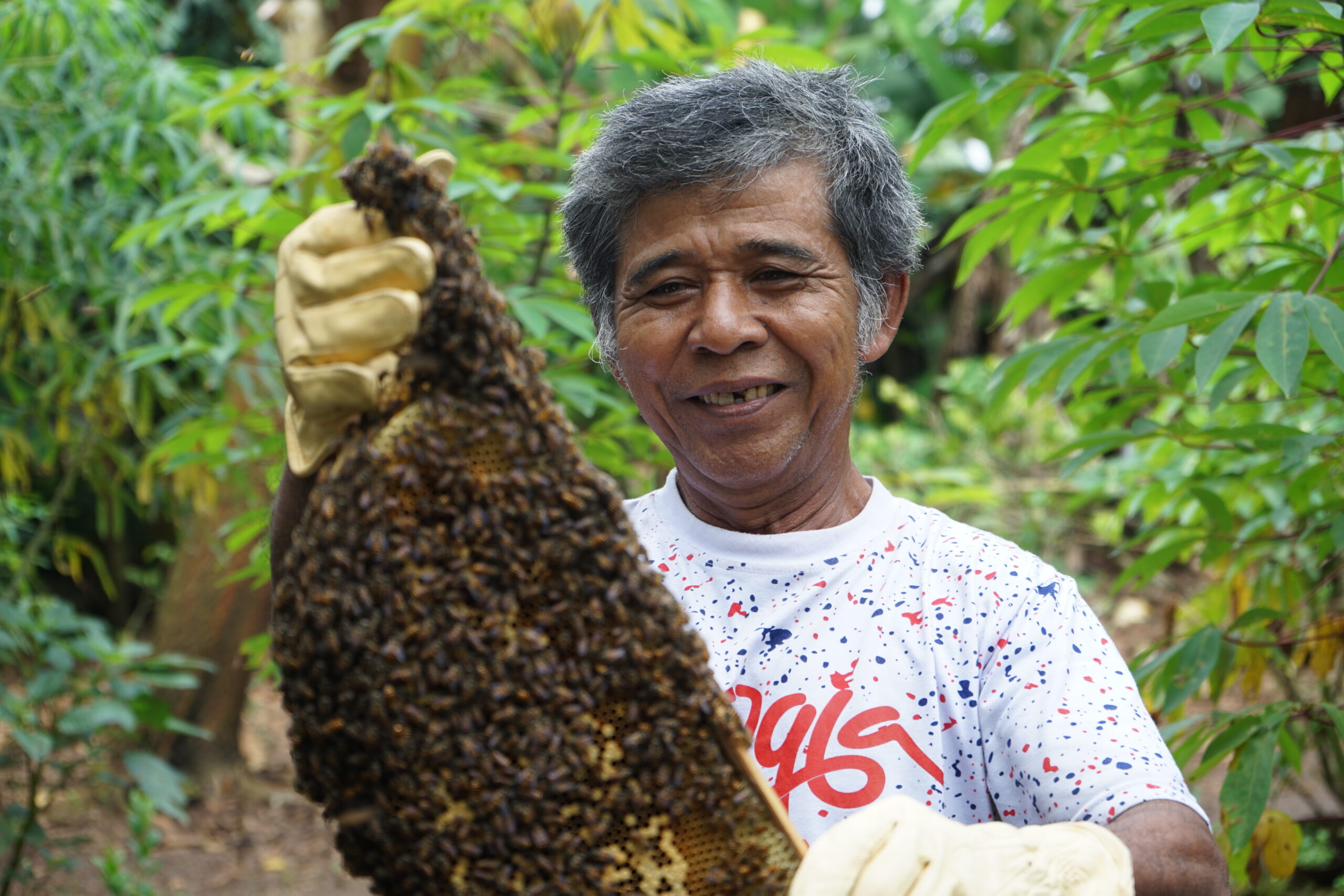
GUNUNGKIDUL —— For the most part, beekeeping and honey production in the Wanagama Forest is a side job. However, there are also some people who specialize in beekeeping as their main source of income. One of them is Mr. Sugio (55), a resident of Banaran 1 Hamlet, Banaran Village, RT 5 RW 1, Playen Subdistrict, Gunungkidul Regency. He has been a beneficiary of the Grand Making Dompet Dhuafa program since 2019.
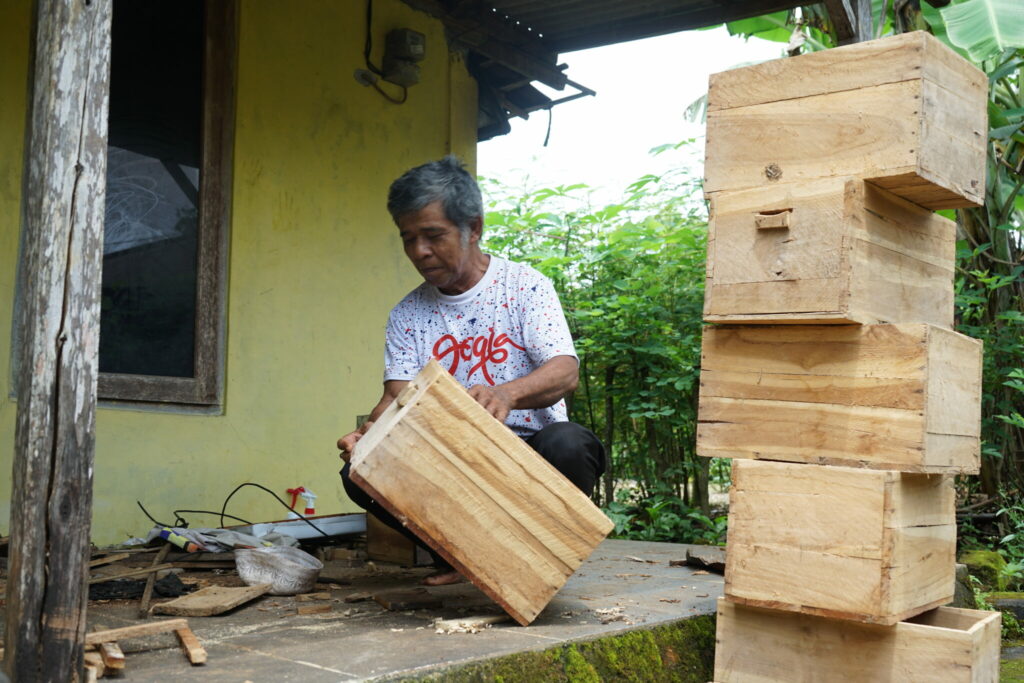
Mr. Sugio now lives alone in his house. His three adult children have their own families, and his wife has passed away. In addition to bee and honey farming, he also makes boxes for wasp colonies on a daily basis.
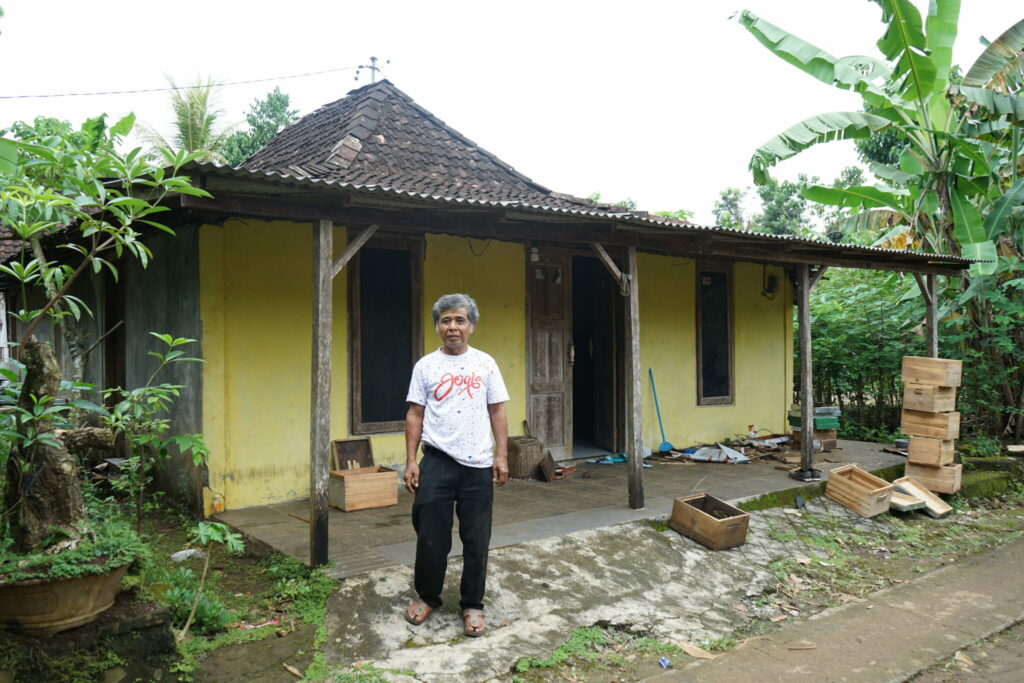
He admitted that he used to work as a farm laborer. He also used to sell satay, but now he can no longer do that and focuses solely on honey and forest bee farming.
“I used to be a farm laborer, and I also sold satay. Honey farming was just a side job. When my wife passed away, I started raising bees full-time. Now, I am no longer able to do heavy work,” he told the Dompet Dhuafa team when they visited his home on Tuesday (6/7/2022).
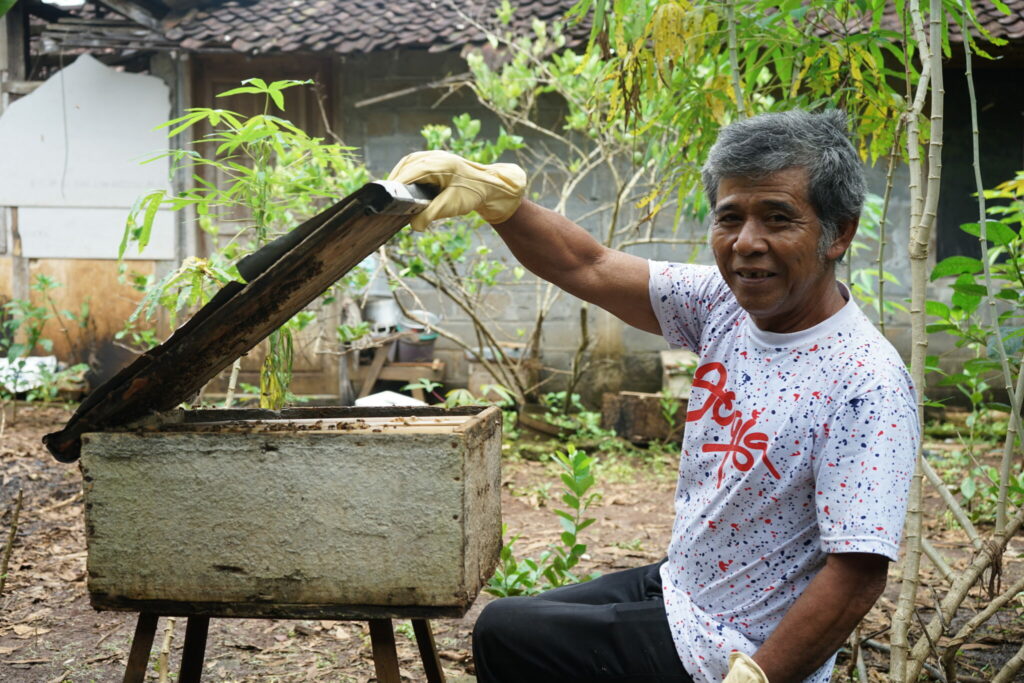
Mr. Sugio has placed his beehives in two locations. Some are placed right next to his house, but the main ones are in the forests. Currently, there are six beehives next to Mr. Sugio’s house, and 50 others are placed separately in the Wanagama forest.
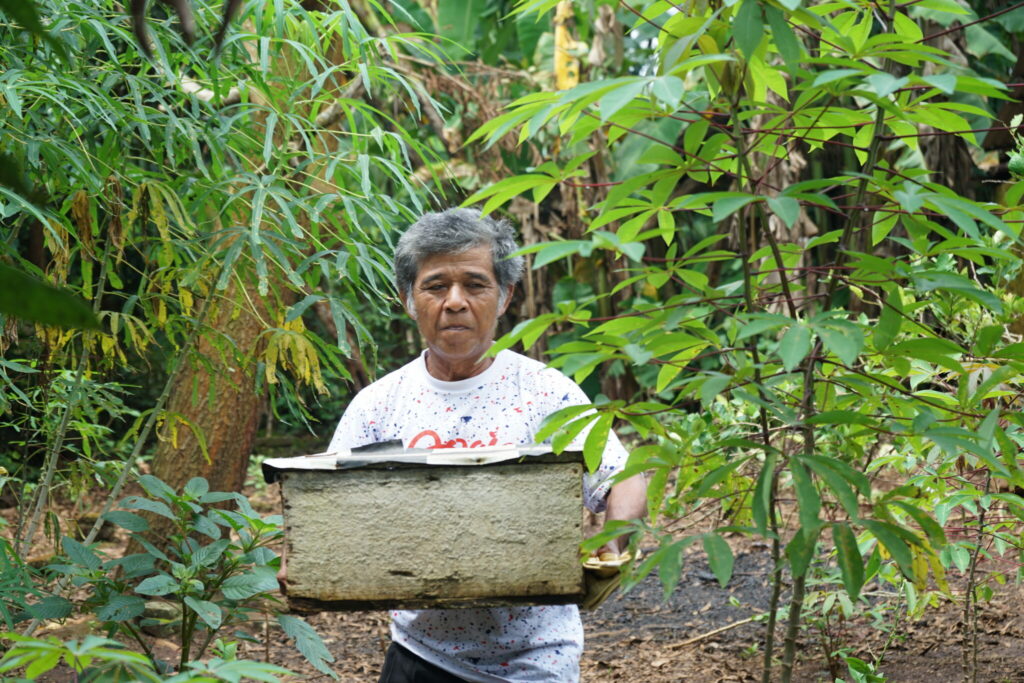
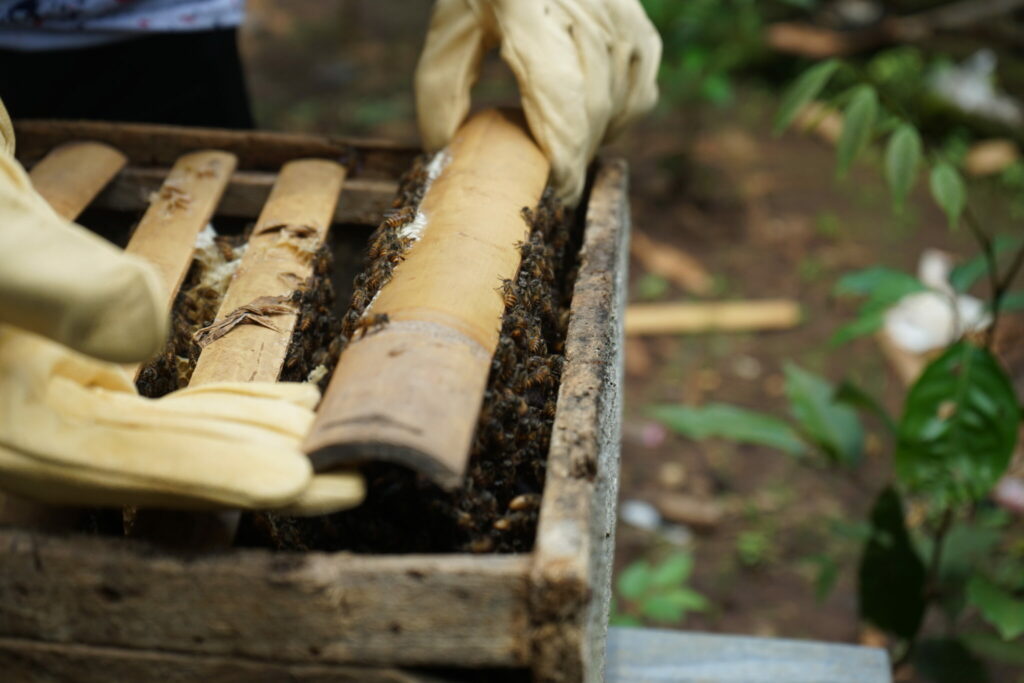
Every day at around 8:00 a.m., he rushes to the forest with his clothes and various equipment. By midday, he returns home to check the honey boxes next to his house.
The Market and Maximum Price
He has been keeping bees for a long time. He admits that he started keeping forest bee hives when he had his first child. He has explored various forests. However, for him, the Wanagama forest is the best honey producer among the others. Therefore, he now chooses to focus on honey cultivation in the Wanagama Forest. Of course, by developing livestock in the best land, the results will also be maximized.
Luckily, he said, he is a member of the “Omah Madu” group with Dompet Dhuafa. There were some difficulties in marketing his honey harvest. After joining Omah Madu and with the addition of the “Sumber Rejeki” cooperative, he no longer needs to worry about selling his honey. The cooperative will facilitate the sales process, ensuring the best possible price. The role of Omah Madu and the Sumber Rejeki Cooperative is like an oasis for honey farmers in the Wanagama Forest.
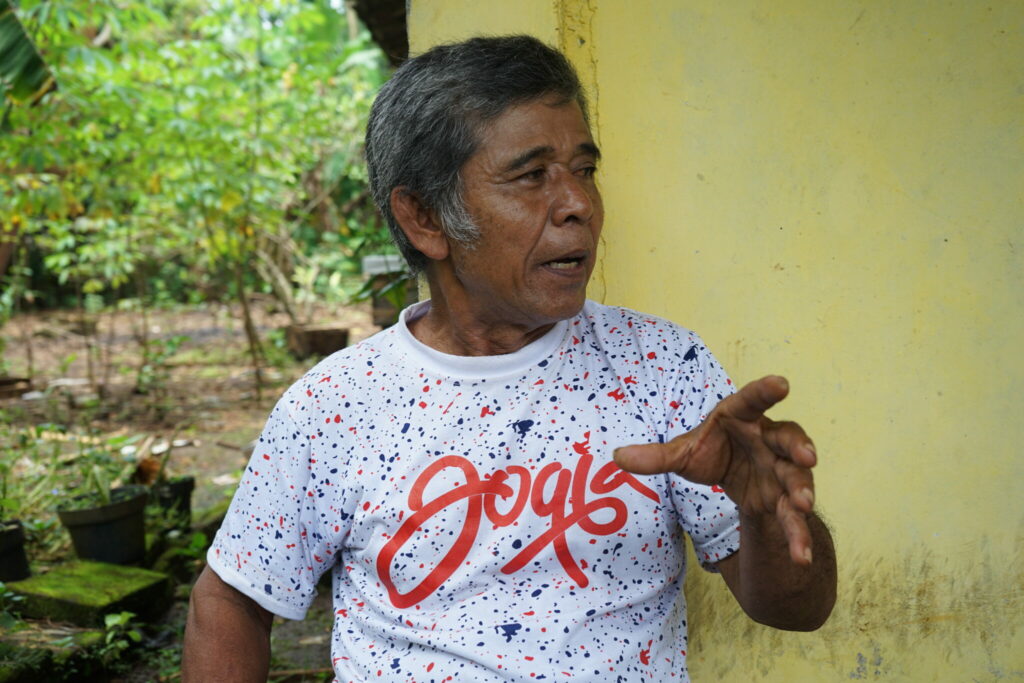
“In the past, we used to pack our honey in used bottles and wait for someone to come and buy it. But now we no longer have to wait for buyers. Everything is collected by the cooperative. With neat packaging, the cooperative will market our harvest. So we can rest assured with this market certainty,” he said.
Since receiving assistance from Dompet Dhuafa, during harvest season, one of Sugio’s boxes can produce 1.5 liters of honey. On one occasion, he even got 2 liters of honey from a single box. Thus, this support has yielded sweet results for his honey harvest. Of course, with the increase in harvest, Sugio’s family income has also increased. (Dompet Dhuafa / Muthohar)