


JAKARTA -– The term “communal industry” may still sound unfamiliar to most of us. This is not surprising, as it is rarely used by the general public. People are more familiar with the term “social enterprise” – a business concept that allocates profits to create positive social and environmental impacts.
However, unlike social enterprises, which are owned by individuals or groups, the focus of the communal industry lies in the ownership and management of resources that are entrusted to the community.
The smallest example of the communal industry is a cooperative. From supplying raw materials to managing resources, everything is handled by cooperative members. Cooperative members play a dual role: they are both owners, drivers, and customers of the cooperative’s services.
Over time, Dompet Dhuafa has planted hope for the mustahik in various ways. This vision is reinforced through one of its programs with a communal industry concept, namely IKON or Industrial Community Pineapple Processing, which is located in Cirangkong Village, Cijambe District, Subang Regency, West Java.
This program, which is part of the management of productive zakat, is Dompet Dhuafa’s first fruit processing plant (food processing management). The processing plant is named Rumah Industri Nanas (RISIN) and was established in 2018. Its products include pineapple juice and jam.
Read also: DD Farm Madiun Becomes a Bridge of Knowledge for Local Farmers
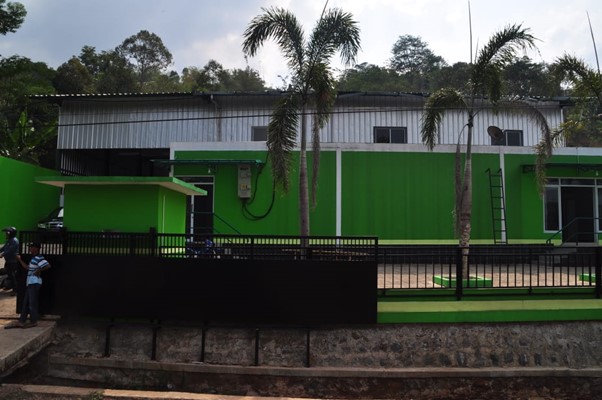
Initially, the area had potential pineapple farmland. Unfortunately, this was not accompanied by adequate management and the economic conditions of farmers and the community had not developed rapidly.
Therefore, Ana Rahmawati, Director of Economic Empowerment at Dompet Dhuafa, introduced this program with the aim of absorbing human resources in rural areas; addressing the low value-added of pineapple products; improving pineapple distribution from farmers; and opening marketing access for local communities.
The establishment of RISIN as a community-based industry enables large-scale production using technology while maintaining the role of the community. Dompet Dhuafa involves local community entities in empowerment efforts, from local farmers to workers at RISIN. The peeling and cleaning of the fruit are still done by residents in processing homes, and the prepared fruit is then sent to the RISIN factory.
Ana added that efforts to promote community prosperity, particularly in rural areas, are also carried out through RISIN share ownership, which will be majority-owned by beneficiaries or mustahik.
Read also: Learning Facilities for Santri, Green House Lido Dompet Dhuafa Transplanting Hydroponic Melon Seeds
“The point of this communal industry is that the factory is owned by the community, or in this case, the beneficiaries (mustahik). Ninety-seven percent of RISIN’s shares will be owned by the mustahik, and three percent by Dompet Dhuafa. This is because Dompet Dhuafa is also responsible for maintaining the equipment and monitoring profits to ensure that this program runs in the long term,” explained Ana.
This is in line with the goal of empowering the mustahik. So that the wheels of the economy, both individually and communally, can continue to turn and generate long-term benefits. (Dompet Dhuafa)
Text: Hany Fatihah Ahmad
Photo: Anndini Dwi Putri
Editor: Dhika