


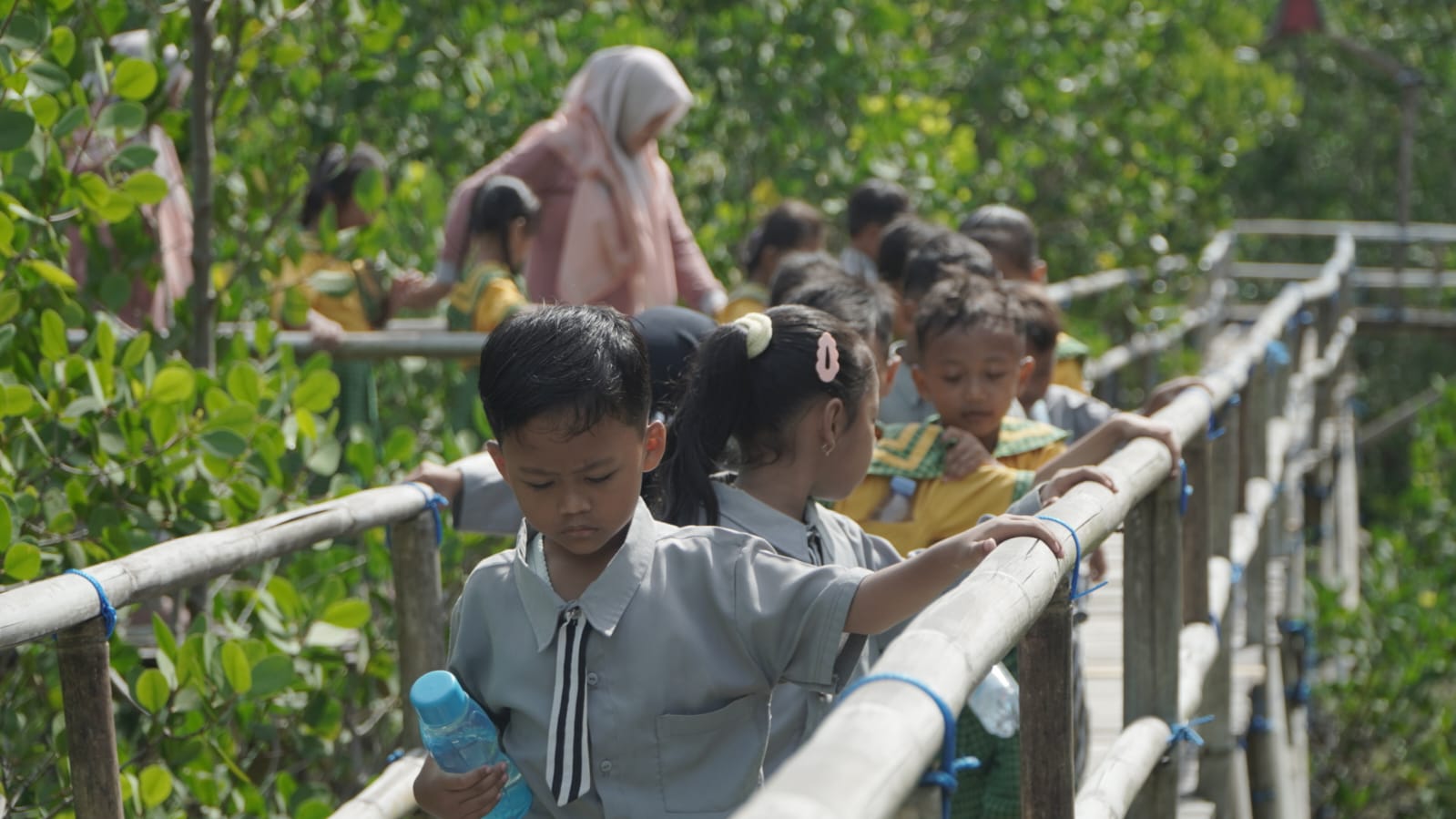
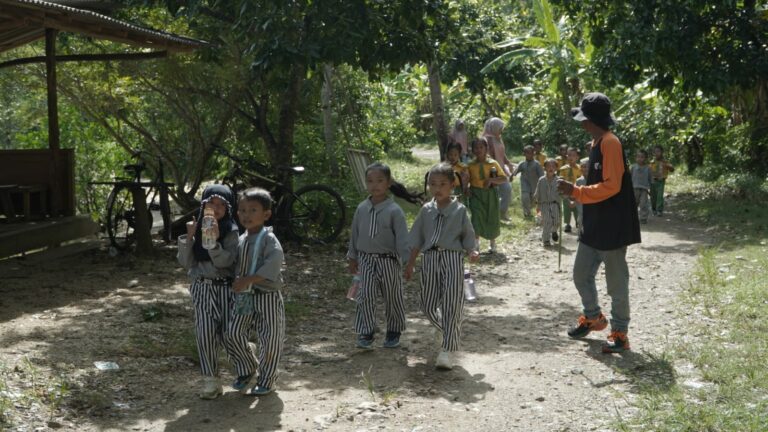
PACITAN, EAST JAVA —— That morning, the children of Sari Mulya Kindergarten did not come to class to study. After the school’s “Clean Thursday” routine, they walked to Teban Beach—along a path shaded by lush trees—toward a site that had just officially opened to the public.
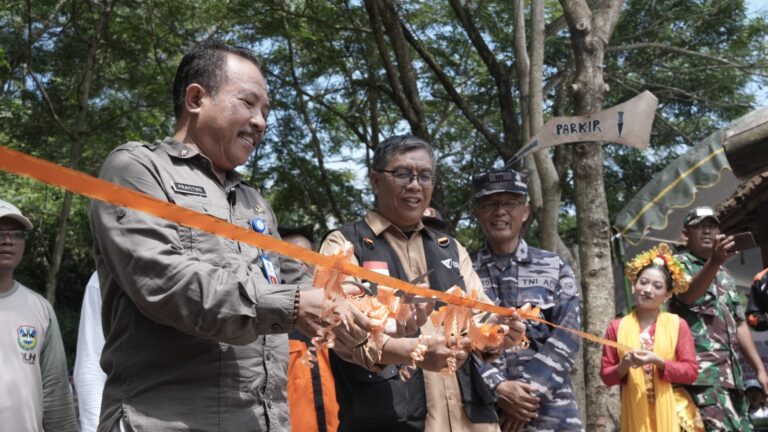
The Mangrove Education Park at Teban Beach, Tawang Wetan Hamlet, Sidomulyo Village, Ngadirojo Subdistrict, Pacitan Regency, East Java, was inaugurated by Dompet Dhuafa’s Disaster Management Center (DMC) on Wednesday, April 29, 2026. More than just an ordinary green park—this area was born out of a real need: to protect the southern coastal region of Pacitan from the threat of earthquakes and tsunamis.
Mangroves as a Fortress, Not Just Plants
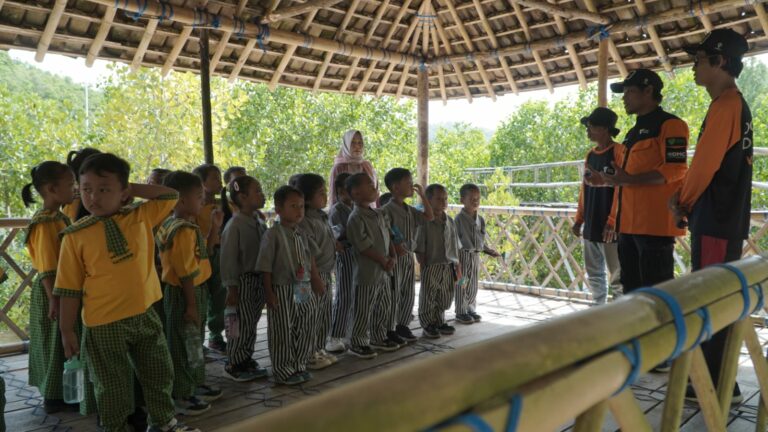
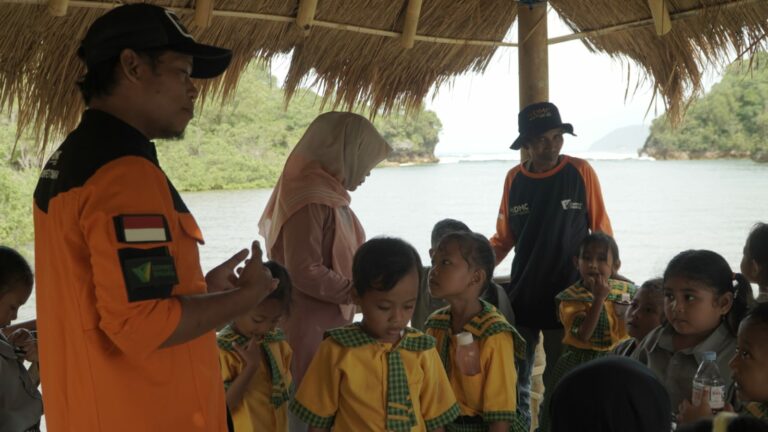
At the park gazebo, the DMC Dompet Dhuafa team explained to the children about mangroves—plants that may be a common sight for those living along the coast, yet whose true value and function are rarely understood.
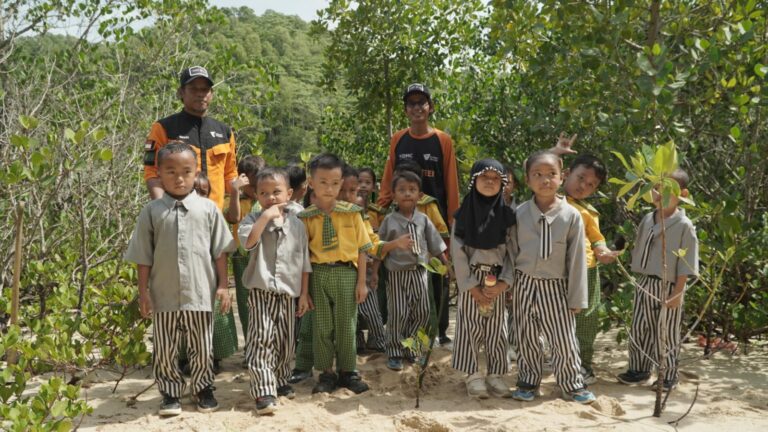
Through a bamboo and wooden path winding through the dense mangrove forest, the children were invited to witness firsthand how the mangroves’ strong roots withstand the pounding waves. A lesson they won’t find in textbooks.
“This is a very meaningful lesson for the children. They are introduced to mangroves and their many benefits for human life. Hopefully, as they grow older, they will become more responsible and love the environment,” said Sri Wahyuni, a teacher from Sari Mulya Kindergarten.
Part of the 12 Tsunami Ready Indicators
The establishment of this Mangrove Education Park is not a standalone initiative. It is part of Dompet Dhuafa’s DMC Disaster-Resilient and Prepared Zones (KTTB) Program in Sidomulyo Village—a program that implements the 12 Tsunami Ready indicators for high-risk disaster areas.
“The Sidomulyo area faces a real threat of earthquakes and tsunamis. This mangrove education park is one of our mitigation efforts to reduce disaster risk. Mangroves can serve as a natural barrier to dampen large waves. Hopefully, this will also have economic value and serve as a community education tool,” explained Abdul Azis, Disaster Mitigation and Training Staff at DMC Dompet Dhuafa.
Managed by the Community, for the Community
Following its official opening, management of the Mangrove Education Park was fully handed over to the Sidomulyo Village-Owned Enterprise (BUMDes). The area is also open to the Sidomulyo Disaster Risk Reduction Forum (FPRB) as a space for community-based education and disaster mitigation activities.
This initiative has yielded results. Prayitno, an Economic and Financial Development Advisor for Pacitan Regency who attended on behalf of the Regent, noted that since the park’s establishment, several new small and medium enterprises (SMEs) have emerged in the surrounding area.
“This park not only prevents coastal erosion but has also become a new tourist destination in Pacitan. It is visited by tourists from around Sidomulyo and other regions. This is a positive development for the village,” said Prayitno, who also expressed hope that DMC Dompet Dhuafa would continue to support the coastal area of Sidomulyo.
One Park, Three Benefits at Once
What makes the Mangrove Education Park at Teban Beach special is its multi-layered impact. From an environmental perspective, intensive mangrove planting serves as a natural barrier against the threat of coastal erosion that has long been eroding Pacitan’s southern coastline, while simultaneously restoring the coastal ecosystem as a habitat for diverse marine life.
From a disaster risk perspective, this area strengthens the resilience of coastal communities against tsunami risks—in line with the Tsunami Ready standards currently being implemented by DMC Dompet Dhuafa in Sidomulyo Village.
Meanwhile, from an economic perspective, the presence of this park opens new opportunities for local residents who have long relied heavily on the informal sector—through tourism, small and medium enterprises (SMEs), and self-managed area stewardship.
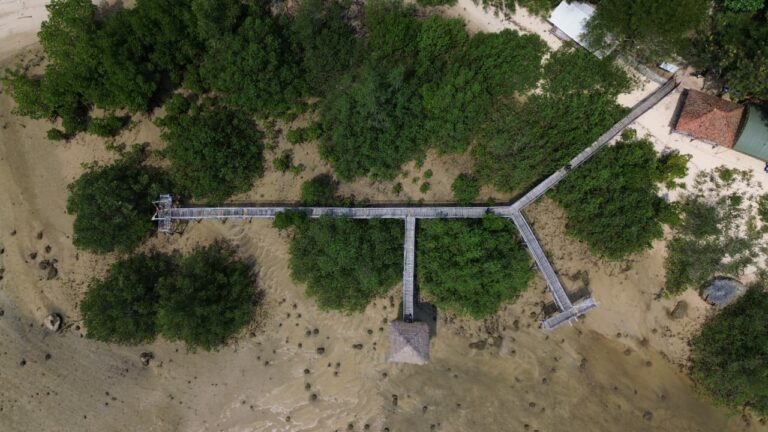
Ultimately, a mangrove tree growing along the Pacitan coast is more than just a plant. It is a guardian of the coast, a learning space, and a source of livelihood—as well as proof that effective disaster mitigation doesn’t have to feel like a threat, but can take the form of something green, shady, and full of hope. (Dompet Dhuafa)
Text and photos: M Afriza Adha
Editor: Ronna