


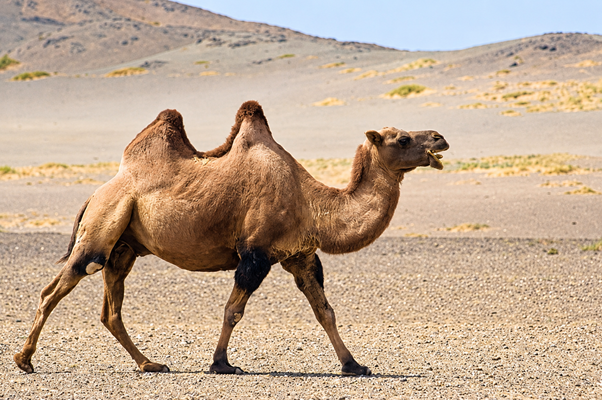
JAKARTA — Sacrificing a camel is a form of qurbani that holds special significance in Islam. In addition to its large size and the ability to distribute its meat widely, camel sacrifice has also been practiced since the time of the Prophet Muhammad (peace be upon him).
Secretary of the Sharia Advisory Board of Dompet Dhuafa, Ustaz Ahmad Fauzi Qosim, explained that camels are among the livestock animals that are valid for sacrifice, as explained in the Quran, Surah Al-Hajj, verse 34. In Islam, camels fall under the category of bahimatul an’am, which refers to livestock permitted for the ritual sacrifice in addition to cows, buffalo, goats, and sheep.
“Camels are one of the sacrificial animals mentioned in the Quran and hold a special significance in Islamic law,” he said.
Camel Sacrifice in the Sunnah of the Prophet Muhammad (peace be upon him)
The practice of sacrificing camels was also directly exemplified by the Prophet Muhammad (peace be upon him) during the Farewell Pilgrimage (Haji Wada’). In a hadith narrated by Imam Muslim from Jabir bin Abdillah (may Allah be pleased with him), it is mentioned that the Prophet Muhammad (peace be upon him) slaughtered 63 camels with his own hands, then handed over the remaining 37 camels out of a total of 100 to Ali bin Abi Thalib (may Allah be pleased with him).
“Then he slaughtered 63 camels and gave the rest to Ali to be slaughtered.”
(HR Muslim no. 1218)
According to Ustaz Fauzi, this event demonstrates the Prophet’s reverence for Allah’s Sharia while also serving as a symbol of sincerity and sacrifice in worship.
“The number 100 camels signifies not only capability but also sincerity and reverence for Allah’s Sharia,” he explained.
Ustaz Fauzi added that several scholars also view the camel as a form of sacrifice with high merit. Besides its larger size and the greater benefit of distributing its meat, the merit of sacrificing a camel is also linked to the Prophet’s hadith regarding the virtue of arriving early for Friday prayer.
“Whoever takes a bath on Friday and goes at the very first moment is as if he has sacrificed a camel…”
(Narrated by Bukhari and Muslim)
Regulations for Camel Sacrifice
In addition to its merit, the sacrifice of a camel also has different regulations compared to other sacrificial animals. A single camel may be designated for up to 10 people performing the sacrifice, as mentioned in the hadith narrated by At-Tirmidzi from Ibn Abbas (may Allah be pleased with him).
We were traveling with the Messenger of Allah, peace and blessings be upon him, when the Day of Sacrifice arrived, so we pooled our resources: seven of us for a cow and ten for a camel
“Once we were on a journey with the Messenger of Allah, peace and blessings be upon him, and the Eid al-Adha arrived, so ten of us pooled our resources to sacrifice a camel. As for a cow, seven of us pooled our resources.”
(Narrated by At-Tirmidhi)
In addition to the number of participants, the method of slaughtering a camel also differs from that of a cow or goat. While a cow is typically slaughtered while lying down, a camel is slaughtered while standing or kneeling with one of its front legs tied. Regarding age, a camel used as a sacrificial animal must be at least five years old and have reached the age of six.
Ustaz Fauzi believes that camel sacrifice also has the potential to grow in Indonesia. According to him, camels can still adapt to conditions in Indonesia if supported by proper breeding and management.
Through education about camel sacrifice, Dompet Dhuafa hopes the public will become more familiar with the various forms of sacrificial rites in Islam while also understanding the values of sacrifice and compassion inherent in the act of sacrifice. Let’s Sacrifice a Camel through Dompet Dhuafa! (Dompet Dhuafa)
Text and photos: Nurul, Kompas.com
Editor: Dhika