


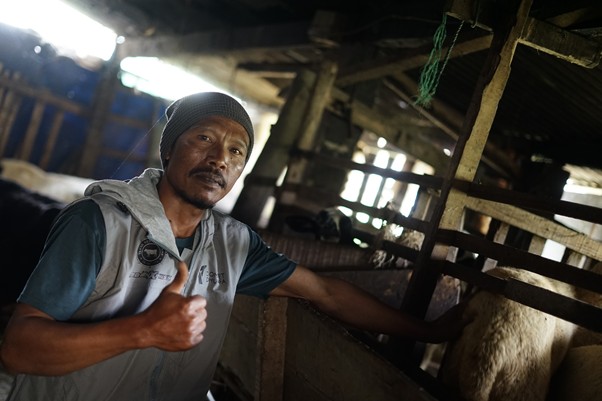
SEMARANG, CENTRAL JAVA —-— On a cool hillside in the highlands of Tolokan Village, Getasan District, a tangible success of an economic empowerment program is beginning to bear fruit.
Kabul Budiyono, or simply known as Kabul, is now preparing to harvest the fruits of his labor over the past four months. As a partner in the Jantara (Archipelago Farmers Network) program from Dompet Dhuafa, he has successfully proven that with the right guidance, small-scale farmers can produce high-quality livestock, Tuesday (05/12/26).
For Kabul, joining the Jantara Program was a major turning point. Before joining Dompet Dhuafa, he was just a traditional farmer who relied on age-old customs without any technical knowledge. He feels that this program not only provided him with livestock capital but also served as a hands-on training ground that elevated his skill level.
“My friends and I feel we’ve learned so much. From being ordinary farmers who only knew how to feed the animals, now we know how to treat them, identify diseases, and administer the right medication—we can handle it all on our own,” said Mr. Kabul proudly.
This medical self-reliance isn’t just theory. Given that the livestock are located in highlands with cold and humid weather, the sheep newly arrived from Dompet Dhuafa Farm Kendal had to go through a rather difficult adaptation phase. Kabul shared the ups and downs of dealing with sheep that began showing symptoms of scabies, red eyes turning white, and coughing. If this had happened in the past, he might have panicked or simply let it be; now, armed with training from Dompet Dhuafa, he is able to promptly handle medications and healing procedures independently.
Read also: Rice Field Laborer in Cianjur Becomes Livestock Farmer, Manages ‘Future Savings’ Livestock Village
“So we’ve been equipped to anticipate how to treat and diagnose issues, so we don’t face any obstacles,” he added.
One of the most impressive achievements at the Kabul farm is a sheep that reached a weight of 41 kg in a short time—just about four months since its arrival in February. In fact, the minimum standard for sacrificial animals is usually around 25 kg. According to him, the key to the success of this fattening process lies in strict adherence to feed management.
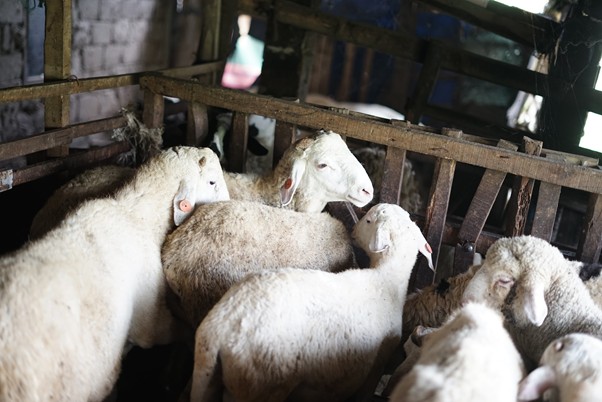
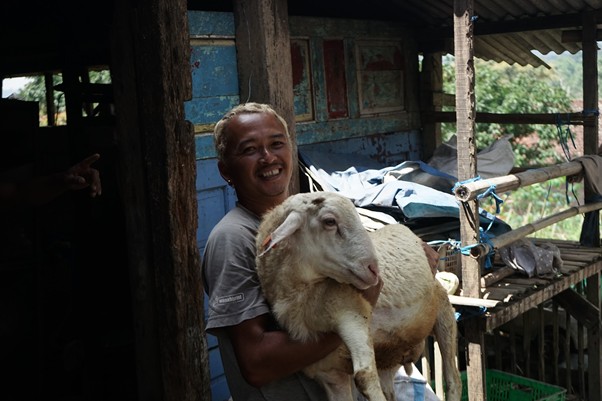
“Well, when it comes to fattening, it’s up to us. But with feed, we have to follow the rules. So, if the body weight is, say, 10 kilograms, that means we give 4 ounces—which is 0.4 percent of the body weight,” Kabul explained regarding the daily feeding formula he consistently applies. It is this discipline that has led to significant growth in his sheep, even though they have only been raised for a few months.
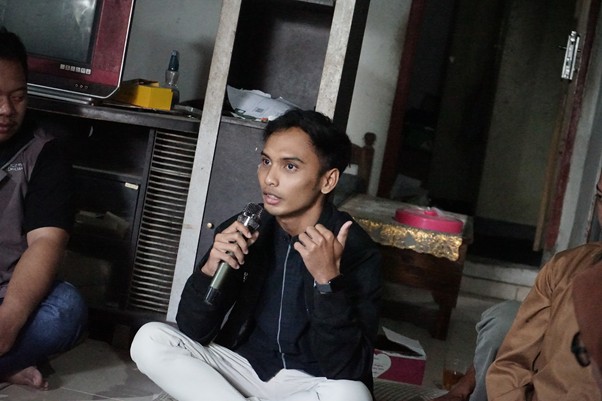
This success at the farmer level was directly validated by the Monitoring and Evaluation (Monev) team. Muhammad Miftahul Huda, from Dompet Dhuafa Farm Central Java, explained that the quality-checking process is conducted very strictly, covering individual weighing and physical inspections to ensure there are no defects.
“Alhamdulillah, a Quality Control (QC) check was conducted in early May. At this location (Tolokan Village), 48 sheep were inspected. The results showed that 45 passed the physical and weight QC checks. Only 3 were slightly under the weight specification,” said Mas Miftah.
He also noted that the natural conditions in Tolokan Village are highly beneficial. The cool temperatures and relatively stable humidity prevent the sheep from suffering heat stress, which is often a problem in lowland areas. These conditions make Kabul’s sheep appear much healthier and more robust.
Read also: Kartini of Sukabumi: Yuyum’s Story as an Empowered Farmer Sending Her Children to College
The Jantara Program is not merely a seasonal project leading up to Eid al-Adha. Dompet Dhuafa is pursuing a larger mission: long-term economic self-reliance. Kabul hopes that if this fattening project succeeds by the time of the holiday, he will be entrusted with a breeding program.
“Maybe if this is successful, they said they’d give us a breeding program for development. Well, hopefully everything goes smoothly. “We are deeply grateful and proud of Dompet Dhuafa for their immense support to the communities around Tolokan Village,” Kabul said with hopeful anticipation.
In line with this, Mas Miftah emphasized that the ultimate goal of this program is to elevate the economic standing of the farmers. “The hope is that the Jantara program can serve as the first milestone in empowerment. We want the mustahik (beneficiaries) to eventually become muzakki (zakat payers), meaning they are truly economically empowered,” he concluded.
Expand the benefits of the Qurbani sacrifice through digital.dompetdhuafa.org/kurban. (Dompet Dhuafa)
Text and photos: Roseta
Editor: Dhika