


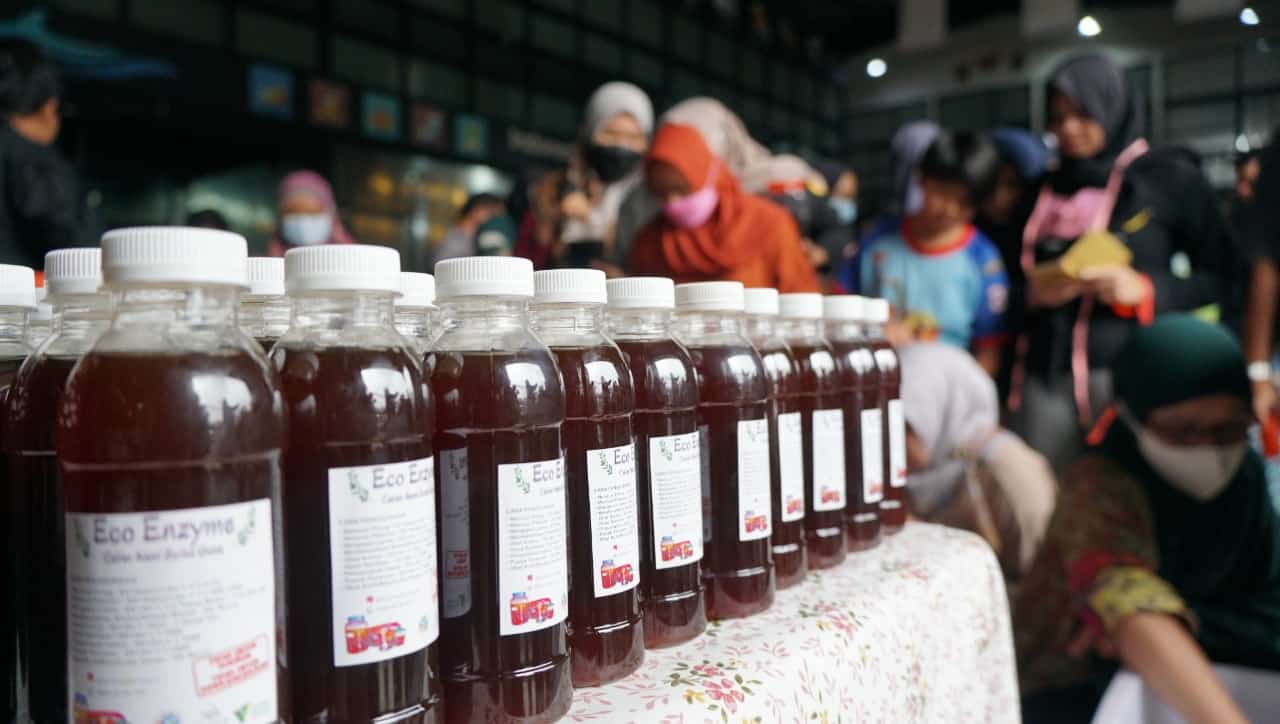
SOUTH TANGERANG -— Through its Culture and Environment division, Dompet Dhuafa held its second eco-enzyme production training session at the DMC Dompet Dhuafa headquarters in South Tangerang, Banten (06/07/2022). A total of 70 participants, consisting of members of the Dompet Dhuafa extended family network, female students, and the general public, attentively followed the presentation on eco-enzyme production by Eco-Enzyme Nusantara Bogor Raya.
The largest composition of waste is food waste, accounting for 30 percent throughout 2019-2021. A total of 40 percent came from household waste over the last three years (2019-2021). This is why Dompet Dhuafa is intensifying its eco-enzyme production training.
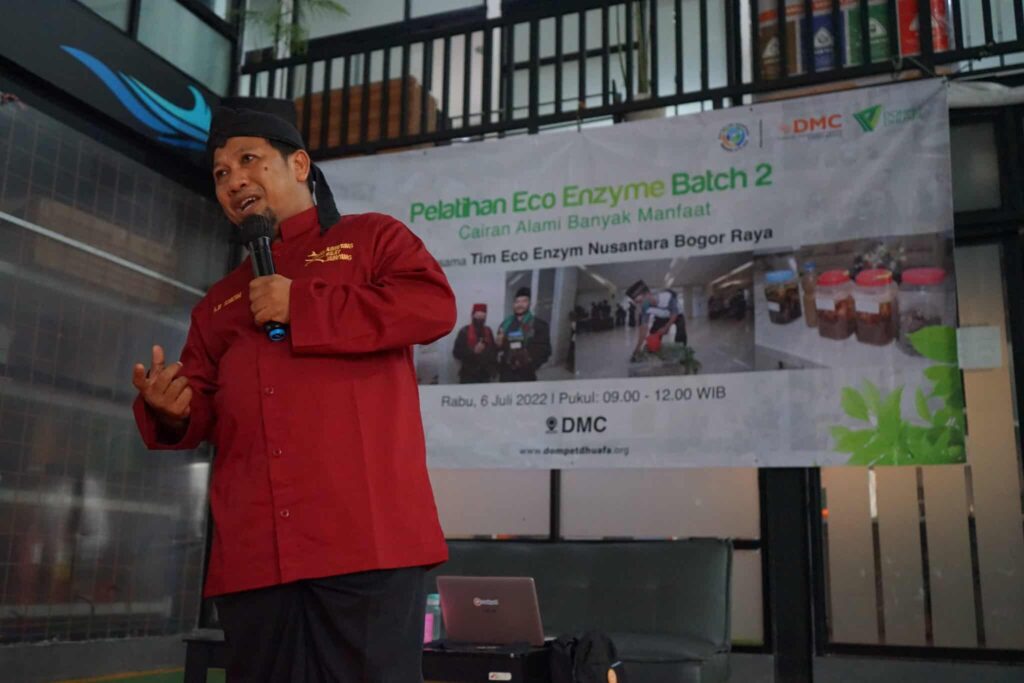
“We see from the potential and facts on the ground that the waste that never decreases is household waste. Just imagine, for three days no one collected household waste in the neighborhood,” explained Ahmad Shonhaji, Director of Da’wah, Culture, and Community Service at Dompet Dhuafa, in his speech.
“What happens then is that trash piles up in trash bins. Of course, an unpleasant odor arises, and ultimately, it becomes a breeding ground for disease,” he continued.
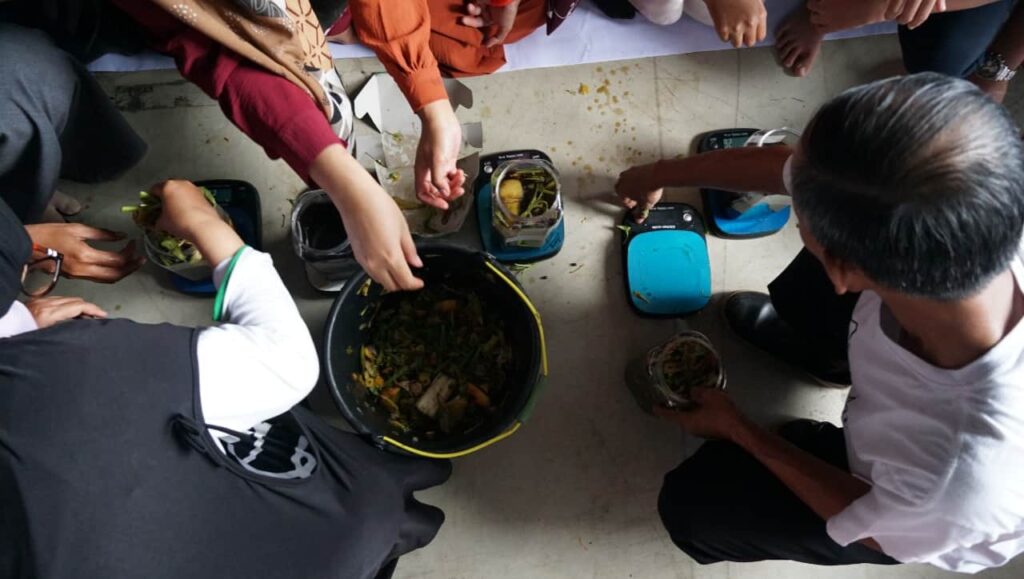
Eco-enzyme itself is a multipurpose liquid made by fermenting fruit peels, vegetable scraps, brown sugar or molasses, and water. The fermentation process takes three months. When it is time to harvest, the liquid has many benefits for the community and the environment. To make it, put sugar (1 kg/gr), fruit/vegetable scraps (3 kg/gr), and water (10 lt/ml) in a container such as a jar or used bottle. The more types of fruit or vegetables used, the richer the eco-enzyme will be.
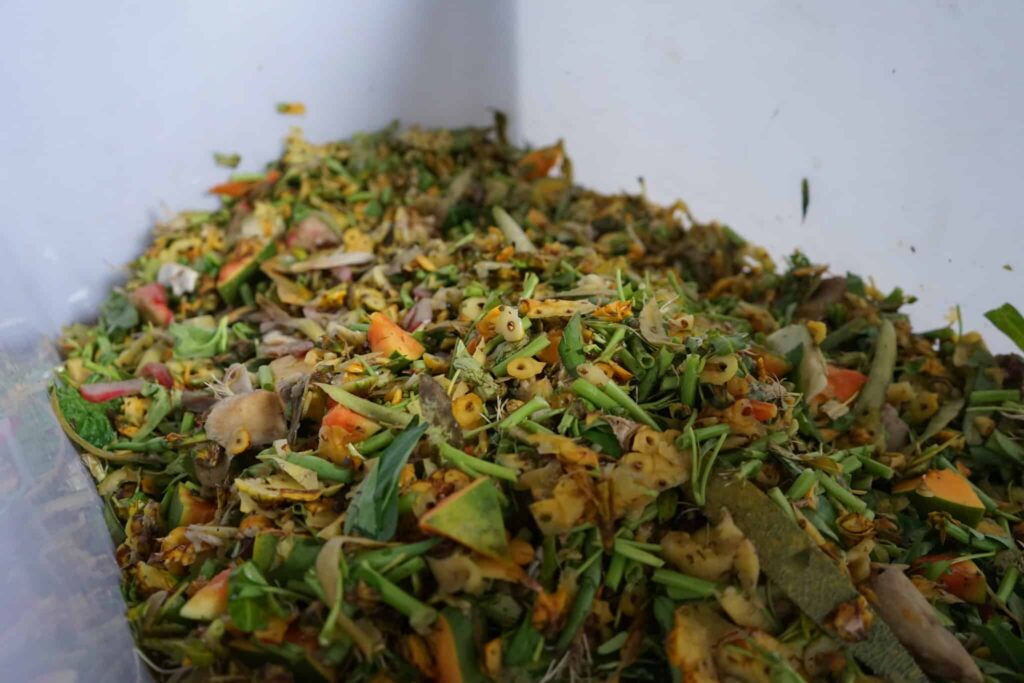
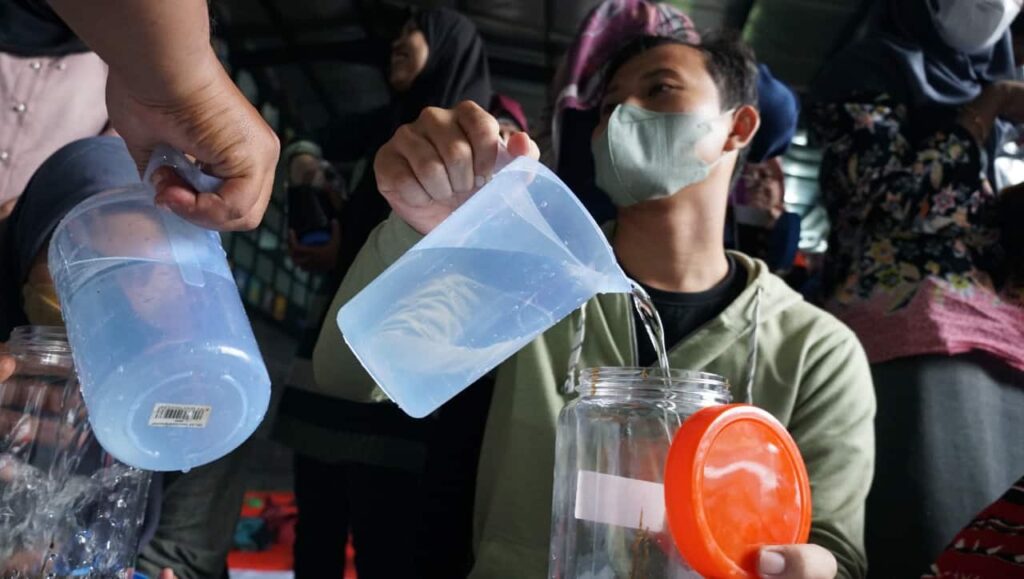
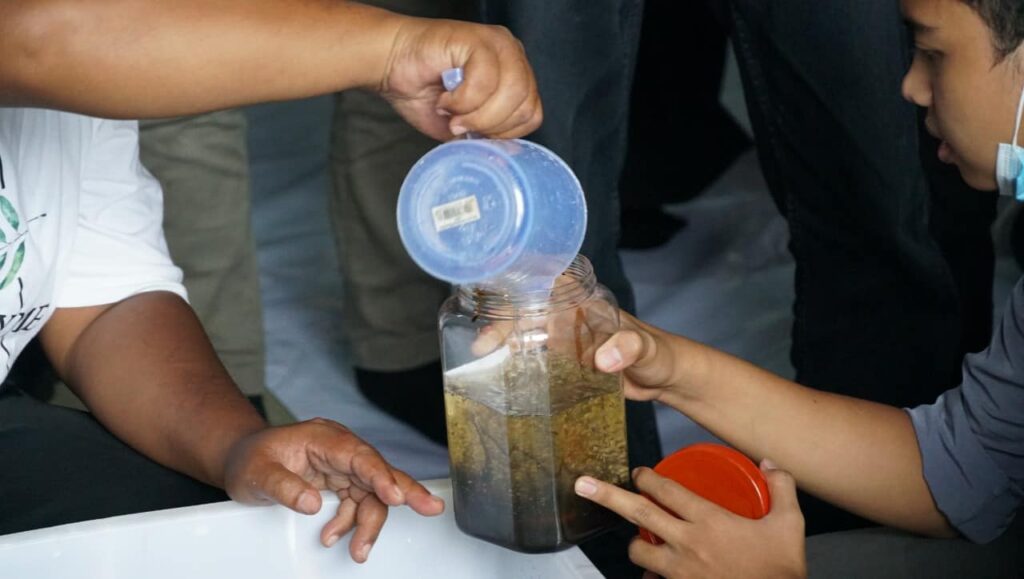
Clean the container of any soap or chemical residue. Measure the volume of the container. Fill with clean water to a maximum of 60 percent of the container’s volume. Add sugar according to the measurement, which is 10 percent of the weight of the water. Add chopped fruit and vegetable scraps, which is 30 percent of the weight of the water. Then stir well. Cover tightly until harvest. Label with the date of production and harvest.
“Today, the first fact is that there is a lot of household waste. The majority is still wasted and even causes problems at the Final Processing Site (TPA). Second, today the majority of people still use materials that come from synthetic chemicals,” explained Aang Hudaya, Branch Manager of Bank Eco Enzym Nusantara Bogor Raya.
“With eco-enzymes, we strive to contribute to nature by sorting and processing fruit peels and vegetable scraps into eco-enzyme liquid,” he added.
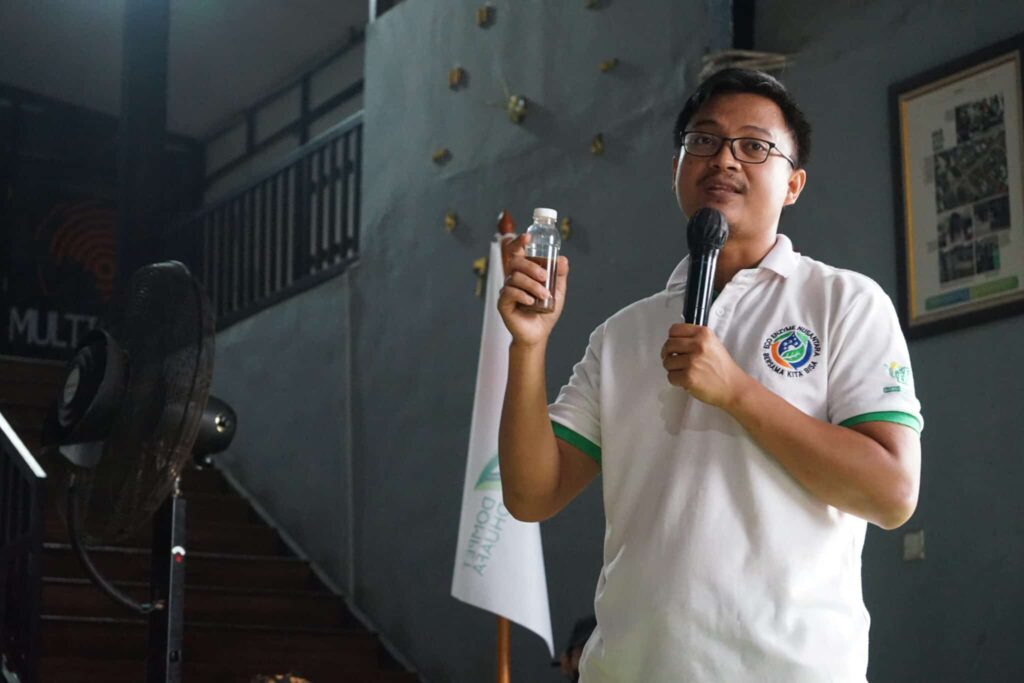
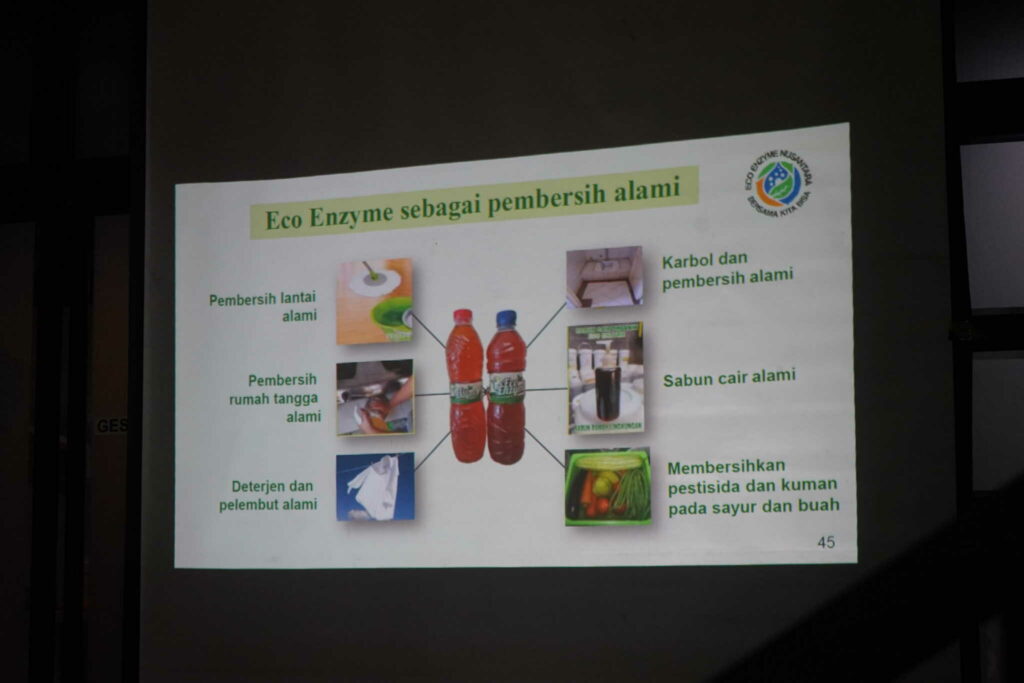
“This product has many benefits, and can even replace our daily needs at home. Until now, we have been buying and using synthetic chemicals,” concluded Aang.
The label on the finished eco-enzyme bottle states that it can be used for washing dishes (with a ratio of Eco-enzyme/EE + soap + water = 1 bottle : 1 bottle : 5-10 liters), washing clothes (EE + soap + water = 1 bottle : 500-1000 liters), mopping the floor (EE + water = 1-2 bottle caps : 1 bucket of water).
It can also be used to clean toilets/bathrooms (pure EE), as mouthwash (EE + water = 10 milliliters : 1 glass of water), hand sanitizer (EE + water = 1 bottle : 1000 milliliters), air spray (EE + Water = 1 bottle: 1000 milliliters), plant fertilizer (EE + Water = 1:1000 milliliters), and skin, boil, and scratch treatments (Pure EE).
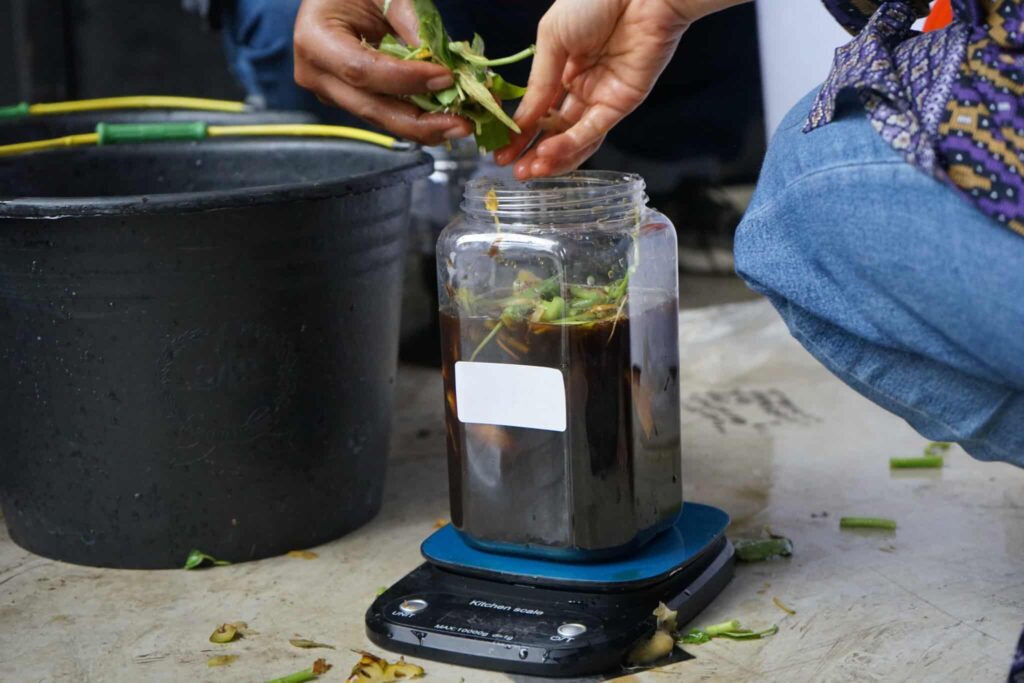
Please note that there are categories of vegetables and fruits that cannot be used for eco-enzymes, namely those that have been cooked, are rotten/worm-eaten/moldy, oily such as coconut and pulp, and dry/hard. In addition, the residue from eco-enzymes also has other uses: to clean toilet drains, it can be blended until smooth and poured into the toilet at night; to deodorize cars, it can be dried and placed in a small cloth bag; and as organic fertilizer (not for potted plants).
Despite the potential benefits, Aang also explained that the community still has difficulties in producing this environmentally friendly liquid. “Some people don’t have knowledge about eco-enzymes. Second, because they haven’t felt the benefits directly,” said Aang. This is in line with what one of the participants said. Tarab, one of the participants who works as the Deputy Head of the Pondok Ranji Neighborhood Association.
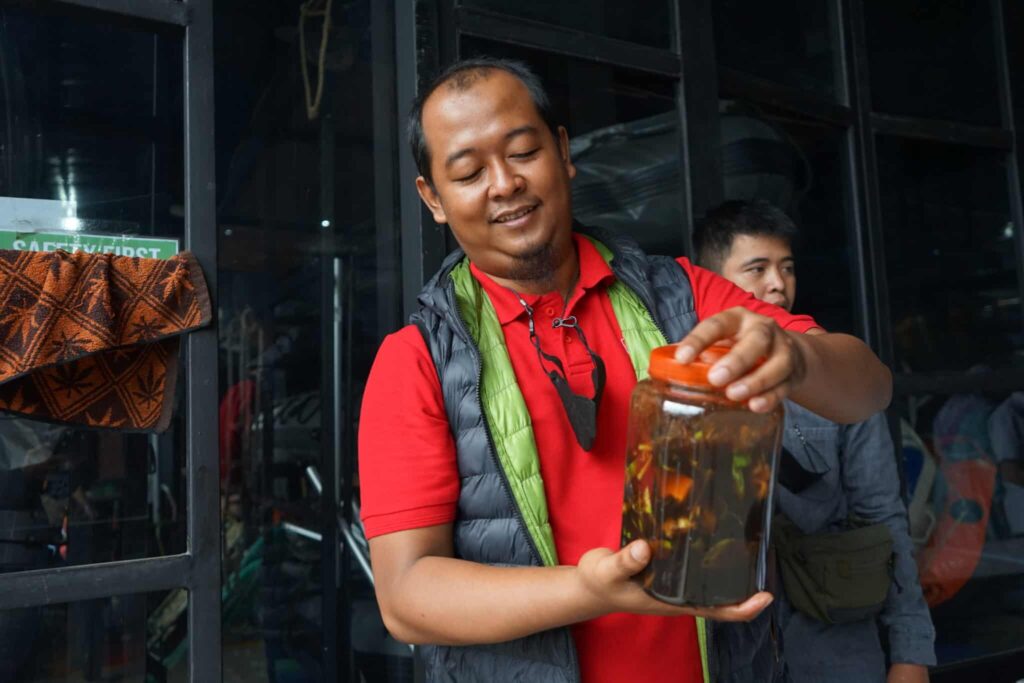
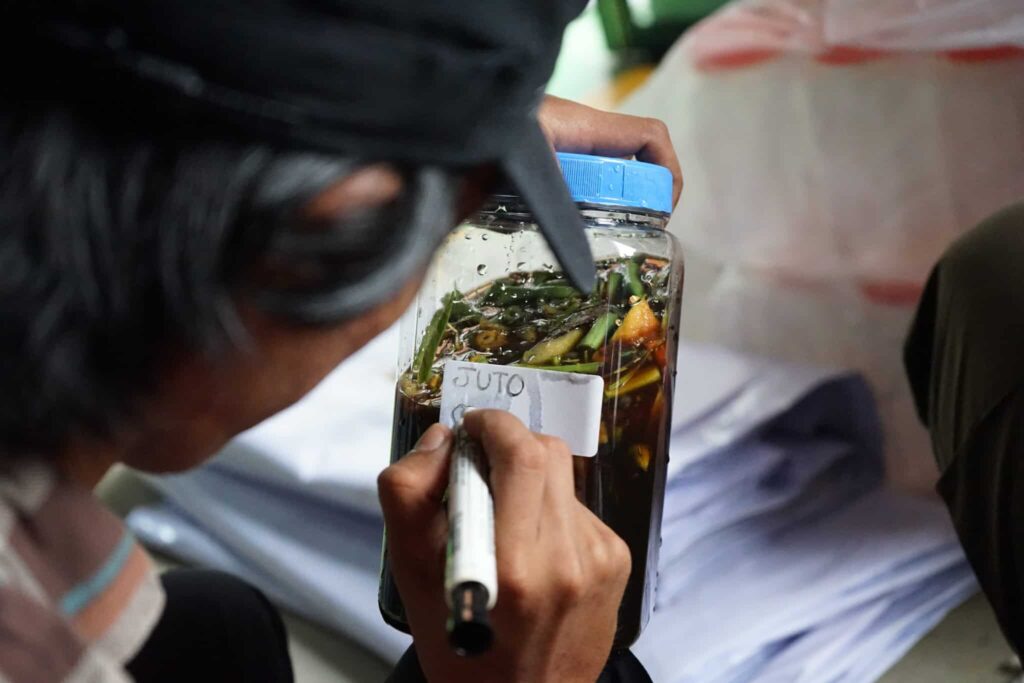
“As residents, sometimes we just throw away our trash. When the garbage collectors are late in picking up the trash for two days, it starts to smell. So rather than piling it up, I will ask for (organic waste),” said Tarab.
“(But) we’ll try the eco-enzyme practice first. After my wife and children finish eating vegetables or fruits, I’ll explain the eco-enzyme practice to them,” concluded Tarab. (Dompet Dhuafa / Arlen)