


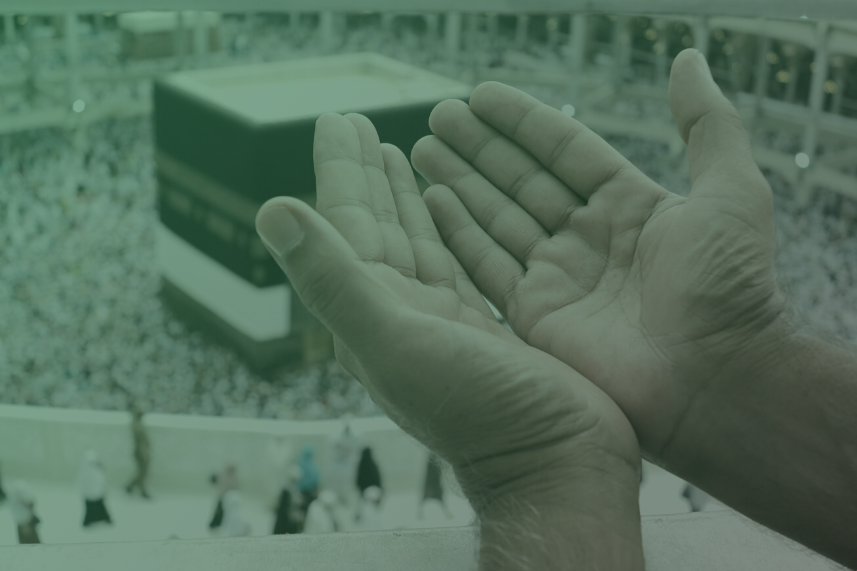
The Fast of Arafah is likely already very familiar to most Muslims. This fast is observed alongside the Hajj pilgrims performing the wukuf at Arafah. For this reason, the Fast of Arafah is considered one of the primary acts of worship during the month of Dhu al-Hijjah. This is especially true for those who have not yet been able to perform the Hajj to the Sacred Land.
My friends… it would be a great pity if we were to miss this Sunnah act of worship, let alone intentionally skip it. For this act of worship can only be performed once a year and possesses many special merits and virtues.
The Arafah Fast: A Primary Act of Worship in the Month of Zulhijah
Scholars agree that the Arafah Fast is a strongly recommended (sunah muakadah) act of worship, particularly for those not currently performing the Hajj.
Arafah in Arabic means “certainty.” Arafah is also the name of a place in Mecca, as well as the name of the day on the 9th of Zulhijah, one day before the Eid al-Adha holiday. This is the day when Prophet Ibrahim, peace be upon him, realized that his dream of sacrificing his son was truly a command from Allah the Almighty.
Imam Nawawi in Al Majmu’ (6: 428) states:
“As for the ruling on the Arafah fast according to Imam Shafi’i and the Shafi’i scholars: it is recommended to fast on Arafah for those who are not performing the standing at Arafah. As for those performing the Hajj who are at Arafah at that time, according to Imam Shafi’i—in summary—and this is also the view of the Shafi’i scholars, it is recommended for them not to fast due to the hadith from Ummul Fadhl.”
Ibn Muflih in Al-Furu’ (3:108) states:
“It is recommended to fast during the first ten days of Dhu al-Hijjah, especially on the ninth day, which is the Day of Arafah. This is the consensus of the scholars.”
The Virtues of the Arafah Fast in the Month of Dhu al-Hijjah
The Arafah fast is an act of worship with many virtues and wisdom, including:
1. Great and multiplied reward
The magnitude of the reward obtained from the Fast of Arafah is described in a hadith narrated by Imam Baihaqi:
“From Sayyidah Aisha (may Allah be pleased with her), she said, the Messenger of Allah (peace be upon him) said: ‘(The virtue of) fasting on the Day of Arafah is like fasting for 1,000 days (outside of the Day of Arafah).’”
This hadith explains that the reward for the Fast of Arafah is equivalent to the reward for fasting 1,000 days on other days. Therefore, it would truly be a great pity if we were to miss the Fast of Arafah.
2. Gaining His Love
A Muslim who performs righteous deeds during the first 10 days of the month of Dhu al-Hijjah, especially the fast of Arafah, will earn the love of the Most Loving, Allah (the Exalted).
Allah deeply loves His servants who observe the Fast of Arafah. This is explained in a hadith from Ibn ‘Abbas (may Allah be pleased with him), who reported that the Prophet (peace be upon him) said:
“‘There is no day on which righteous deeds are more beloved to Allah than these days, namely the first 10 days of the month of Dhu al-Hijjah.’ They asked: ‘O Messenger of Allah, not even jihad in the way of Allah?’ He replied: ‘Not even jihad in the way of Allah, except for one who goes out (to fight) with his life and wealth, and then returns with nothing.’”
3. Equivalent to following the Sunnah of the Prophet (peace be upon him)
Observing the Arafah Fast is equivalent to following the Prophet’s Sunnah. The Arafah Fast is a practice frequently performed by the Prophet Muhammad (peace be upon him), as stated in the following hadith:
“There are four things the Prophet never neglected: fasting on the Day of ‘Ashura, fasting on the Day of Arafah, fasting three days each month, and praying two rak’ahs before Fajr.”
(Narrated by An-Nasa’i and Ahmad)
“The Prophet Muhammad, peace and blessings be upon him, used to fast nine days in the month of Dhu al-Hijjah, fast on the Day of Ashura, fast three days each month, and fast on the first Monday and Thursday of each month.”
(Narrated by Abu Dawud)
5. The Forgiveness of Sins
A Muslim who observes the Arafah Fast not only receives the reward of fasting but also has their sins forgiven for the past year and the coming year.
“Fasting on the Day of Arafah expiates the sins of two years—the past and the coming. And fasting on the Day of Ashura (the 10th of Muharram) expiates the sins of the past year.”
(HR Muslim)
The sins referred to in the hadith above are minor sins. This is clarified by the consensus of the majority of scholars that the sins that can be erased by observing the Fast of Arafah are minor sins. As explained by Imam An-Nawawi in his book Sharh Sahih Muslim:
“Likewise, ‘Fasting on the Day of Arafah, the 9th of Dhu al-Hijjah, serves as atonement for the sins of two years, and the Day of Ashura serves as atonement for the sins of one year. If one’s ‘Amin’ coincides with the angels’ ‘Amin,’ one’s past sins will surely be forgiven.” The view emphasized by the scholars is that each of these acts of worship is sufficient as an expiation. If there are minor sins to be expiated, then that act will expiate them. However, if it does not involve a minor sin but rather a major sin, then that act of worship will be recorded as a good deed and elevate one’s status. If that act of worship is in the face of one or more major sins and no minor sins, we hope that the act of worship may alleviate the punishment for those major sins. And Allah knows best.”
6. Far from the Fire of Hell
If we perform the Arafah Fast, insha’Allah we will be spared from the torment of the Fire of Hell.
“There is no day on which Allah frees more of His servants from the Fire of Hell than on the Day of Arafah.”
(HR Muslim)
Procedures for the Arafah Fast
The procedures for the Arafah Fast are the same as those for Ramadan and other fasts. It begins with reciting the intention, eating and drinking during Suhoor, then refraining from hunger, thirst, anger, and the like, until sunset or Maghrib. The fast is then broken immediately after the Maghrib call to prayer is sounded.
Intention for the Arafah Fast
The intention for the Arafah fast may be recited at night or during suhoor; it may also be recited during the day provided one has not eaten or drunk anything since waking up.
The wording of the intention for the Arafah fast at night:
Nawaitu shauma ghadin ‘an adaa’i sunnati Arafah lillaahi ta‘aalaa.
Meaning: “I intend to fast the Sunnah of Arafah tomorrow for the sake of Allah, the Exalted.”
The wording of the intention for the Arafah fast during the day:
Nawaitu shauma haadzal yaumi ‘an adaa’i sunnati Arafah lillaahi ta‘aalaa.
Meaning: “I intend to fast the Sunnah of Arafah today for the sake of Allah, the Exalted.”
The Arafah Fast and the Spirit of Qurbani
The Sunnah worship of Arafah is the best moment for us to draw closer to Him while erasing the minor sins of the past year and the coming year. Even so, the nobility of this worship is not fully realized unless accompanied by genuine compassion.
The act of sacrifice during Eid al-Adha is not merely a ritual of slaughtering an animal, but an expression of gratitude and a symbol of obedience whose impact is directly felt by others. Amid increasingly difficult economic conditions, every piece of sacrificial meat you give will be a source of happiness and much-needed nutrition for those who rarely or have never experienced it.
Therefore, do not let the blessings of Eid al-Adha pass by without leaving a trace of your kindness. The urgency of performing the sacrifice this year is even greater, as it involves efforts to promote food equity and reduce poverty.
Read also: With the Economy Struggling, Sacrifices to Remote Areas Are More Needed Than Ever
Friends, let’s perfect the rewards of the Arafah Fast by spreading benefits through the act of sacrifice that we can send to the far corners of the country. You can make a sacrifice easily, yet still faithfully, blessedly, and effectively through the link below. (Dompet Dhuafa/RQ)