


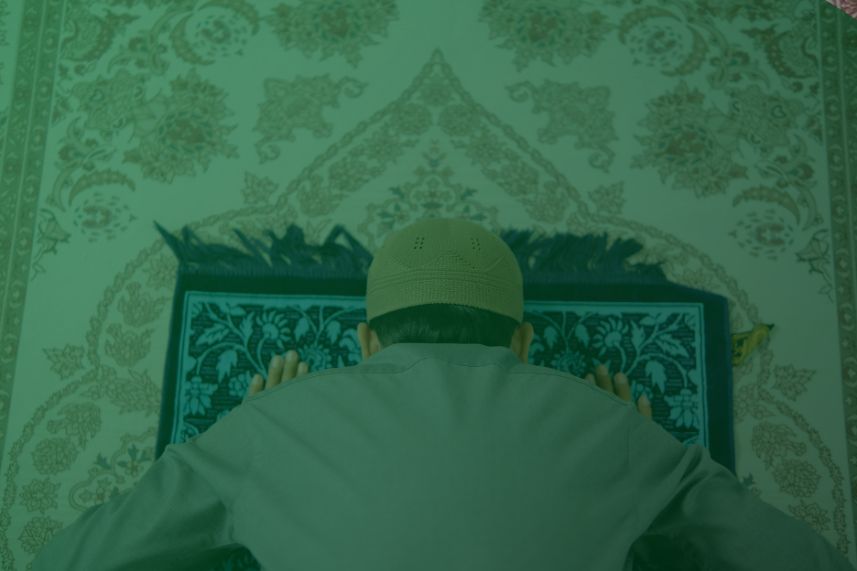
The Dhuha prayer is one of the highly recommended Sunnah acts of worship in Islam. This prayer is performed in the morning, from shortly after sunrise until just before noon. Many Muslims practice the Dhuha prayer because it is believed to bring blessings, financial abundance, and peace of mind.
One of the supplications often recited after this prayer is the Dhuha prayer supplication. This supplication contains a plea to Allah SWT for ease in provision, blessings in life, and protection from hardships.
So, what is the text of the Dhuha prayer supplication and its meaning? Read the full explanation below.
Text of the Dhuha Prayer Supplication and Its Meaning
The following is the text of the Dhuha prayer supplication frequently recited by Muslims after performing the Dhuha prayer.
O Allah, indeed the morning light is Your light, the splendor is Your splendor, the beauty is Your beauty, the strength is Your strength, the power is Your power, and the protection is Your protection
O Allah, if my provision is in the heavens, then send it down; and if it is on the earth, then bring it forth
And if it is difficult, make it easy; and if it is forbidden, purify it; and if it is far away, bring it near
By the right of Your dawn, Your splendor, Your beauty, Your strength, and Your power
Grant me what You have granted Your righteous servants
Meaning
“O Allah, indeed the time of Dhuha is Your time, majesty is Your majesty, beauty is Your beauty, strength is Your strength, power is Your power, and protection is Your protection.
O Allah, if my provision is in the heavens, then send it down; if it is on the earth, then bring it forth. If it is difficult, then make it easy; if it is forbidden, then purify it; if it is far, then bring it near.
By the truth of Your Dhuha time, Your majesty, Your beauty, Your strength, and Your power, grant me what You grant to Your righteous servants.”
Time for Performing the Dhuha Prayer
Dhuha prayer is performed after sunrise until just before Zuhr time. Generally, the best time for Dhuha prayer is around 7:00 to 11:00 a.m., when the sun has begun to rise higher. The Prophet Muhammad (peace be upon him) said:
“The prayer of those who turn to Allah is when the young camel begins to feel the heat.”
(Narrated by Muslim)
This hadith indicates that the most preferred time to perform Dhuha prayer is when the sun is sufficiently high.
Number of Rak’ahs in Dhuha Prayer
Dhuha prayer is a Sunnah prayer with a flexible number of rak’ahs. The minimum number of rak’ahs for Dhuha prayer is: 2 rak’ahs. However, the Prophet Muhammad (peace be upon him) also performed up to 8 rak’ahs, and some scholars mention that it is permissible to go up to 12 rak’ahs. The Dhuha prayer is performed with a salam after every two rak’ahs.
The Virtues of the Dhuha Prayer
The Dhuha prayer has many virtues mentioned in the hadith of the Prophet Muhammad (peace be upon him).
1. Charity for every joint of the body
The Prophet Muhammad (peace be upon him) said:
“Every morning, every joint of a person’s body is obligated to give charity. Every tasbih is charity, every tahmid is charity, every tahlil is charity, and two rak’ahs of Dhuha prayer suffice for all of that.”
(Narrated by Muslim)
This means that the Dhuha prayer can substitute for charity for every joint in the body.
2. One’s daily needs are provided for
In a Qudsi hadith, it is mentioned:
“O son of Adam, do not neglect four rak’ahs at the start of your day (the Dhuha prayer), and I will provide for you at the end of your day.”
(Narrated by Ahmad and Tirmidhi)
This hadith indicates that Dhuha prayer is one of the means through which Allah’s assistance comes into one’s life.
3. Receiving the reward of charity
Dhuha prayer also carries a great reward akin to giving charity. For this reason, many scholars refer to Dhuha prayer as the prayer that opens the doors of provision, although the true source of provision remains Allah SWT.
Recommended Acts After Dhuha Prayer
In addition to reciting the Dhuha prayer supplication, there are several recommended acts to perform after completing the Dhuha prayer, including:
- increasing remembrance of Allah
- reciting istighfar
- praying for ease in provision
- reading the Qur’an
These acts can increase the blessings in the activities carried out throughout the day. The Dhuha prayer is a Sunnah act of worship full of virtues. By performing it regularly, a Muslim not only earns reward but also finds peace of mind and blessings in carrying out daily activities.
Reciting the Dhuha prayer supplication and its meaning after performing this prayer is a form of striving to seek ease in provision and blessings in life from Allah SWT. May we be among the steadfast servants who consistently perform the Dhuha prayer and always remember Allah in every activity.