


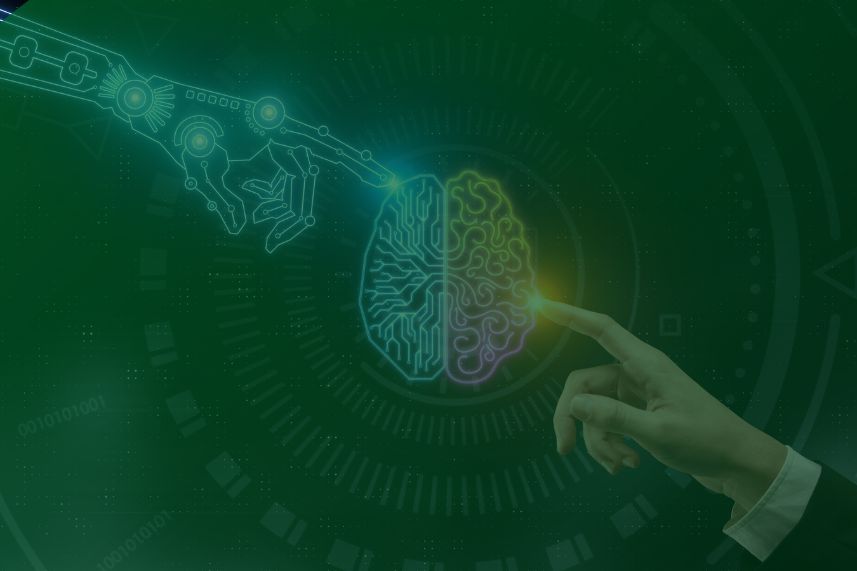
The development of artificial intelligence (AI) in recent years has not only changed the way humans work, but also the way humans think, make decisions, and understand the world. AI is now present in various aspects of life, from education and healthcare to everyday communication. However, amid these advancements, a more fundamental question arises: Where is humanity headed as technology becomes increasingly intelligent? What role does religion play as more decisions become automated? And how will the relationship between AI, religion, and humanity take shape in the future? These questions are not merely technical but also philosophical and spiritual. For ultimately, the future of AI is not just about technology but about humanity itself.
AI arrives with the promise of efficiency and convenience. Many tasks that once took a long time can now be completed in a matter of seconds. Data can be analyzed faster, decisions can be made with greater precision, and various processes can be automated. However, these changes impact not only work but also how humans perceive themselves. When machines can think, write, and even provide complex recommendations, questions arise about humanity’s role within such systems. Will humans become freer, or will they grow increasingly dependent? This is why it is crucial to view AI not merely as a tool, but as part of an ecosystem that shapes how humans live.
Religion as a Compass Amid Change
In a world filled with change, religion plays an irreplaceable role. Religion provides a framework of values that helps humans distinguish between right and wrong. In Islam, humans are not merely seen as rational beings, but also as moral and spiritual beings. Every action is judged not only by its outcome but also by its intention and impact.
Allah SWT states: “Indeed, We have honored the children of Adam…” (QS. Al-Isra: 70). This verse indicates that humans hold a special position. Technology, including AI, should serve as a tool that supports this dignity, not replace it.
One thing that distinguishes AI from humans is values. AI can process data, but it lacks moral consciousness. It does not understand the meaning of goodness, justice, or sincerity. AI operates based on patterns and algorithms, not on intent. It bears no spiritual responsibility and will not be held accountable. In this context, humans remain at the center of every decision. Technology can assist, but it cannot replace the role of humans as beings endowed with values.
The Future of AI and Ethical Challenges
As AI advances, ethical challenges grow increasingly complex. Decisions previously made by humans are now being delegated to automated systems. The question is: who is responsible for these decisions? Is it the human who created the system, or the system itself? In Islam, every individual is responsible for their actions. This concept remains unchanged despite technological advancements. Therefore, the use of AI must remain within a clear framework of values. Technology must not be used without considering its impact on humans and society.
Amid AI advancements, humanity faces two possibilities. On one hand, technology can help humans become more productive and efficient. On the other hand, there is a risk that humans will lose the meaning in their lives. When everything becomes easy, humans can lose the process. When all answers are readily available, humans may stop asking questions. This is where maintaining balance is crucial. AI can assist humans in many ways, but it cannot replace the process of reflection, the search for meaning, and spiritual connection.
Religion and AI: Not a Conflict, but a Direction
Often, technology and religion are viewed as two opposing forces. In reality, they can coexist. Religion provides direction, while technology provides the tools. Without direction, technology can lose its meaning. Without tools, values may be difficult to realize on a larger scale. In this context, the future of AI, religion, and humanity is not about which is more dominant, but how the three can complement one another.
The future is not determined solely by how advanced the technology is, but also by the values upheld. AI will continue to evolve, but questions of meaning, purpose, and responsibility will remain the domain of humanity. Humans possess the ability to choose, to judge, and to take responsibility. This is what distinguishes humans from technology. From an Islamic perspective, life is not merely about what is done in this world, but also about accountability in the afterlife. Every use of technology, including AI, is part of that responsibility.
The future of AI, religion, and humanity is not something entirely determined by technology. It is determined by human choices. Will technology be used to reinforce values, or will it disregard them? Will humans remain at the center, or will they be sidelined by the systems they themselves have created? These questions have no simple answers. However, one thing is certain: the future is not just about what can be done, but about what should be done. And at this juncture, religion remains an irreplaceable compass.
Read also: If AI Isn’t Artificial Intelligence, But Father & Mother
Compassion That AI Cannot Replace
Amid the increasingly sophisticated development of AI, there is one thing that technology cannot replace: compassion. AI can help humans work faster and more efficiently, but it lacks empathy, does not feel hardship, and does not understand the meaning of mutual aid. Compassion, humanity, and the desire to help others are innate human traits that do not stem from a system, but from the heart.
In Islam, this value is an integral part of life. Allah SWT states, “And help one another in righteousness and piety” (QS. Al-Ma’idah: 2). This verse reminds us that human relationships are not merely interactions but moral responsibilities. This is where the role of humans is irreplaceable, for only humans are capable of choosing to care.
In an increasingly digitalized world, maintaining compassion has become even more crucial. One of the most tangible forms is charity, which not only provides material assistance but also fosters a sense of complete humanity. Through Dompet Dhuafa, compassion can be channeled effectively and create a broader impact for those in need. Technology will continue to advance, but human values remain an irreplaceable foundation. Among the many choices available, choosing to care is the most fundamental decision we can make as human beings. Channel your best charity through Dompet Dhuafa, and make compassion a part of a more meaningful future.