


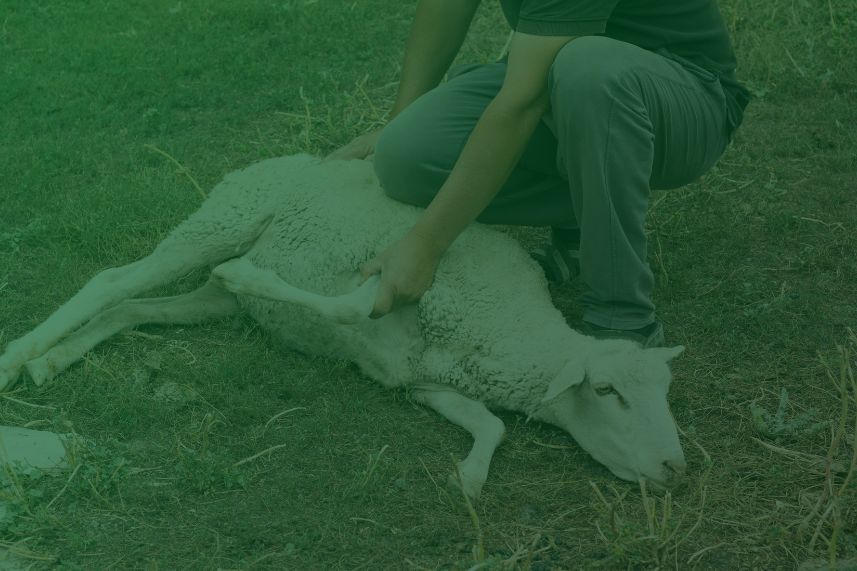
The joy of Eid al-Adha is always welcomed by Muslims around the world. Those who are able gather together to perform the sacrifice as a form of obedience to Allah SWT. Many also choose to perform the sacrifice online, as it is more convenient—the sacrificial animals are already prepared and slaughtered without the need to visit the slaughterhouse. However, this raises a question: what if the person making the sacrifice does not witness the slaughter of the animal directly? Is the sacrifice valid?
Friends, this question is totally understandable! In this digital age, everything has been made easier. So you can perform the sacrifice without having to be present at the slaughtering site. Is such worship still considered valid according to Islamic law? Is witnessing the slaughtering of the sacrificial animal in person mandatory? Let’s discuss the rules in detail in this article so you can be more certain and at peace!
The Sacrificer Not Witnessing the Slaughter of the Sacrificial Animal
Ustaz Ahmad Fauzi Qasim, a member of the Sharia Council at Dompet Dhuafa, explains the ruling on the sacrificer not witnessing the slaughter of the sacrificial animal in person. According to Ustaz Fauzi, in principle, witnessing the slaughter of the sacrificial animal is a recommended act (sunah) for the sacrificer, not an obligation.
This is also the opinion of many scholars. In Al-Fiqh al-Islami wa Adillatuha by Wahbah Zuhaili (p. 3/625), Sheikh Dr. Muhammad Al-Najdi states in his fatwa:
“Witnessing the sacrifice is a recommended act, and I am not aware of any scholar who has declared it obligatory.”
On the other hand, there is a hadith narrating that the Prophet Muhammad once said to Fatimah to witness the slaughtering of the sacrificial animal:
“O Fatimah, rise and witness the slaughtering of your sacrifice, for indeed Allah forgives every sin you have committed from the first drop of the sacrifice’s blood, and say: ‘Indeed, my prayer, my worship (sacrifice), my life, and my death are for Allah, the Lord of the Worlds, and there is no partner for Him.’ And for that reason, I was commanded, and I am among the first to submit.”
The hadith above is narrated by Al-Hakim, Al-Baihaqi, and Al-Ashbahani. This hadith is considered weak or dhaif, as stated by Sheikh Al-Bani in his book Dhaif Al-Targhib wa al-Tarhib and Silsilah Al-Ahadits al-Dhaifah.
Read also: Sacrifice Using PayLater or Pinjol, Worship or Burden? Here is the ruling
Thus, it can be concluded that the ruling for those who sacrifice animals is that it is permissible to not witness the slaughter of the sacrificial animal in person, and the sacrifice remains valid. However, the person offering the sacrifice must entrust their sacrifice to another person or social institution to be slaughtered in another area, as the people there are in greater need. The most important thing to note is that we, as those offering the sacrifice, must ensure that our sacrificial animals are slaughtered and distributed in accordance with our trust, namely given to the poor and those in genuine need.
Waalahu’alam bisshawab..
Friends, as the person offering the sacrifice or someone who is sacrificing, do not forget to recite the following prayer: “O Allah, accept my sacrifice. Make what I do a means of salvation in the Hereafter, just as the worship of the Prophets and Messengers before us was.” Amin…
Sacrifice Together with Dompet Dhuafa
Entrusting your sacrifice to a social institution to be slaughtered and distributed to those in genuine need is not easy. We must ensure that the institution is trustworthy and will carry out our message sincerely. By sacrificing with Dompet Dhuafa, you can achieve peace of mind in your sacrifice.
Why? Because Dompet Dhuafa provides four guarantees that will certainly bring peace to your heart and mind, my friends. First guarantee: your sacrificial animal is definitely male. Why male? Because Dompet Dhuafa prioritizes the sustainability of livestock. If too many female animals are used for sacrifice, the female population may become unbalanced, making it difficult for the herd to reproduce.
The second assurance is that your sacrificial animal will pass quality control. Dompet Dhuafa always ensures that the physical condition and health of the sacrificial animals are good and of high quality. The quality control process goes through many stages, starting from weighing the animals, ensuring they are healthy, to ensuring they are free from defects in accordance with Islamic law.
The third assurance is that your sacrificial animal will be distributed to remote areas of the country. Dompet Dhuafa is committed to distributing sacrificial meat to remote and rural areas. Why? Because in those areas, many people are unable to perform the sacrifice, so they cannot consume the meat. According to a study by IDEAS, most sacrificial animals are still concentrated in large cities, where the meat ends up piling up.
Fourth certainty: reports about your sacrificial animals will be fast and accurate. The sacrificial process at Dompet Dhuafa is transparent and trustworthy. As much as possible, we report the condition of the sacrificial animals in real time, from selection, slaughter, to the distribution of the meat through an integrated system that can be easily accessed by you, the donors.
In addition to the four assurances above, when you entrust your sacrificial animals to Dompet Dhuafa, you are also empowering local farmers. This is because Dompet Dhuafa sources the animals from local farmers with the aim of supporting the sustainability of their farming businesses, thereby ensuring that the economy of the farmers is equitable and runs smoothly. Let’s sacrifice now! (RQA)