


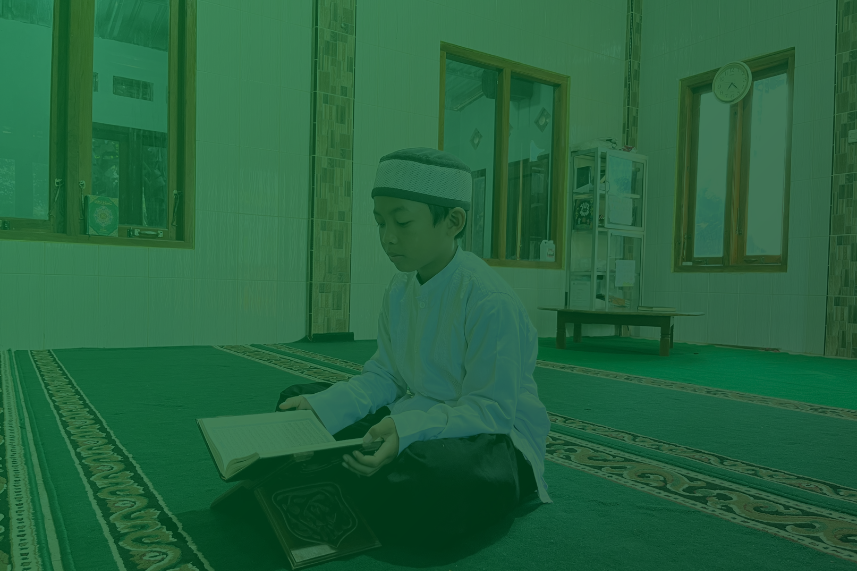
The reward for waqf for mosques is one of the achievements of charitable deeds, namely waqf, which will never cease to be beneficial even after the waqf donor has passed away. In Islamic teachings, waqf is considered the best form of charity because its benefits are widespread and continuous. This is especially true when waqf is in the form of a mosque. Mosques not only serve as places of worship, but also as centers of education, preaching, and social activities for the community. Therefore, mosque waqf has a very high spiritual value and continuous rewards for those who donate their wealth.
Read also: Cash Waqf: Definition, Merits, and Advantages
What is Waqf?
Islam defines waqf as a form of holding assets. These assets can be used for their benefits without reducing their principal value. Then, these assets are distributed for the benefit of worship or the community. Imam An-Nawawi explains that waqf is different from ordinary charity because the benefits of waqf are sustainable. In the context of mosques, waqf can take the form of land used as a mosque site, the mosque building itself, or other assets such as carpets, the Quran, loudspeakers, and even cash waqf funds used for the maintenance and development of the mosque. All these forms of waqf fall under the category of mosque waqf. This is because the existence of waqf supports the function of the mosque as a place of worship, preaching, education, and social activities for the community. As long as the community uses the mosque, the rewards of waqf will continue to flow to the waqif (waqf giver) without ceasing.
Read also: Share Waqf as an Instrument of Sustainable Philanthropy
The Rewards of Waqf for Mosques in the Perspective of the Quran and Hadith
Islam considers waqf to be a form of ongoing charity whose rewards never cease. This is confirmed in the words of the Prophet Muhammad, “When the son of Adam dies, his deeds come to an end except for three: ongoing charity, beneficial knowledge, or a righteous child who prays for him” (HR. Muslim).
This hadith provides a strong basis for considering mosque waqf as a form of ongoing charity. The rewards of waqf for mosques continue to flow because every time someone prays, reads the Quran, or performs acts of worship in the mosque, these good deeds are also recorded as deeds for the waqf donor.
The Quran also emphasizes the virtue of spending in the way of Allah. “The parable of those who spend their wealth in the way of Allah is like a grain (seed) that grows seven stalks, each stalk containing a hundred grains. Allah multiplies (the reward) for whom He wills. Allah is All-Encompassing and All-Knowing.”
This verse illustrates that every asset donated to a mosque will multiply in benefits, not only in this world, but also as a store of reward in the hereafter.
Read also: Straightening the Waqf Paradigm
The Reward of Waqf for Mosques as an Investment in the Hereafter
Endowment for a mosque is different from ordinary charity. While charity generally expires after it is used, endowment for a mosque provides continuous benefits. For example, someone endows land or property for the construction of a mosque. Every time the mosque is used for congregational prayers, Quran recitation, religious studies, and social activities of the community, rewards will continue to flow to the endower even long after he has passed away.
This is what is meant by an investment in the hereafter. The value of the property donated by the donor does not decrease, but rather increases in the form of multiplied rewards. A great scholar, Imam Asy-Syafi’i, explained that waqf is one of the most recommended acts of charity because its benefits are widespread and long-lasting in society.
Read also: Synthesizing Waqf and Investment
Functions that Make the Rewards of Waqf for Mosques Uninterrupted
Why are the rewards of waqf for mosques so great? Because mosques are not only physical buildings for ritual worship, but also have many functions that are relevant to the lives of the ummah. History records that since the time of the Prophet Muhammad, mosques have functioned as:
- A place of worship, namely a center for congregational prayers, dhikr, and reading the Qur’an.
- A center of education, during the time of the Prophet and his companions, the mosque was a place for learning religious and general knowledge.
- A center for da’wah, namely the mosque as a means of spreading Islamic teachings and a gathering place for Muslims to strengthen their ukhuwah (brotherhood).
- A social center, the mosque serves as a place for deliberation, zakat management, and even a place of refuge for travelers.
All of the above activities show that the rewards of waqf for mosques are multiplied because they involve many aspects of people’s lives. Everyone who worships, studies, or benefits socially from the mosque will become a source of reward for the waqf donor.
Read also: The Law of Inheritance in Islam and Its Distribution in Detail
Laws and Regulations on Mosque Waqf
Islam has legal provisions governing mosque waqf. The argument regarding mosque waqf can be seen from the actions of the companions of the Prophet Muhammad. Umar bin Khattab r.a. once received a plot of land in Khaibar, then he came to the Prophet Muhammad and asked, “O Messenger of Allah, I have received a plot of land that I have never had before, what do you command me to do?” The Prophet replied, “If you wish, keep the principal and give the proceeds in charity.” Umar then endowed the land for the poor, relatives, servants, those who fight in the way of Allah, travelers, and guests (HR. Bukhari and Muslim).
The above hadith is the basis for waqf in Islam, including waqf for mosques. Waqf means that the principal asset (land or building) cannot be sold or inherited, but its benefits are used for the benefit of the people.
Read also: The Virtues of Quran Waqf and Its Benefits
Hurry Up and Do Waqf for Mosques Before It’s Too Late
Many people delay their intention to make waqf with the excuse of waiting for their wealth to increase. In fact, the opportunity to make waqf does not have to wait until one becomes wealthy. Even a small amount of wealth donated with sincere intention will become a continuous act of charity.
The Prophet said, “Protect yourselves from the fire of Hell, even if it is only with half a date” (HR. Bukhari and Muslim).
A mosque endowment can start small. You don’t have to wait until you have a large piece of land; you can also endow funds to buy prayer mats, repair the mosque roof, install lights, or air conditioning. As long as these items are used in the mosque, the rewards will continue to flow to the endower.