


In addition to sacrificing animals, there are other recommended acts of worship during Eid al-Adha that can be performed to increase our rewards and love for Allah SWT and His religion. These acts were exemplified by Prophet Muhammad SAW, who is the leader of the Muslim ummah. If we practice these recommended acts of worship during Eid al-Adha properly, we will undoubtedly receive special blessings.
Sunnah Acts of Eid al-Adha
Eid al-Adha is a moment for Muslims to earn as much reward as possible. This holiday is closely associated with the emotional events of Prophet Ibrahim (AS) and Prophet Ismail (AS) in their time. Their sacrifice and sincerity in obeying Allah SWT’s command demonstrate the greatness of their faith and piety toward the Creator.
Of course, as Muslims, we also aspire to have the faith and piety of Prophet Ibrahim and Prophet Ismail, even if only a fraction of it. If sacrificing an animal is not yet possible for us, we can at least perform the following 9 Sunnah practices of Eid al-Adha to increase our rewards and goodness:
1. Proclaiming the Takbir
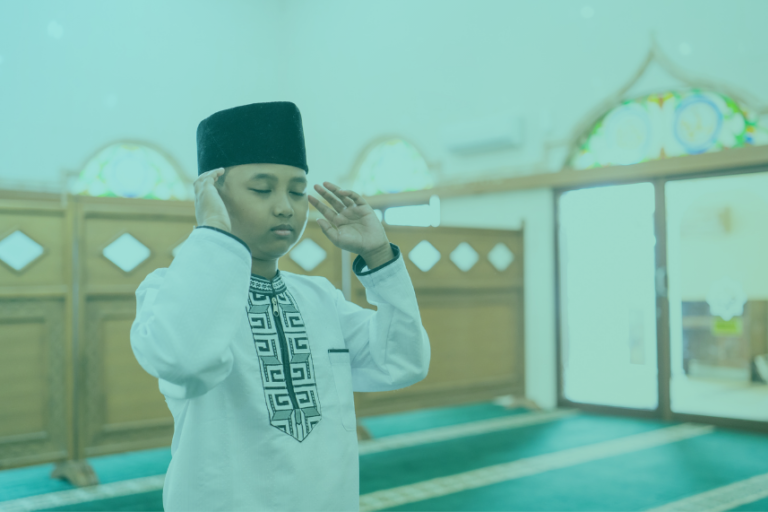
Reciting the takbir on the night of Eid al-Adha is highly recommended. This takbir activity can begin as soon as the sun sets on the 9th of Zulhijah and continues until Eid al-Adha on the 10th of Zulhijah, ending on the 13th of Zulhijah during the Asar prayer. The recitation of takbir serves as a call to glorify Allah and encourage Muslims to do the same.
2. Take a bath before Eid prayer

Taking a full bath before the Eid prayer, whether on Eid al-Fitr or Eid al-Adha, is a Sunnah. This full bath is the same as a regular full bath, except for the intention. This is as stated in the hadith:
“From Nafi’, he said that Ibn Umar, may Allah be pleased with him, took a bath on the day of Eid al-Fitr before going to the prayer ground.”
(Reported by Malik and Asy-Syafi’i)
4. Wearing Perfume
In addition to wearing their best clothes when performing Eid al-Adha prayers, Muslims are also encouraged to use perfume or fragrances. Of course, these fragrances should not be excessive or disturb those around us. This is in accordance with the hadith:
“The Prophet Muhammad (peace be upon him) instructed us to wear our best clothes on the two Eid days and to use perfumed oil.”
(HR Hakim)
5. Not Eating or Fasting Before Eid Prayer
On the day of Eid al-Adha, Muslims are encouraged to refrain from eating before performing the Eid prayer. After returning from the prayer, it is also recommended to eat immediately. This differs from Eid al-Fitr, where it is recommended to eat first before the prayer. Therefore, ensure that this Sunnah practice of Eid al-Adha is carried out.
6. Leave Early
To perform the Eid al-Adha prayer, it is best to leave early and arrive at the prayer site calmly and without rushing. While waiting for the congregational prayer, we can sit and recite the takbir and zikr. This is certainly a good opportunity, especially since the Eid al-Adha prayer is only performed once a year.
7. Walk to the Eid Prayer Site
If the prayer site is close and easily accessible, it is recommended to follow the Sunnah of the Prophet Muhammad (peace be upon him) by walking to the Eid al-Adha prayer site. This is as mentioned in the hadith:
“The Prophet Muhammad (peace be upon him) would go to the Eid prayer by walking, and he would return by walking as well.”
(HR Ibn Majah)
8. Taking a Different Path on the Way Back and Forth
“The Prophet Muhammad peace be upon him, when performing Eid prayer, would take a different path on the way there and back.”
(HR Al Bukhari)
From the hadith above, there are various lessons we can learn. For example, by taking a different path, we can meet more people, strengthen our bonds, or observe the surroundings that we rarely notice. Who knows, there might be people in need of help whom we rarely assist, and so on.
9. Bringing Women or Children to the Eid Prayer Site
Most scholars agree that the Eid al-Adha prayer is a strongly recommended Sunnah. The Prophet also instructed women and children to attend the prayer site to listen to the sermon at the edge of the prayer area. This indicates that Eid al-Adha prayer holds special significance in terms of the sermon delivered. Therefore, even if women are unable to pray, they are still encouraged to listen to the sermon.
10. Strengthening Social Bonds
After performing Eid al-Adha prayer, Muslims are encouraged to visit one another, exchange greetings, and share joy through sacrificial meals. This sunnah reflects the noble values of Islamic teachings in building brotherhood and strengthening social relationships, as Allah says:
“… and fear Allah by whom you ask one another, and (preserve) the ties of kinship. Indeed, Allah is ever, over you, All-Seeing.”
(QS. An-Nisa: 1)
By gathering with family, relatives, neighbors, and friends, emotional bonds between individuals grow stronger. This helps erode feelings of hostility and increase love and compassion within the community.
11. Show Joy and Happiness
All Islamic holidays are good times to express gratitude and happiness. The Prophet Muhammad (peace be upon him) set an example for his followers to show a cheerful face, dress neatly, and share joy with others on holidays.
“Indeed, every community has its own holiday, and these (Eid al-Adha and Eid al-Fitr) are our holidays.” (HR Bukhari and Muslim)
In fact, the Prophet once allowed two young girls to sing in his home to show that Eid is a time for joy, which is permitted in Islam. This joy not only reflects gratitude for Allah’s blessings but also spreads positive energy to others.
May we be able to perform the 11 recommended acts of Eid al-Adha mentioned above and serve as proof that we are part of the Prophet Muhammad’s community.
Read also: Qurbani from Muslim Community in Kiwi Country
There’s Still Time, Sacrifice Now
Friends, after you have performed all the recommended acts of worship for Eid al-Adha mentioned above, don’t forget that the most important recommended act of worship for Eid al-Adha is sacrificing an animal. Sacrificing an animal is the essence of Eid al-Adha. If you are unable to sacrifice an animal this year, let’s start setting aside a portion of our income to perform the sacrifice next year.
However, if you intend to perform the sacrifice this year, there is still time, and your sacrifice will still be accepted until the end of the Tasyrik days! There are still a few days left after you read this article. Don’t miss out on this year’s sacrifice, friends!