


CENTRAL KALIMANTAN — If likened, the month of Ramadan is like a garden full of various plants and fruits ready to be harvested. People can pick as much as they want. That’s Ramadan, in which there is an abundance of rewards that Muslims can earn by actively worshiping. Therefore, it is natural that this noble moment becomes a golden opportunity to compete in increasing worship, including congregational tarawih prayers in mosques, which are always awaited by all Muslims.
However, not all Muslims can experience congregational prayer in the mosque. This is because people in big cities can easily come to the mosque whenever they want. This is in contrast to Muslims in Panahan Village, the farthest village in North Arut District, West Kotawaringin, Pangkalan Bun, Central Kalimantan. This village is located upstream of the Arut River.
It is 150 km from Pangkalan Bun
So far, the people of Panahan Village who are Muslim have found it difficult to experience congregational prayer in the mosque because there has never been a mosque in their village. Panahan Village is inhabited by 260 families, 20 of which are Muslim. Some of them are converts, both Dayak natives and newcomers.
Previously, the only way to get to Panahan Village was by klotok, a form of water transportation commonly used by the people of Kalimantan for travel and other activities. However, since a company project a few years ago, a road has been opened so that the village can be reached by two- or four-wheeled vehicles. This is the only road that can be used.
Read also: Cianjur Rises Again: Al-Barokah Mosque Destroyed by Earthquake Now Stands Rebuilt


On Monday (2/24/2025), Dompet Dhuafa had the opportunity to come directly to Panahan Village. Upon arrival in Pangkalan Bun, Central Kalimantan, we continued our journey to Panahan Village, passing through a project road with a fairly wide road. The winding roads typical of the hills were also traversed. On that road we were presented with thousands of hectares of oil palms and eucalyptus trees.
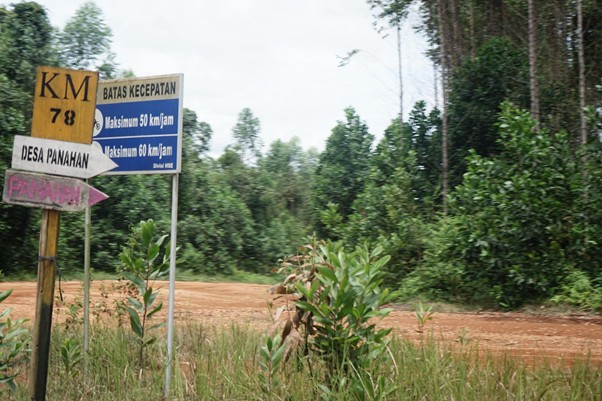
We had traveled 48 kilometers, but there were no signs of civilization, only expanses of forest and the remains of felled eucalyptus trees. Kilometer 78 was still far from sight, and the journey continued for another 150 kilometers through a remote and quiet area. Far from the capital, about 150 kilometers from Pangkalan Bun, we finally arrived at Panahan Village.
It is not only distance that is an obstacle, but electricity will only be entering this village in 2024. Difficult communication networks are a separate obstacle for the people of Panahan Village.
Amini is one of them, he has been a newcomer since 1988. He is also one of the Muslims who need a mosque in Panahan Village, because when he wants to pray on Friday he has to leave a day in advance.
“The difficulty of my time, when I first came here, if I wanted to pray I had to use a klotok (small boat) with an engine. Passing through Riam Village. If you can’t pray on Friday, you have to come back the day before. In the past I was alone, now there are friends who support each other,” said Amini.
Read also : The Important Role of Mosques in the Spiritual Journey of Mualaf
The Dream of Panahan Villagers, the Presence of the First Mosque
The presence of an adequate mosque as a place of worship is the dream of the Muslim community of Panahan Village. However, so far the religious agenda can still be carried out in a makeshift manner, such as Eid al-Fitr and Eid al-Adha prayers in the open field. This is very concerning, considering that the majority of Muslims here are converts who still need assistance.

Apart from Panahan Village, the surrounding community, such as Riam Village, also longs for the mosque to be built. This is because the closest mosque is a 60-100 minute drive away by motorbike or car.
They dream of being able to have a house of God that is a comfortable and peaceful place, creating a subtle dialogue between servant and Creator.
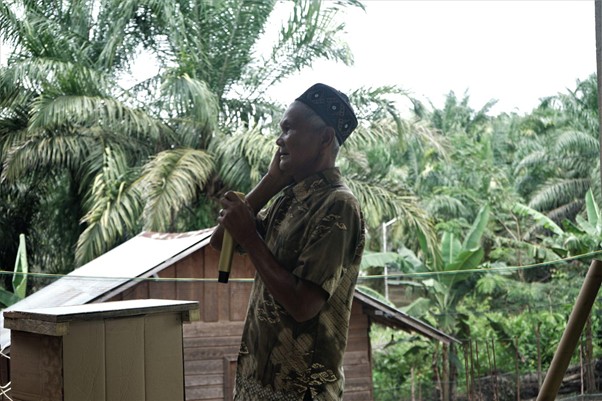
“Here I miss hearing the call to prayer. In the cities, no matter what time of prayer, Isha, Asr, the call to prayer is easily heard. Here I miss the call to prayer,” added Tuslam (70).
Tuslam is one of the figures who also initiated the mosque in Panahan Village. Entering the month of Ramadan, they also hope that the mosque can be used for congregational tarawih prayers.
“Yesterday we had a discussion with friends about the urgent need for this mosque. We hope that it can be used during this Ramadan week,” said Tuslam.
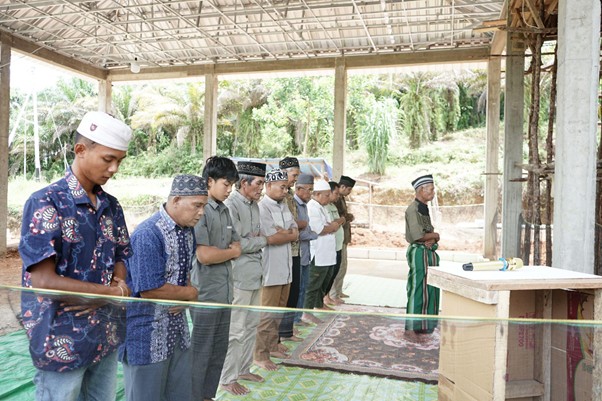
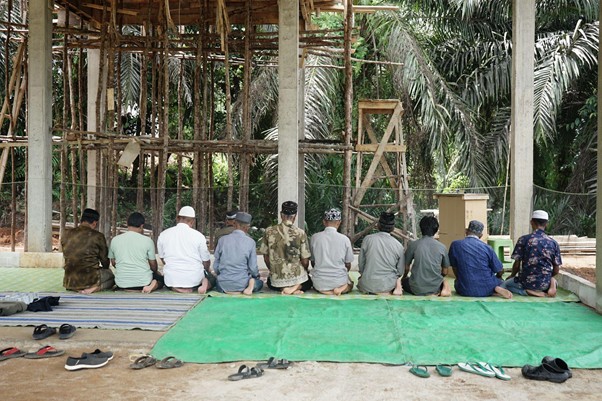

This mosque has an important role as an icon of Panahan Village, as a symbol of the struggle of Muslims there, so the completion is eagerly awaited by the community.
“The struggle for Islam is unmatched. If we are still alive, in the name of God, we will do whatever we can. Insha Allah, even though we have little knowledge … there is reward from Allah. We can’t do anything, but we help out at the mosque. I can’t buy anything, I have to wait for donors, but we just help out at the mosque with our energy,” he continued.
Public Trust
In 2004, the people of Panahan Village worshiped at the An Nur Mosque, the only place of worship that stood there. However, its existence was faced with a land ownership dispute that sparked conflict. Its location was also less than ideal, adjacent to a pigsty, creating new challenges for the Muslim community in Panahan Village.
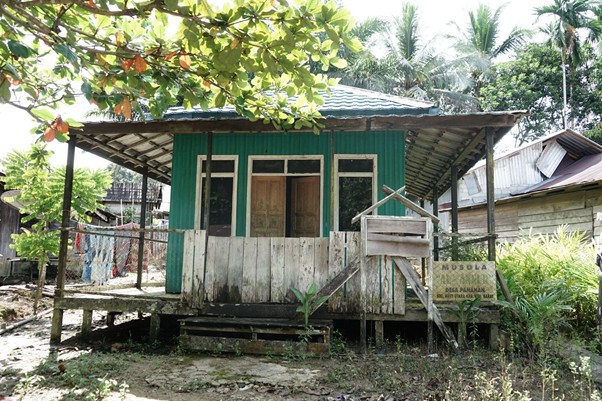
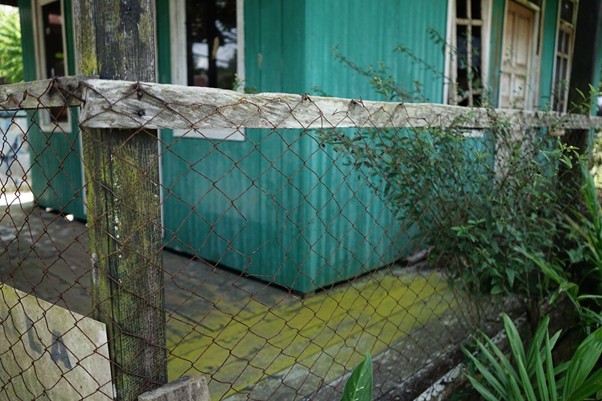
However, tolerance is maintained. Amidst differences, tolerance flourishes, bridging diverse beliefs. People respect each other and cherish their long-standing diversity. In this village, Kaharingan beliefs coexist with Islam.
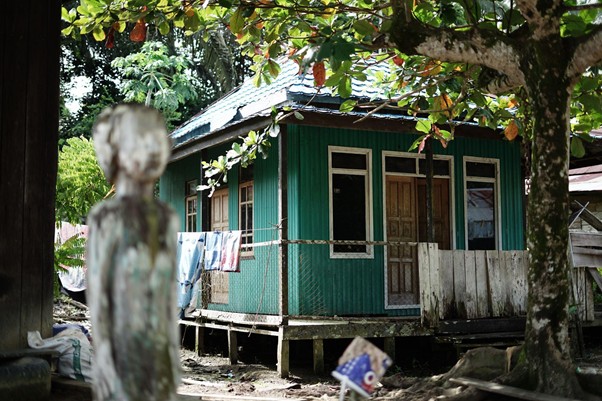
Kaharingan is the indigenous belief of the Dayak tribe in Kalimantan. The Kaharingan belief has been around for a long time in Kalimantan, even before other beliefs entered Kalimantan. Currently, Kaharingan is one of the ancestral beliefs in Indonesia that is still alive and embraced by some Dayak tribes, especially in Central Kalimantan and South Kalimantan.
Read also: Dompet Dhuafa Helat THK in Adonara, a Muslim-Populated Area in East Flores
Kaharingan’s belief is not only reflected in its spiritual teachings, but also in various cultural symbols that are still preserved today. One tangible manifestation of this tradition is the Sapundu Statue, a wood carving art unique to the Dayak Ngaju people of Central Kalimantan. For the Dayak Ngaju people, Sapundu is not just a decoration, but a ritual of respect for the deceased.
Mosque Endowment for Others
Since 2016, the community has been trying to build a proper place of worship. Initially, the construction plan was planned next to the house of one of the residents, and the community started a joint fund to buy materials. Construction had started up to the foundation stage, but stalled due to funding constraints and lack of land.
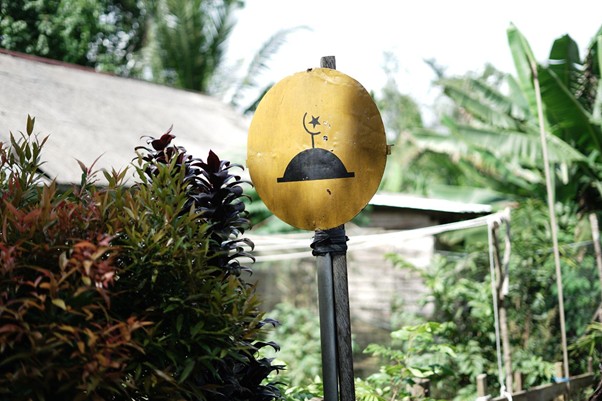
In 2020, plans to resume construction resurfaced. The people of Panahan Village continued to be driven by a strong desire to build a mosque. Finally, they took the initiative to move the construction of the mosque to a new location.
The mosque that is currently under construction stands on land that was previously an oil palm plantation. This land was donated by a resident who is also a community leader in Panahan Village, namely Imam. As a form of mutual agreement, the people of Panahan Village named the mosque Al Huda in its new location.
“Alhamdulillah, this is a waqf from me, and my friends agreed. Finally, it stands there until now. Because for me, what’s the point of having a lot of wide land, after all, it can’t be taken with us when we die. If what I donate is a waqf, insha Allah, there will be a legacy. Because my intention is to play an active role in religious activities, so when needed, I will be there. I just hand it over. So the Muslim residents of Panahan want a place of worship, a place for deliberation, for worship and for other religious activities,” Imam explained to Dompet Dhuafa.

Read also: The Important Role of Mosques in the Spiritual Journey of Mualaf
The mosque construction process was carried out in two stages. The first stage began with the construction of the foundation, but was halted due to funding constraints. After a long delay, construction resumed and proceeded for several months until the pole installation stage.
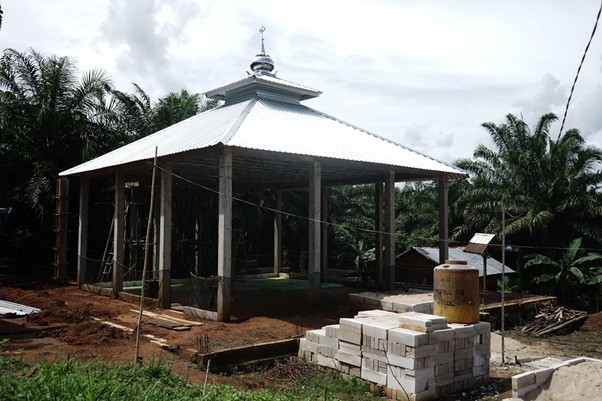
Praise be to God, the assistance received made it possible to complete the roof, including the light steel and dome. Currently, the mosque is usable even though the walls have not yet been built.
The mosque’s last construction was two years ago. Currently, the roof and foundation pillars have been erected, but limited funds are still an obstacle to continuing the process. Meanwhile, the floor is still made of soil covered with tarpaulins or carpets. The community has also installed a net to keep animals such as dogs and chickens out of the mosque area.


The desire to learn Islam in this village is very strong, so that the community feels it is important to have a place that can be used for worship as well as to study religious teachings. The existence of a mosque is a primary need, not only for the five daily prayers, but also as a place to study and to maintain relationships.
Various challenges are still felt, including equipment that supports the smooth running of worship. One of the challenges faced is the absence of a pulpit. Before there was a pulpit, the community used a charity box as a place to put books and microphones. Due to urgent needs, the pulpit was finally made simply using cardboard and makeshift wood.
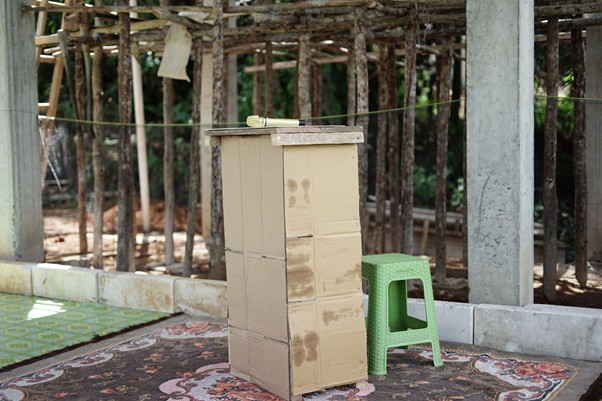
The spirit and determination of the people of Panahan Village are a symbol of their struggle. Even though they are a minority, their togetherness and strong cooperation enable them to realize their common desires.
“Hopefully our mosque can be finished quickly, so there is something to educate our grandchildren. Because we are all laymen here and there are many converts. My hope is that there will be a preacher who stays here to guide us,” said Imam.
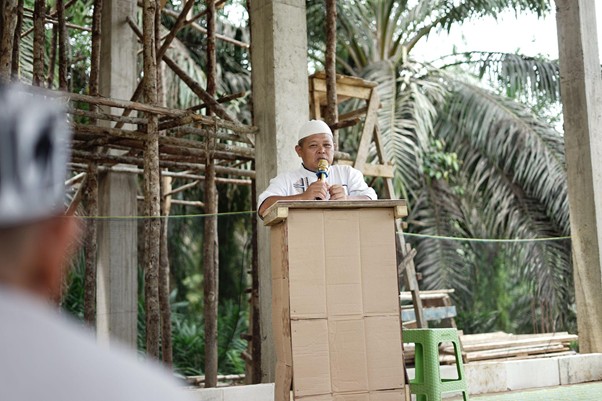
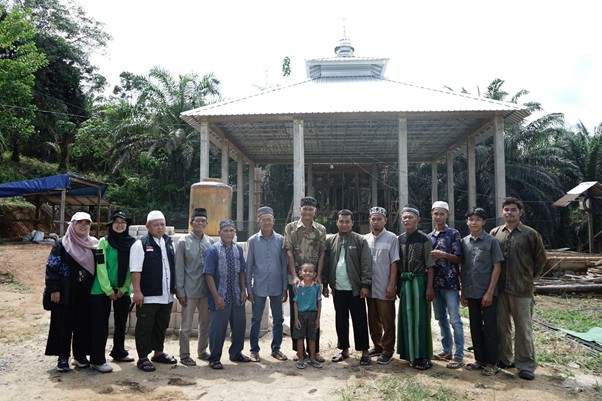
“In the future there will be TPQ learning again. But we are thinking of saving these generations of ours who are still young. Our hope is not only physical, but there are other activities that support it,” said Imam hopefully.
Al Huda Mosque will be built on a waqf land area of ± 600 m². Al Huda Mosque is currently in dire need of attention and prompt handling. Otherwise, the people of Panahan Village will never have a proper and comfortable place of worship. Help bring the first mosque to the people of Panahan Village by visiting this page digital.dompetdhuafa.org/wakaf/masjidmualaf.
Text and photos: Anndini Dwi Putri
Editor: Dhika