


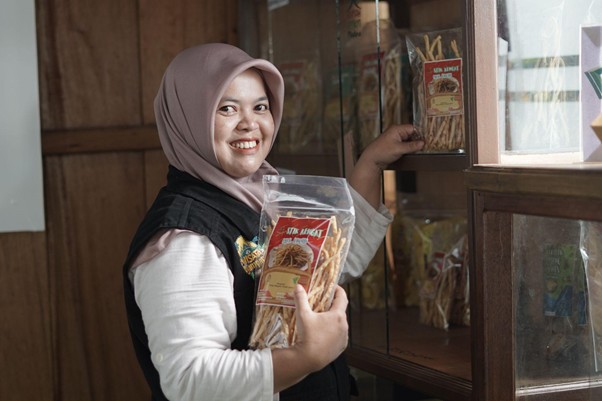
WEST JAVA — Kartini Day, celebrated every April 21, is not only about remembering Raden Ajeng Kartini, but also a moment of reflection on the struggles of women today. How they survive, thrive, and even become agents of change in their communities. Amid economic and social challenges, many women have risen from adversity to become pillars of empowerment. One such woman is Siti Hapsoh (44), a modern-day Kartini from Bogor.
Hapsoh’s journey began in her kitchen. As a single parent, she wanted to remain independent and productive, even though she had to raise her children on her own. In 2018, she started a small business selling packaged onion sticks. However, like many small businesses, it began with limited resources, little capital, minimal marketing knowledge, and a lack of understanding of proper business management.
However, her life took a turn for the better after meeting Zona Madina Dompet Dhuafa. At the time, Dompet Dhuafa was actively promoting an economic empowerment program for women in the Parung area of Bogor. Hapsoh, who arrived with a sense of pessimism, was welcomed with open arms. She found not only access to training and mentoring but also a collaborative ecosystem that helped her grow.
Read also: National Zakat Day and Kartini Day, a Show Event for Women Zakat Heroes
“It all started in 2018. I chose onion sticks as a product for my business. However, there were many product returns because the system was not clear. Thank God, the Zona Madina team helped evaluate the business. Now everything is more systematic, with weekly deliveries, and the products are already available in restaurants and tourist attractions,” he recalled.
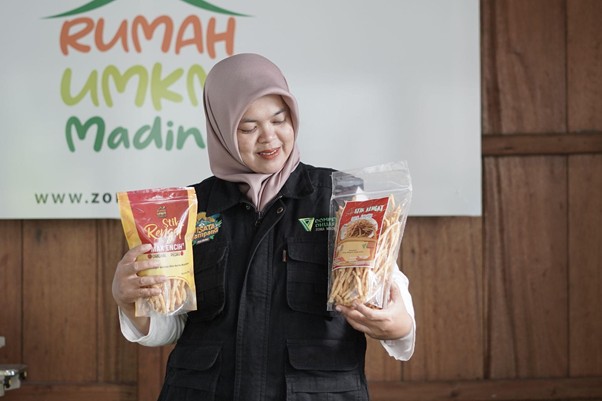
Thanks to that process, Stik Rengat, his flagship product, is now widely recognized. He can even produce up to 25 kilograms per week and has begun creating job opportunities for his neighbors.
This success hasn’t made Hapsoh complacent. Instead, she sees true empowerment as when someone can inspire others. That’s where her passion grew, and her confidence followed. She was then trusted to become the Chairperson of the UMKM Zona Madina Packaging House, leading over 60 other women who are also building their own micro-enterprises.
As chairwoman, Hapsoh does not only manage administration and product distribution. She serves as a moral supporter, a source of motivation, and a mentor for the other women. At the Madina Zone UMKM House, she initiated informal learning sessions, sharing her experiences in production, packaging, and building the confidence of members who feel insecure about their limitations.
“Many women were initially shy and afraid to start a business. But at the UMKM Center, we encourage each other. We help one another. I tell them, ‘Don’t be afraid to fail; the important thing is to start first,’” Hapsoh said confidently.
Her role is not only as a home-based entrepreneur but also as a leader of the women’s community. She is a living example that women are not merely beneficiaries but active agents of social development. Meanwhile, the UMKM House serves as a safe and productive space for women to grow together—physically, mentally, and spiritually.
Hapsoh’s story is one of many examples of how strategically implemented Islamic philanthropy can foster independence rather than dependency. Through an approach that prioritizes mentoring, training, access to capital, and business digitalization, Dompet Dhuafa demonstrates that women’s empowerment is not just a dream but a tangible reality.
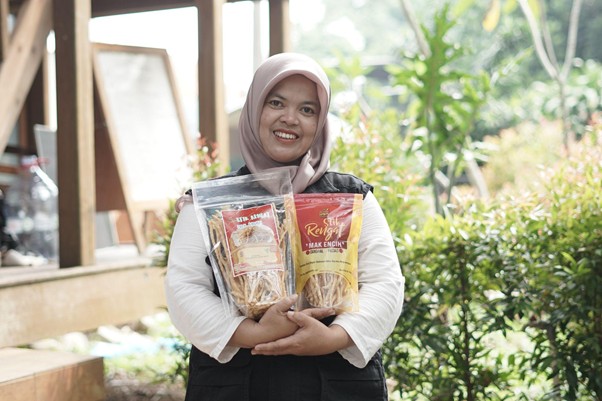
Women like Hapsoh are no longer just providing for their families, but also improving the lives of others. She is a leader born out of empowerment, and now she is empowering others. These values align with Kartini’s spirit: that women have the right to dream, grow, and lead.
More than that, Hapsoh proves that a woman’s integrity is not defined by titles or status, but by dedication, consistency, and the willingness to keep learning and sharing. Within the Dompet Dhuafa empowerment ecosystem, it is this integrity that is continuously nurtured so that every woman can find value, strength, and direction in her life.
Read also: Mother as a Role Model for the Family, Dompet Dhuafa Presents Waqf for Mothers
This year’s Kartini Day celebration carries a profound message: amidst simplicity and limitations, there are many women who quietly drive change. Like Hapsoh, who not only rose from adversity but did so with a spirit of unity.
Through the UMKM Zona Madina program, Dompet Dhuafa does not merely distribute aid. It instills vision and values. Dompet Dhuafa is cultivating new Kartinis who are grounded in reality but have aspirations as high as the sky.
And as long as that spirit endures, as long as philanthropy walks hand in hand with empowerment, there will always be women who illuminate the world around them. For, as our mother Kartini once said: “After darkness, light dawns.” (Dompet Dhuafa)
Text and photos: Riza Muthohar
Editor: Dhika