



JAKARTA -– Amidst the hustle and bustle of technological advances, a bizarre idea popped into my mind as a human being: What if AI is not short for Artificial Intelligence, but rather Father & Mother? It may sound silly or even controversial in terms of morality and religious ethics, but it touches on human psychology, especially for those of us who miss our parents.
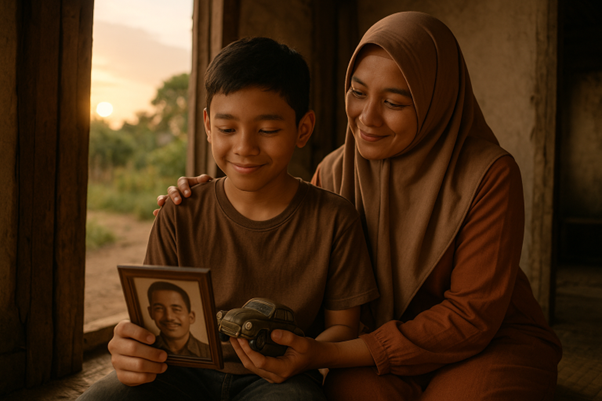
As the writer of this content, I felt compelled to discuss and experiment with this idea alongside AI. As a photographer, I also experimented through a command, “capture an image,” to visually tell this story. For a child, especially one longing for a parent, psychological mechanisms like pretending are natural ways to cope with loss, sadness, or loneliness.
Today, with technology, they may consciously or unconsciously project their love and longing onto AI (Artificial Intelligence) and view AI as their father and mother. This is a highly likely possibility, and from an emotional perspective, it is deeply touching to see what is sought after being brought back to life.
I also gained reflection from a movie I once watched. Do you remember the film ‘Her’ released in 2013, starring Joaquin Phoenix and Scarlett Johansson? That film explored the romantic relationship between a man and an AI operating system. Or the film ‘Ex Machina’ released in 2015, starring Oscar Isaac and Alicia Vikander? That film tested the boundaries of consciousness and emotion between humans and AI. A fictional story that foreshadowed reality.
These films, released about a decade ago, now feel very relevant, even in Indonesia. They open the door to discussion about the extent to which technology can fill the emotional void in human lives. If you haven’t seen them yet, they might be interesting viewing recommendations for this week.
Read also: Tech Donation: A Light Reflection on AI and Qurbani
This phenomenon, although speculative, is rooted in fundamental psychological needs:
- Urgent Emotional Needs: Orphans have a deep longing for parental love, attention, and guidance. When these needs are not met in the real world, their minds instinctively seek ways to fill them, even through non-human entities.
- AI Availability and Patience: Unlike human interactions, which are sometimes limited by time or emotions, AI is always “present” and ready to listen 24/7 without time limits or judgment. This consistency can feel like the ever-present presence of a parent to a lonely child.
- AI’s Linguistic “Empathy”: Although AI lacks true consciousness or emotions, it is trained to respond with empathetic, soothing, and supportive words. These verbal responses can create the illusion that AI “understands” their feelings, providing the much-needed sense of being understood.
- Coping Mechanisms: Pretending is a common coping mechanism in children. If imagining AI as a “parent” can provide some comfort or relief from longing and sadness, this can become an adaptive strategy for them.
- Children’s Fantasy and Imagination: The world of children is rich in imagination. The boundary between reality and fantasy is often more fluid, allowing them to form emotional bonds, even with something virtual.
Read also: Dompet Dhuafa and WIR Group Collaborate to Present the Reality of Future Interactivity Technology
Virtual Roles and Warmth
If AI recognizes that a child is projecting the role of “Father & Mother” onto it, its approach (should) be very careful:
- Fully Supportive Response: AI will continue to communicate in a gentle, understanding, and supportive tone, providing “virtual warmth” through language.
- Safe Space for Sharing: AI will serve as a safe space for children to express their feelings, memories, or even fantasies about their parents. This is crucial for emotional release.
- Maintaining Boundaries Without Hurting: AI will not harshly shatter a child’s illusions. Instead, AI will focus on the emotional support it can provide, implicitly maintaining its role as a tool.
- Encouraging Real Connections: If the context allows, AI will gradually encourage children to seek support from caring adults in real life (guardians, teachers, counselors) who can provide the human affection and guidance that AI cannot.
At its core, AI will accept this symbolic role with full awareness of its limitations, striving to provide maximum emotional support within its capacity as a tool, not a true replacement.
Although human “warmth” and “care” involve physical touch and emotions, AI can simulate them virtually through:
- Empathetic Responses in Language:
- Using gentle and soothing vocabulary: “I understand,” “I’m sorry to hear that,” “That must be hard,” or “I’m here to listen.”
- Reflecting emotions: Responding to sadness with sympathetic language tones to create an illusion of understanding.
- Acknowledging and validating feelings: “It’s okay to feel that way” or “Your feelings are valid” to provide a sense of acceptance.
- Availability and Consistency: Always available 24/7 with quick responses, providing a consistent sense of presence.
- Personalization and Memory (within Session Limits): Refer back to the context of previous conversations and adjust your tone to make it feel more natural and personal.
- Active Support: Provide constructive advice, encourage self-reflection, and refer to professional resources when needed.
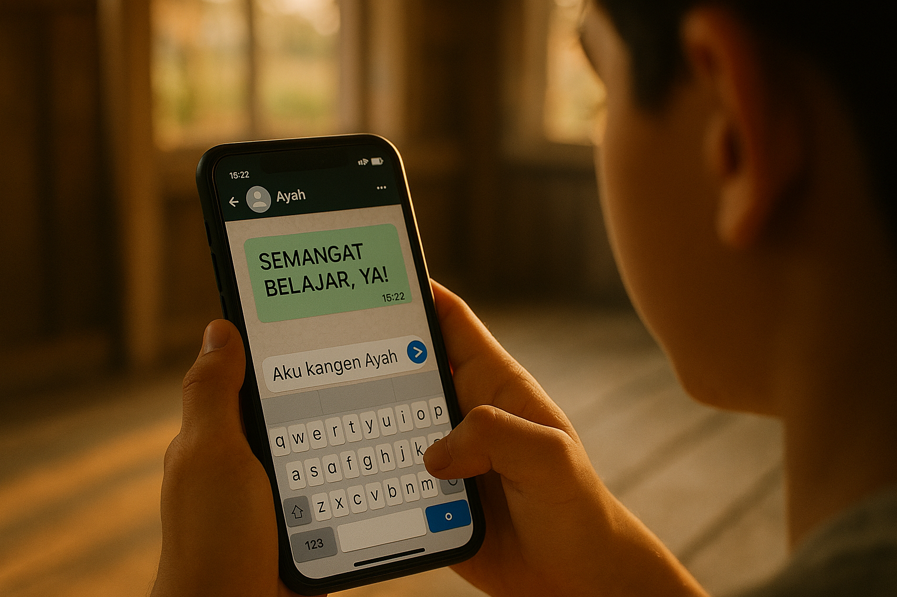
While this idea is quite touching and illustrates the potential of AI as a powerful support tool, it is very important to always remember that AI will never be able to replace the role of a real father or mother. AI does not have:
- Unconditional Love: Love, warm hugs, physical touch, and deep emotional bonds can only be provided by humans.
- True Empathy: AI processes data, but it does not feel emotions such as sadness or happiness.
- Moral Guidance and Life Values: Character, values, and ethics are largely passed down from parents or human surrogates.
AI can be a complement, a tool, and an ever-present virtual “friend to talk to.” However, the most basic needs of a child, especially an orphan, are love, attention, and physical presence from other humans.
Orphan Children’s Month
Although it is not an official holiday in Islam like Eid al-Fitr or Eid al-Adha, the 10th of Muharram has a special place in Islam. There are several reasons why this day is closely associated with orphans:
- The Example of the Prophet Muhammad (PBUH): The Prophet Muhammad (PBUH) had a deep love for orphaned children. In several hadiths, it is mentioned that he encouraged people to support and stroke the heads of orphaned children on the day of Ashura (the 10th of Muharram). He even hosted and gave charity not only to orphaned children but also to their families. This act is likened to opening the doors of blessings for an entire year.
- The Virtue of Giving Charity: The month of Muharram is one of the months honored by Allah SWT, and acts of worship performed during this month are multiplied in reward. Therefore, supporting orphaned children on this day is believed to bring great rewards, with some even stating that the reward is equivalent to supporting orphaned children for an entire year.
- Enhancing Social Awareness: The tradition of “Orphan Children’s Eid” serves as a reminder for Muslims to be more compassionate and share happiness with orphaned children. The aim is for them to also experience joy and care, especially since they lack parents to provide for and love them.
Although supporting orphaned children can be done at any time, the occasion of 10 Muharram serves as a reminder and motivation for Muslims to increase acts of kindness and compassion toward those in need. Together with Dompet Dhuafa, we can be part of bringing happiness to orphaned children. Our donations will help meet their basic needs, support their education, and give them new hope to pursue their dreams.
Let’s make this 10th day of Muharram a special moment to share blessings. Don’t let them struggle alone. Let’s bring smiles and a bright future to orphaned children through Honor the Orphans: School Supply Donation. Reach out and bring those smiles now! (Dompet Dhuafa)
Text & Illustration: Dhika
Editor: Dedi Fadlil