

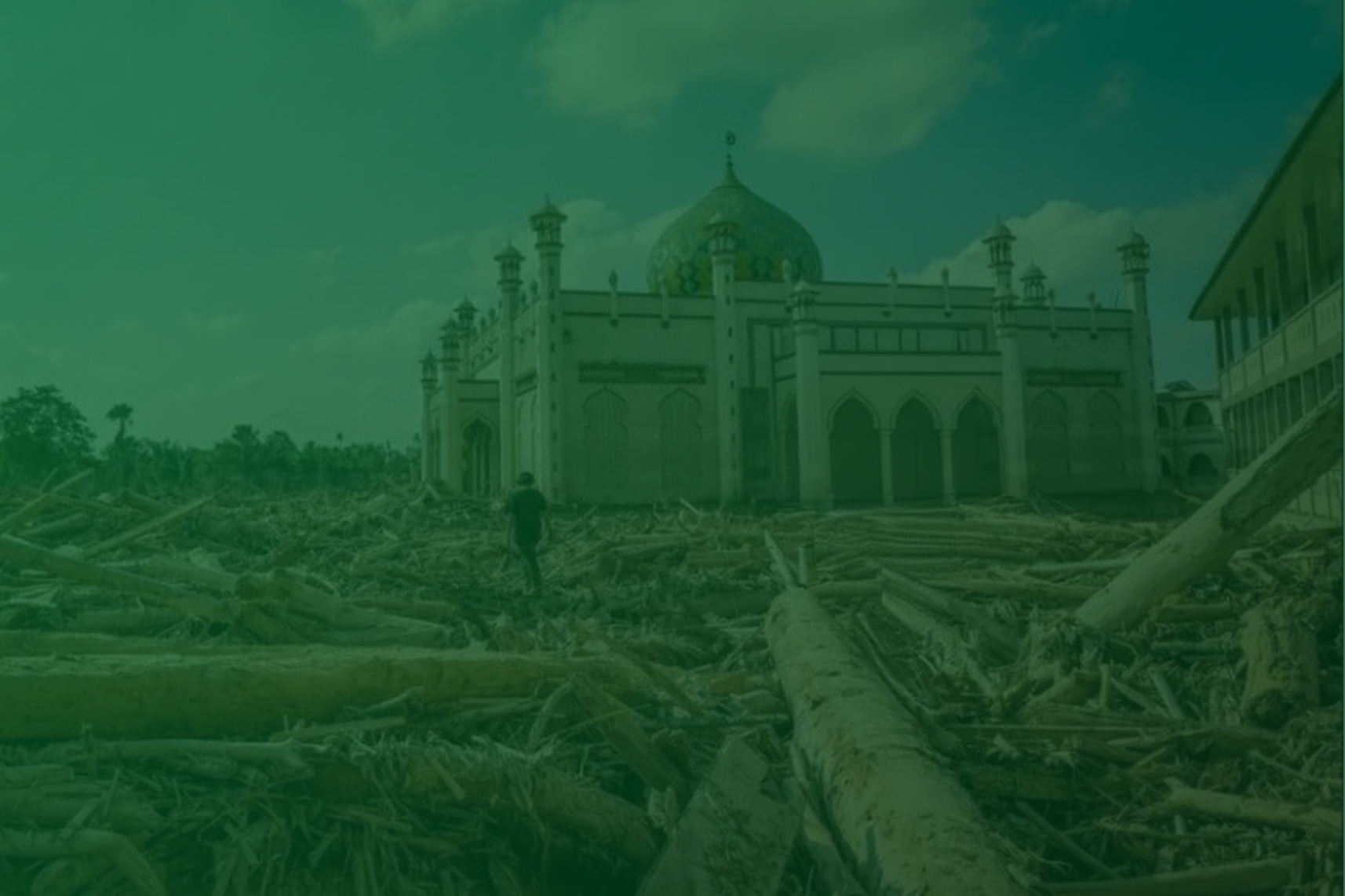
The disaster that struck Sumatra opened many people’s eyes to the fragility of life when nature is destroyed by human hands. The floods came after the forests were cleared on a massive scale and turned into palm oil plantations. Torrential rains fell, rivers overflowed, and villages were submerged in a short time. Many families lost their homes, jobs, and sense of security. At times like this, there is an important question we need to answer. Are we truly present for our brothers and sisters in need?
Read also: Valuable Lessons from the Great Flood in Sumatra
Deforestation Causes Disaster to Hit Sumatra
The floods in Sumatra were not only caused by torrential rains, but also by deforestation in the upstream areas, which accelerated the flow of water to residential areas. When trees are cut down indiscriminately and land is cleared without control, the soil loses its absorbency, forests that should store water turn into open areas, rivers can no longer accommodate the water discharge, and floods can occur repeatedly.
When nature loses its balance, humans bear the consequences. This disaster should be seen as a shared concern, not just a passing news item on social media, but a call to responsibility that must be acted upon. The Quran reminds humans of the consequences of their own actions. Allah says in Surah Ar-Rum verse 41 that destruction on land and sea arises because of human actions.
This warning is not far from the reality in Sumatra today. When humans exceed their limits, nature responds harshly.
Read also: The wisdom behind natural disasters in Islam, Muslims must know!
The Social Impact of the Disaster that Hit Sumatra
We need to care about the disaster in Sumatra because its impact directly affects people’s lives. Floods cut off access to education, making it difficult for children to attend school, damaging farmers’ land and tools, halting traders’ activities, eliminating livelihoods, and disrupting the health and safety of residents. This situation occurs because of ongoing environmental damage, so that humans also bear the consequences of treating nature incorrectly. The increasing number of flood victims shows that the underlying problem has not been resolved.
Caring brings real benefits to victims and the wider community. We build social solidarity, strengthen humanity, and foster empathy that makes communities better prepared to face crises. Caring also encourages concrete actions in the form of assistance, attention, and support, while raising awareness to protect the environment so that the risk of disasters can be reduced.
Read also: 7 Guidelines for Dealing with Disasters in the Quran: Self-Preservation is a Priority
Where is Our Role When Disaster Strikes Sumatra
When disaster strikes Sumatra, everyone has a role to play according to their abilities. Some help in the field, others support from afar by spreading information on social media. Some raise donations. Others play a role through policy and supervision. All of these roles are important and complement each other.
Islam encourages its followers to care for others. In Surah Al-Maidah verse 2, Allah commands humans to help one another in goodness and piety. Helping flood victims and protecting the environment are tangible forms of goodness. If we choose to remain silent, their suffering will only prolong.
The disaster that struck Sumatra also reminds humans of their moral responsibility in managing nature. Nature is not just a source of profit. Nature is the foundation of life. When forests are destroyed for narrow interests, the impact spreads to many people. This responsibility applies according to each person’s role. Officials are responsible for policy. Business actors are responsible for the impact of their businesses. The community is responsible for protecting the surrounding environment.
Read also: Zakat for the Environment Helps Restore Damaged Ecosystems
Amidst Mud and Loss, They Persevere with Faith
When the floods began to recede, the suffering of the residents did not immediately end. Mud still covered their homes, road access had not been restored, and daily activities could not return to normal. Many families had to survive in evacuation centers without certainty, facing limited food, clean water, and health facilities. It was during this phase that the psychological and social burdens became even more pronounced, as they had to restart their lives under very limited conditions.
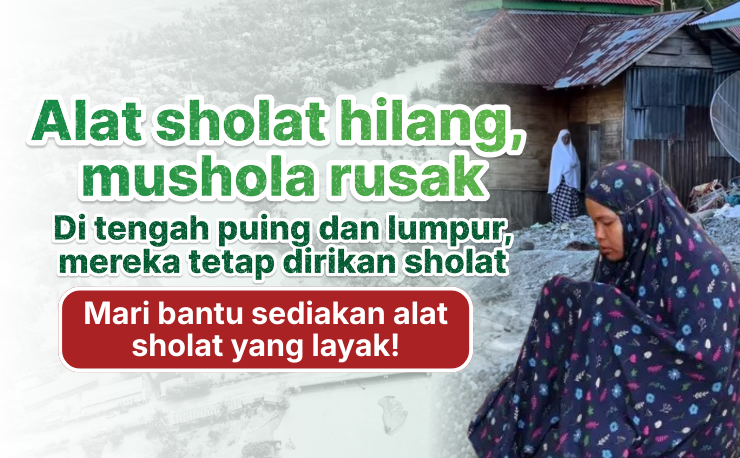
Amidst the debris and loss, the survivors still tried to maintain their worship. Even though their prayer equipment was washed away or buried in mud, they did not abandon their obligations to Allah. With makeshift prayer mats, or even without any mat at all, they continue to prostrate and ask for strength. This determination serves as a reminder that disasters may take away their possessions and homes, but they cannot extinguish the faith that they continue to uphold in the midst of trials.
Read also: Allahs Warnings about Disasters in the Quran and Hadith
Being Present for Our Brothers and Sisters Affected by Disasters
Our presence among brothers and sisters affected by disaster does not always have to be manifested by being physically present at the location. Presence can also take the form of caring for donations and prayers that continue to accompany them, because the impact of flooding does not stop when the water recedes. The damage left behind requires a long time to recover, not only the homes and facilities of residents, but also the environment that has supported their lives. Many families have lost not only their possessions and homes, but also the religious items that help them draw closer to Allah. In the refugee tents, they continue to try to maintain their prayers despite their limitations, prostrating on damp ground and praying in whatever clothes they have.
Islam teaches that humans should not remain silent when danger threatens their lives. Allah says, “Spend in the way of Allah, and do not throw yourselves into destruction, and do good. Indeed, Allah loves those who do good.” (QS. Al-Baqarah verse 195). This verse reminds us that preventing destruction and strengthening others is part of doing good deeds.
The destruction of forests that triggers flooding is proof that human negligence has a widespread impact on many people. Through tangible care, such as the program to donate prayer equipment to disaster survivors in Sumatra, we can help them maintain their peace and devotion in worship. Giving prayer mats, prayer robes, and prayer equipment is not just about giving things, but about keeping faith strong in the midst of trials.