


Praise be to Allah, after completing a series of worship rituals during the month of Ramadan, Muslims are preparing to welcome Dhu al-Hijjah by performing qurbani. Qurbani is an annual act of worship to draw closer to Allah and to promote the spirit of sharing. Various methods are used to promote qurbani, one of which is through qurbani contributions.
According to Imam Syafi’i and Imam Maliki, the law of sacrifice is sunnah muakkad or a strengthened sunnah. Meanwhile, according to Imam Abu Hanifah, sacrifice is obligatory for those who are able.
Questions about joint sacrifice are thoroughly discussed through this sharia consultation. Read on to find out more!
Sharia Consultation on Joint Sacrifice
Question
Currently, it is common in some communities to pool funds for qurbani with varying amounts and for various purposes. Can this joint qurbani be categorized as valid according to sharia?
Answer
1. Qurbani in accordance with the valid requirements
The qurbani ritual must comply with the valid requirements and eligibility of qurbani animals. First, the valid requirements from the livestock side. Checklist when choosing a sacrificial animal, here are the criteria based on sharia:
- Eyes are not completely blind or missing
- Ears are not cut off by more than a third
- Upper body is of sufficient age, at least 1 year old and not pregnant
- Tail is not cut off by more than a third
- Stomach is not so thin that the bones are visible
- Legs are not lame
- The fur is healthy and not dull
- The teeth are not missing
2. The intention of sacrifice is to draw closer to Allah
According to Dr. Oni Sahroni of the National Sharia Council of the Indonesian Ulema Council, sacrificial animals are slaughtered on the day of Eid al-Adha as a form of taqarrub, or drawing closer to Allah.
3. The joint contribution meets the minimum number of sacrifices
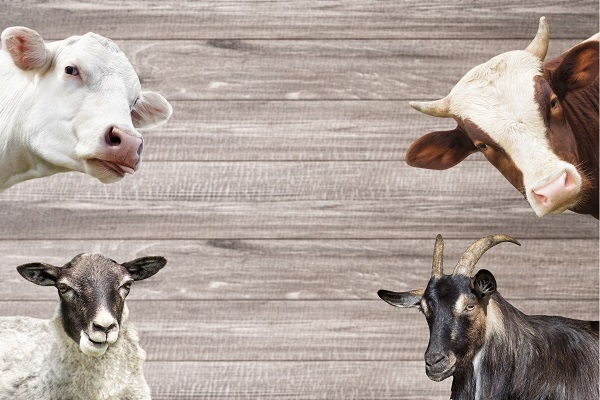
Joint qurbani must meet the minimum number of participants. The Sharia Council of Dompet Dhuafa, Ustadz H. Ahmad Fauzi Qosim, S.S., M.A., M.M said that goat qurbani is only allowed for one person and can represent a family, while cow or camel qurbani can be for seven people. Therefore, the only permissible joint sacrifice is a cow or camel.
Read also: To prevent the spread of PMK, DD Farm tightens inspections of all sacrificial animals
According to zakat.or.id Dompet Dhuafa, some scholars explain that sacrificing one goat is better than pooling resources for a cow or camel, because seven goats are more beneficial than one cow (Shahih Fiqh Sunnah, 2:375, Fatwa Lajnah Daimah no. 1149 and Syarhul Mumthi’ 7:458).
Imam As-Saerazi Asy-Syafi’i said,
“A goat (alone) is better than seven people pooling together to buy a cow. This is because the person performing the sacrifice can shed the blood (slaughter) alone.” (Al Muhadzab 1:74).
The opinions of the scholars above are drawn from the economic situation of the people living in Arabia, who are classified as wealthy and can afford to buy sacrificial animals for themselves. Meanwhile, in Indonesia, there are still many people from the lower-middle class, so buying a cow jointly is a common solution.
4. Beneficial for sharing
Pooling funds for sacrifice is a form of meat charity that builds solidarity among Muslims. By pooling funds for a cow sacrifice, the sacrificer receives reward while also helping the poor enjoy the meat.
Hadith stating that pooled sacrifice is valid
Watch this video clip to understand more!
The law of joint sacrifice is found in a hadith narrated by Ibn Abbas in the book Al-Mustadrak by Imam Al-Hakim.
كنا مع رسول الله صلى الله عليه وسلم في سفر فحضر النحر فاشتركنا في البقرة عن سبعة
Meaning: “We were traveling with the Messenger of Allah, peace be upon him, when the day of Eid al-Adha (yaumul nahr) arrived. Finally, we pooled our money to buy a cow for seven people to be sacrificed,” (HR. Al-Hakim).
In addition, there is also a book called Shahih Muslim, narrated from Jabir bin Abdullah;
كنا نتمتع مع رسول الله صلى الله عليه وسلم بالعمرة، فنذبخ البقرة عن سبعة نشترك فيها
Meaning: “We once performed the tamattu’ pilgrimage (performing umrah before hajj) with the Messenger of Allah, peace be upon him, then we slaughtered a cow from the joint contribution of seven people.” (HR. Muslim).
From the above arguments and opinions of scholars, it can be concluded that the law of sacrificial offerings through joint contributions is valid and permissible.
Choose the best and healthiest animals through online sacrificial offerings at trusted institutions such as Dompet Dhuafa. You can make your sacrificial offering from the comfort of your own home, and you can follow the report transparently from afar.
Additionally, the livestock raised by Dompet Dhuafa are exceptionally healthy and hygienic. Let’s spread the benefits of your sacrifice to reach even the remotest corners of the country with Dompet Dhuafa! #OneSacrificeManyGoodDeeds (red 2023)