


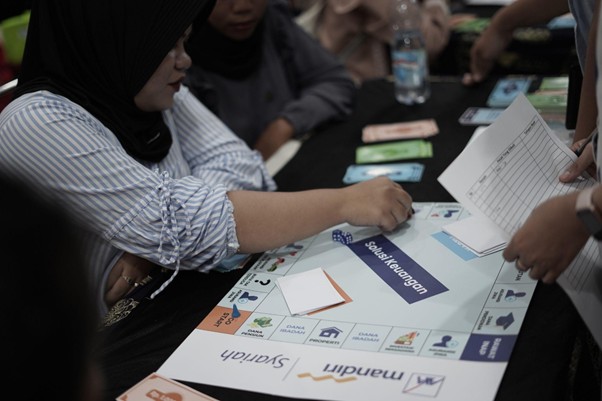
BOGOR, WEST JAVA — We all agree that building a household is not just about uniting two people in marriage. There are commitments, responsibilities, and, of course, the realities of life that must be faced together. One of the most common challenges is financial issues.
Many couples start their marriages with love but end them due to economic issues. Data from Databoks Katadata shows that in 2023, 108,488 divorce cases in Indonesia were caused by economic reasons. This means that more than a quarter of the total 408,347 divorce cases were due to financial problems.
Financial issues within a household are not solely due to low income. Many cases actually arise from a lack of knowledge about how to manage finances. This is why we all—whether newlywed, long-married, or still planning to marry—need to continuously learn about how to wisely manage family finances.
On Wednesday (April 23, 2025), at Zona Madina Dompet Dhuafa in Parung, Bogor, during a talk show themed “Maternal Health and Family Financial Management” organized by Dompet Dhuafa in collaboration with AXA Mandiri, a housewife named Lista Rosita (33) participated as an active speaker.
Read also: KLiK Program Encourages Financial Literacy for Teachers and Students in Medan
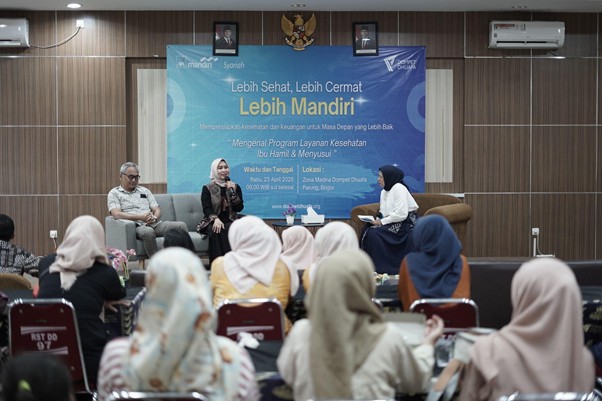
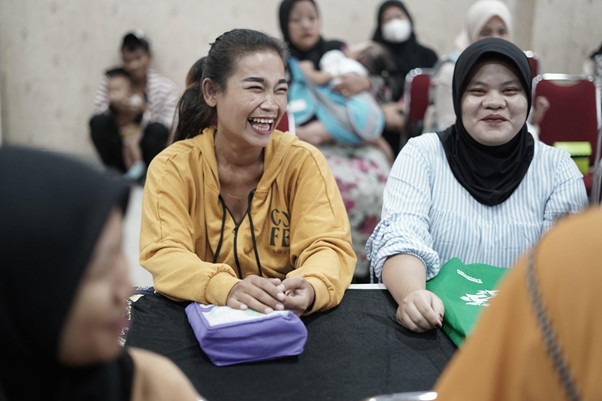
The event was attended by at least 30 pregnant and breastfeeding women from underprivileged communities. They gathered not only to receive education on maternal and child health, but also to gain insight into how to manage family finances independently and wisely, despite limited income.
During the forum, competent speakers such as Dr. Ari Waluyo, SpOG(K), MARS, provided education on the importance of balanced nutrition during pregnancy, the benefits of exclusive breastfeeding, and the role of nutrition in children’s growth and development. From a financial perspective, Dalila, Head of Business Development & Banca 4.0 at AXA Mandiri, shared in-depth insights on household financial management.
With a sincere expression and a soft voice, Lista asked, “How can we manage our family finances with a small income so that our household remains peaceful, harmonious, and happy?”
This question likely resonates with millions of families in Indonesia who work hard every day yet still feel ‘not enough.’ In reality, the key to financial success isn’t the size of one’s income, but how it’s managed.
“Financial issues aren’t about the size of your income. It’s about how you manage it carefully and wisely,” Dalila replied wisely.
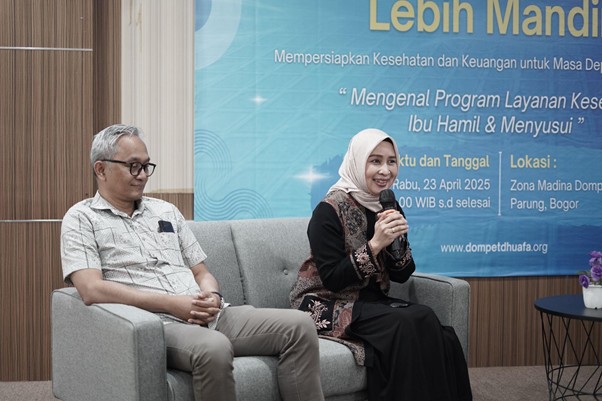
She continued by saying that in families, women (mothers/wives) play an important role as “Ministers of Finance.” It is women who decide where money goes every day. Therefore, basic skills in financial planning and management are essential for maintaining household stability.
Dalila then introduced participants to the practical concept of Islamic finance that can be applied by anyone, including families with limited income. She quoted a principle from the KNEKS publication, Islamic Wealth Management Textbook, which divides income into five main categories:
- Zakat (2.5%): To purify wealth and help others.
- Assurance: Funds for protection against unexpected events (such as illness or accidents).
- Present: Meeting the family’s daily needs in a simple manner.
- Future: Savings for long-term needs such as education and childbirth expenses.
- Investment: Preparing for the family’s future, including provisions for the afterlife.
Dalila also provided practical guidelines for dividing monthly income, which can serve as a reference for housewives. Here are the ideal proportions for monthly financial management, regardless of income:
- 2.5% for zakat
- Maximum 30% for basic living expenses
- Maximum 15% for lifestyle
- Maximum 35% for debt or installments
- Minimum 10% for emergency funds
- Minimum 10% for savings and future investments
Read also: Promoting Womens Economic Independence Through the Majelis Taklim Program
She reminded us that borrowing money is not prohibited, but it must be done with careful consideration. Don’t let consumer debt erode household peace.
“Debt or credit is okay if it is really important and has been carefully thought out. But it should be limited to a maximum of 35% of monthly income,” Dalila explained firmly.
Many families live paycheck to paycheck, not because they are lazy or wasteful, but because they were never taught how to manage money properly. In fact, many of us have never created a household budget, set aside emergency funds, or know how to start saving.
While writing this article, the author was reminded of the international bestseller “The Psychology of Money” by Morgan Housel. A small section of the book tells the story of Ronald James Read, a philanthropist and investor who worked daily as a janitor and gas station attendant in the United States. His life was very modest with a meager salary. After he died at the age of 92, the name of the janitor from that village made headlines in international news. In his will, the former janitor left $2 million to his stepchildren and over $6 million to the local hospital and library. Where did he get all that money? It was from wise money management.
The key to good financial management lies in three things:
- Knowledge: Understanding the basic principles of finance.
- Awareness: Realizing the importance of financial planning.
- Discipline: Consistently implementing these principles.
All of this can start with a simple step. Every rupiah that we manage wisely is an investment in household peace, our children’s future, and sustainable goodness. (Dompet Dhuafa)
Text and photos: Riza Muthohar
Editor: Dhika