


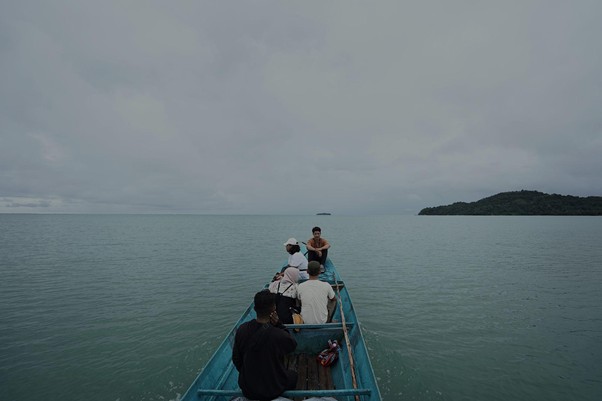
MALUKU -— Behind the hustle and bustle of the metropolitan city, behind the busy concrete buildings and the incessant sound of vehicle horns, I found a quiet and peaceful place. A place untouched by time, located far to the east of Seram Island, Maluku. The land is called Bitorik. No one would have guessed that behind the waves and the broken roads lies a community so strong, so kind, and so full of hope. My journey from Jakarta to Bitorik was no ordinary trip. It was a mission. A mission to bring the spirit of sharing to a place that had not celebrated Eid al-Adha with the sacrifice of animals for 26 years.
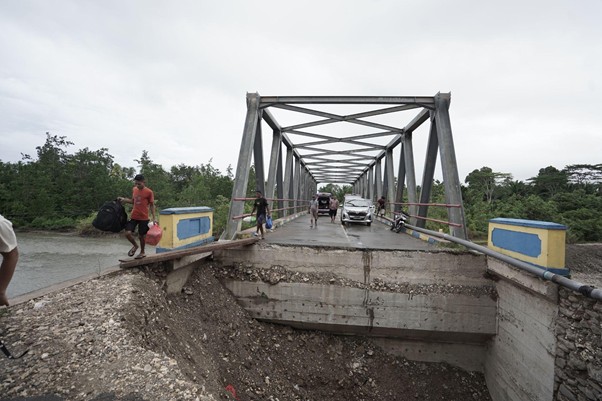
My long journey began in Ambon City, accompanied by an inspiring young couple named Farhan and Mutia, known as “Sejauh Angin.” From the port, we crossed the sea to Amahai Port in Masohi, then continued our overland journey for two full days. Unbeknownst to us, one of the main bridges along the route had collapsed. We had to stop, switch vehicles, and find an alternative route. Every kilometer felt like a test, but our spirits remained unwavering. Because we were certain that at the end of this journey, hope awaited us.
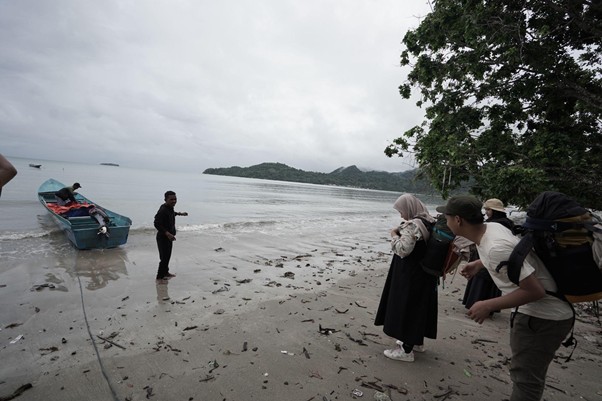
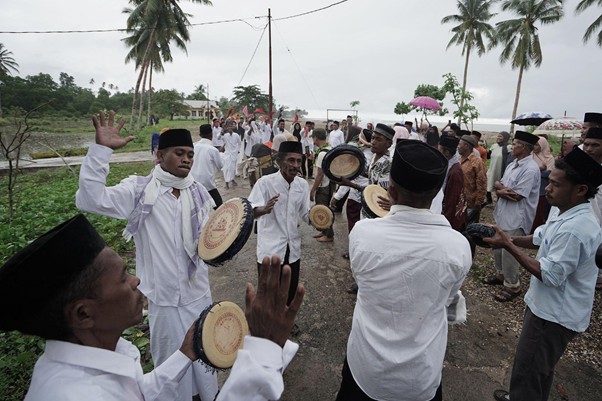
Upon arriving in Negeri Manggis, the journey must continue by small boat through waters with fairly high waves. The rising and falling of the sea seemed like a sign of nature’s joy in welcoming our arrival. As the boat touched the shore of Bitorik, I was surprised by the warm welcome. The community greeted us with traditional dances, cultural symbols, and sincere smiles that bloomed like flowers. Behind the simplicity, I saw a deep sense of respect and love.
We spent the night at one of the villagers’ homes. That night, I slept on a mat, wrapped in the damp sea air. But my heart was warm, for I knew I was among a family with big hearts—the people of Bitorik.
In this village, I saw no shops, let alone a market. It seemed as though there was no economic activity at all. If the villagers needed something—a bottle of oil, a piece of cloth, or even a bar of soap—they had to cross over to another village. Their primary source of food was the sea and their gardens. Sago was their staple food, eaten daily with fish from their catches.
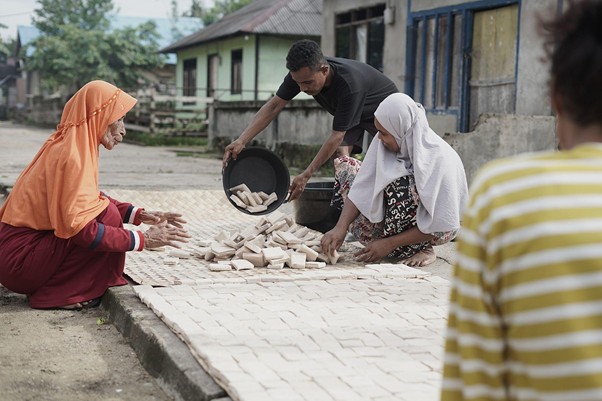
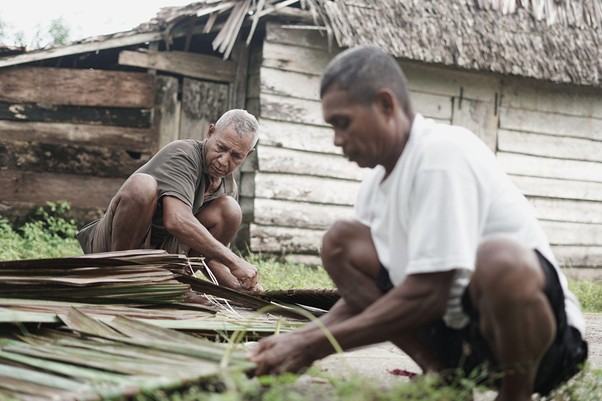
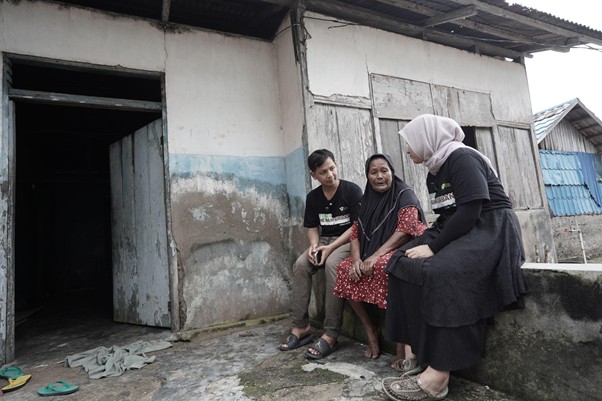
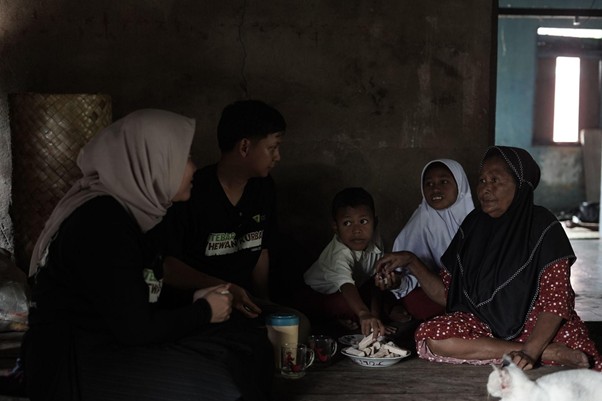
While walking around, we saw men weaving roofs from sago leaves, while women dried sago in front of their houses. We stopped at a small house and met Siti Hajar Rumadaul, a 72-year-old widow who lives with her two grandchildren. Her legs hurt, so she cannot work.
For food, she waits for her neighbors to give her sago. Sometimes, if she is lucky, she eats it with bananas for a little sweetness, or with coconut water. We sat with her on the simple porch of her house, listening to her touching and meaningful stories. “I don’t work. My legs hurt, so I can’t move much. I just wait for someone to come home from the forest with sago.
Behind the house there is a banana tree. Sometimes we eat sago with water and bananas, so there is a little sweetness,” he explained.
Not long after, he invited us into the kitchen with a treat of sago and young coconut. When we told him that a sacrificial cow would be coming to Bitorik, his face changed. From flat to emotional, from calm to glowing.
Muhammad Yasin Kesuy, a community leader in Bitorik, said that the last time there was a sacrificial animal slaughter was 26 years ago. That was a single goat purchased through a community contribution for everyone in Bitorik to enjoy.
“The last time there was a sacrifice here was 26 years ago. That was a shared goat,” he said.
Since then, in Bitorik, every Eid al-Adha is only celebrated with Eid prayers. No meat. No celebrations. No social bonds among the community. There are two reasons why there are no sacrifices in Bitorik. First, because of the economic conditions of the community. Second, because there are no cows there.
“We really want to be like the people there who celebrate Eid al-Adha by sacrificing animals. But what can we do? Here, no one can afford to sacrifice an animal. There are no animals available. So, after the Eid al-Adha prayer, people just go back to their homes. There are no other celebrations,” he explained.
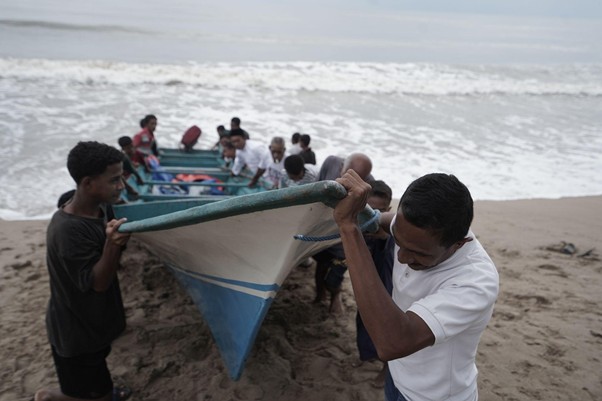
However, this year might be different. With the support of donors, Dompet Dhuafa plans to send several sacrificial cows to Bitorik this year. The animals will be transported from nearby areas using boats owned by the villagers. I can’t help but imagine how one cow could bring joy to 70 families in Bitorik.
Read also: Traveling through rugged terrain for Dompet Dhuafas THK Quality Control Process
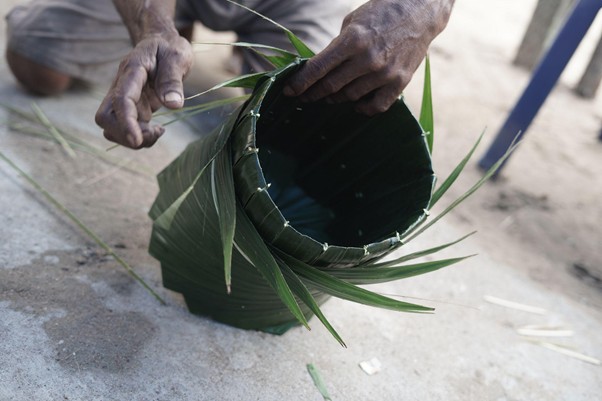
Their enthusiasm continued to grow. The community even began making “Raun,” containers made from sago leaves that would later be used to distribute the sacrificial meat. They made them carefully, one by one, as if knitting their hopes together. For them, this sacrifice was not just food, but also a form of respect. The Raun containers were a symbol of their reverence for the sacrificial meat they received.
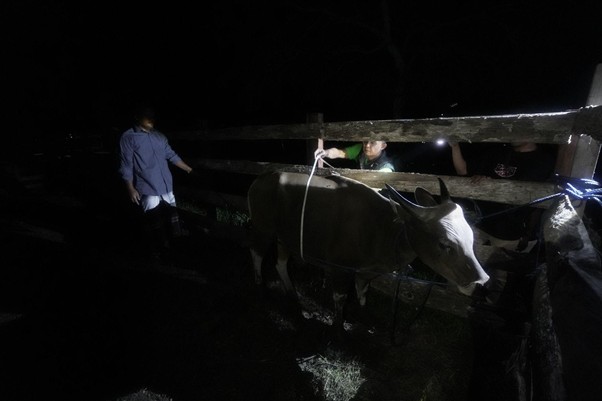
From Bitorik, we then set off for Negeri Kobisonta, once again crossing the winding sea and land. There, we searched for the best cows to be brought back to Bitorik. We ensured that the animals selected were healthy, suitable, and capable of becoming meaningful symbols of sacrifice. Our Quality Control (QC) process was carried out in accordance with the standards set by the Dompet Dhuafa Tebar Hewan Kurban (THK) program.
This journey filled with meaningful hope has made me even more enthusiastic about the success of the Dompet Dhuafa THK program. I invite all my friends to be part of this story. Let us together perform the sacrifice ritual for Bitorik through Dompet Dhuafa. Because one sacrifice can bring a smile to those who have long awaited hope. (Dompet Dhuafa)
Text and photos: Riza Muthohar
Editor: Dhika