


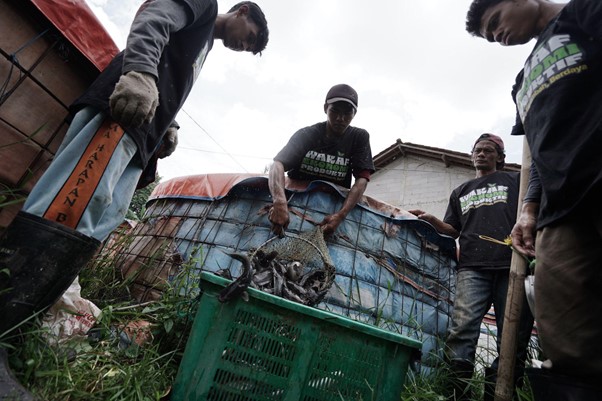
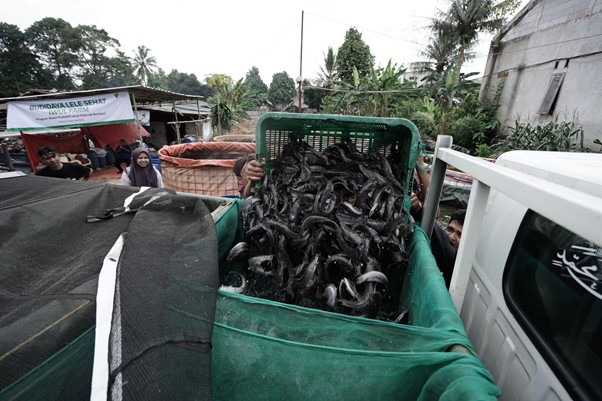
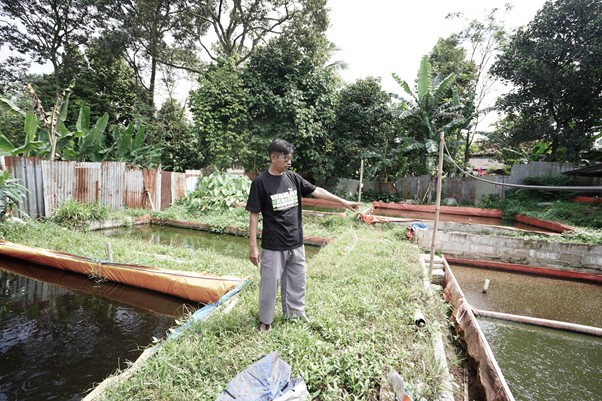
JAWA BARAT – As a waqf nazir institution, Dompet Dhuafa has just harvested catfish from the investment waqf management program in Parung, Bogor, on Tuesday (18/2/2025). This program is the result of a collaboration with Iwul Farm, owned by Mr. Ash Sunny Muhammad, an experienced catfish farmer who has been involved in catfish farming for seven years.
Three months earlier, Dompet Dhuafa invested Rp142 million from the surplus of productive waqf endowments. In managing this investment waqf, Dompet Dhuafa made a direct investment (direct investment) to Iwul Farm for catfish farming using a musyarakah contract. This investment scheme was carried out to recycle waqf surplus assets so that they would continue to grow.
This investment is temporary, which will end in a period of four years. For the first two years, the managing partner, in this case Iwul Farm, is obliged to ensure that this business will at least reach the Break Even Point (BEP). The initial capital, which is the waqf principal, is IDR 142 million and must be returned to the Dompet Dhuafa nazir. Meanwhile, for the next two years, Iwul Farm ensures that this business will get a 100 percent Return on Investment (ROI). The dividends earned will be divided 25:75 between Dompet Dhuafa and Iwul Farm.
In this harvest, Iwul Farm managed to harvest 500 kilograms of catfish. In one month, harvesting can be done six times. So if you calculate: 500 kg x 6, the monthly harvest can reach 3 tons. Meanwhile, the selling price per kilogram is IDR 21,000. So, the monthly sales revenue is IDR 63 million.
Read also: First Harvest of Banten’s Largest Celery Center, Earning Rp120 Million
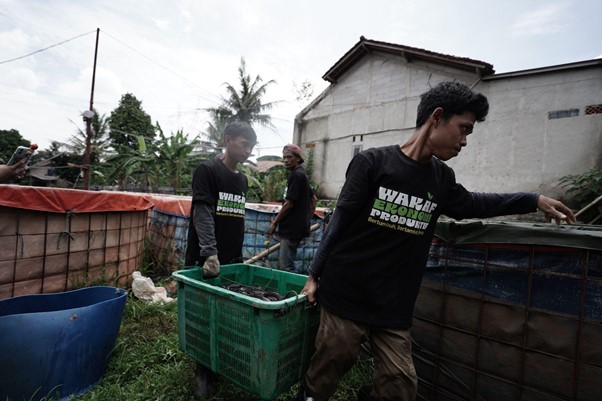
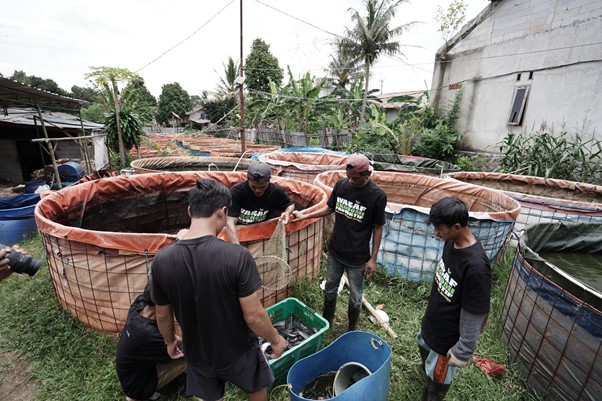
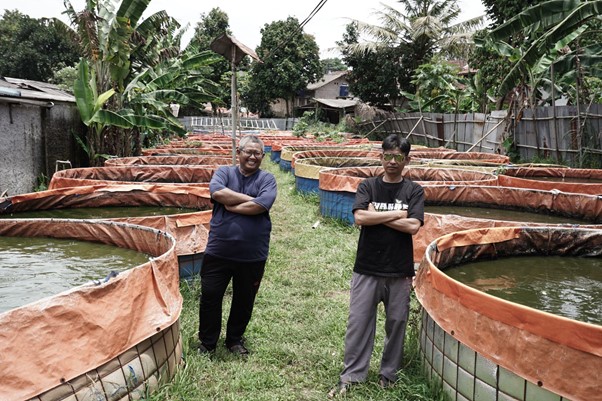
Currently, Iwul Farm has an area of 3,000 meters with 100 ponds, consisting of 70 bioflocs with a diameter of 3 meters, 1 biofloc of 8 meters, and the rest are ponds for breeding, each measuring 3×7 square meters. Meanwhile, there are four employees.
Mr. Sunny expressed his gratitude for being able to be part of this program. He considers that business management with the concept of investment waqf has more value than ordinary businesses. He also added that as part of waqf, the management of this investment is carried out with great care so that the principal remains intact.
“The essence of waqf is to withhold the principal and distribute the benefits. Therefore, we ensure that the capital is maintained, while the results can be enjoyed by those who are entitled to it,” he concluded.
He admitted that in the catfish farming that he runs, so far they have not received or opened investment. Only this time did they receive investment from Dompet Dhuafa, which uses waqf funds. He was interested because the funds came from waqf, so he felt more connected to Allah, considering that what he managed was His capital. Meanwhile, the results of the business are expected to be more beneficial for those in need.
“Actually, many people offer me investments, but I still hold back. Because most people only think about their own interests. Meanwhile, I believe that this business is not that narrow, the level of trust must also be strong,” he said.
Read also: Planting Hope to Reap Prosperity, Chickpea Harvesting on PTGL Waqf Land Gives Farmers Stable Income
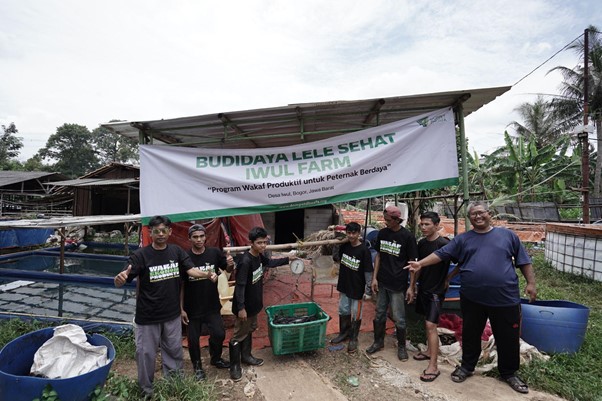
According to Dini Khoirinnisa, Waqf Development Officer at Dompet Dhuafa, the profit received by Dompet Dhuafa, in addition to being replayed for the next investment, will also be distributed to the beneficiaries of the endowment (mauquf alaih), especially for education programs.
“These funds will later be used for Dompet Dhuafa’s educational programs,” he said.
Investment waqf is a productive waqf concept that aims to manage waqf funds so that they can produce long-term benefits for the beneficiaries (mauquf alaih). Unlike conventional waqf, which is often in the form of immovable assets such as land or buildings, investment waqf focuses on the development of a sustainable business sector.
In this context, waqf funds are not directly distributed to beneficiaries, but are used as professionally managed business capital. The profits earned from the business are then distributed to community groups in need, in accordance with the principles of waqf. Thus, the benefits of waqf are not just one-time, but can keep on circulating and have a wider impact.
Read also: Exploring the Potential of Milkfish Aquaculture, the Integration of Zakat and Endowment Programs
Dompet Dhuafa has long developed various investment waqf programs in the agriculture, livestock, and microbusiness sectors. Through this model, Dompet Dhuafa seeks to create economic independence for the community and improve their welfare in a sustainable manner. The investment waqf program also provides an opportunity for business people to develop with affordable capital, while contributing to social welfare.
With this successful harvest, Dompet Dhuafa hopes that the investment waqf program can continue to grow and provide wider benefits to people in need. In the future, Dompet Dhuafa plans to expand the scope of this program to other sectors that have high economic potential, such as organic agriculture, sustainable animal husbandry, and renewable energy management. Thus, investment waqf is not only an economic solution for business people, but also a strong social instrument in helping the poor and vulnerable. (Dompet Dhuafa)
Text and photos: Riza Muthohar
Editor: Dhika