


JAKARTA – Dompet Dhuafa officially signed a Memorandum of Understanding (MoU) for the Scholarship Program for Indonesian Zakat, a collaborative initiative between the Ministry of Religion (Kemenag), the National Zakat Board (BAZNAS), and the Zakat Institutions (LAZ), at the Bimas Islam Building of the Ministry of Religion, Central Jakarta, Friday (21/03/2025). This program aims to utilize zakat funds strategically to finance higher education for the beneficiaries, so that it can help them get out of the cycle of poverty.
The signing of the MoU was carried out by the Indonesian Minister of Religion, Prof. Nasaruddin Umar, together with the Chairperson of Dompet Dhuafa, Ahmad Juwaini, as well as representatives from 17 other LAZ administrators. Ahmad Juwaini said that Dompet Dhuafa has long had various educational scholarship programs, ranging from primary to higher education. With the Indonesian Zakat Scholarship Program, Dompet Dhuafa hopes to further expand the reach of education beneficiaries, so that more and more mustahik (beneficiaries) have access to quality education.
“We believe that education is the key to community empowerment. With the synergy of the Indonesian Zakat Scholarship Program, we hope that more children from underprivileged families can pursue higher education and have a brighter future,” said Ahmad Juwaini.
Read also: Graduation of Yatimpreneur Dompet Dhuafa Scholarship Beneficiaries

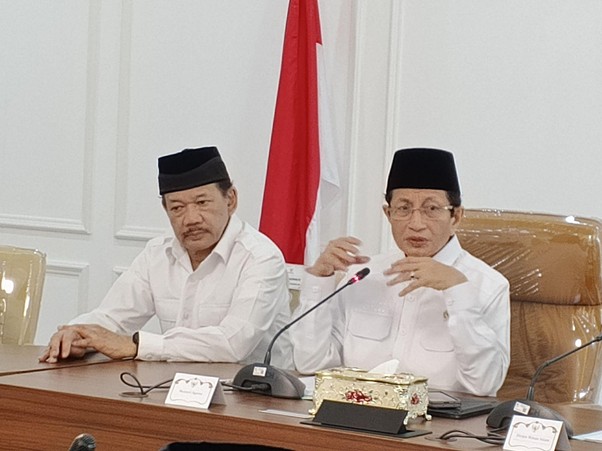
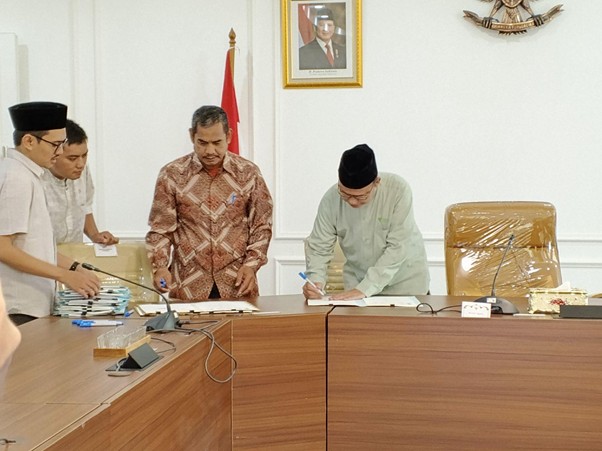
Meanwhile, Nasaruddin Umar emphasized that the Indonesian Zakat Scholarship is a concrete step in integrating zakat management for the welfare of the ummah. He said that this program is not just administrative work, but the beginning of a major transformation in the distribution of zakat that is more structured, measurable, and has a broad impact on society. He even emphasized that the Indonesian Zakat Scholarship will be an ideal example of synergy between the state, zakat institutions, and the community in building a religious fund that empowers.
“No matter how good our strategy is, if it is not based on a unified vision and clarity of purpose, then we will not be productive in facing the challenges of the times. And the most important thing is collaboration,” he said, emphasizing the importance of collaboration.
The Ministry of Religion’s Director of Zakat and Waqf Empowerment, Waryono, explained that the program was designed with a fully funded scheme, where 178 scholarship recipients will receive full funding, including Single Tuition Fees (UKT), monthly living expenses, laptops, attributes, and travel tickets.
“If we agree that the priority of zakat is for the poor, then education is the most rational solution to empower them. It’s not just a number, but a form of allegiance to the future of the ummah,” said Waryono.
Read also: Utilizing GenZAKAT Scholarship, Rasya Determined to Go to School and Study Chemical Engineering
The Indonesian Zakat Scholarship Program will be an important milestone in the history of national zakat fund management. The Chairman of BAZNAS RI, Noor Achmad, appreciated this program which strengthens coordination between LAZs in distributing zakat for education.
“Each LAZ does have an education program, but with better coordination through the Indonesian Zakat Scholarship, the benefits of zakat can be more optimal and right on target,” said Noor Achmad.
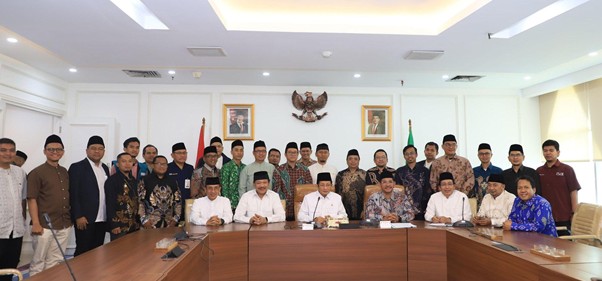
The Minister of Religion also emphasized the importance of transparency and accountability in the management of zakat funds, including in the financing of advertising and amil operations. If one day in the hereafter you are asked about these zakat funds, do not let the rights of the mustahik be diminished due to the negligence of the amil. That was the message.
In his remarks, the Minister of Religion highlighted the need for a zakat fiqh that is more relevant to the challenges of the times. He emphasized that zakat is not just about the 2.5% figure, but must also be managed as an instrument of social change.
According to him, there is a lot of untapped zakat potential, including other Islamic social funds such as infaq, sedekah, fidyah, kafarat, iwadh, and nazar. As amils, the LAZs have the duty to ensure that the management of these funds can provide wider benefits for the community.
With the Indonesian Zakat Scholarship, it is hoped that more zakat institutions and communities will be involved in supporting the education of the nation’s future generations. This program is not just financial assistance, but also a long-term investment for the future of Muslims in Indonesia. (Dompet Dhuafa)
Text and photos: Riza Muthohar
Editor: Dhika