


Assalamu’alaikum wr.wb.
My dear respected,
Healthcare workers, stakeholders, and all esteemed guests.
Today, we commemorate the 24th anniversary of Layanan Kesehatan Cuma-Cuma (LKC). LKC is one of Dompet Dhuafa’s oldest units. Given its age, LKC’s service to the community is immeasurable in both quantity and value.
Happy anniversary to LKC, and congratulations to the management and staff. Congratulations to Dr. Tata, Dr. Yeni, and the health warriors of LKC, and of course Yayasan Rumah Sehat Terpadu (YRST) Dompet Dhuafa, the foundation where LKC operates.
LKC’s anniversary (November 6, 2025) coincides with National Health Day (HKN)—an important moment to reaffirm our commitment that health is not only a matter of medical services, but the main foundation for national progress. This year’s HKN theme invites us to ensure that every citizen, without exception, has the same opportunity to live a healthy, productive, and dignified life.
The Dompet Dhuafa Republika Foundation (YDDR) is concerned with public health and those who are less fortunate in particular. Dompet Dhuafa manages seven hospitals in Java and Sumatra, including the Eye Hospital. One of the most challenging is the Integrated Hospital in Parung. I know very well how difficult it is to manage a hospital “for the poor,” because I am one of the patients who used to use Askes and now uses BPJS, and I have seen how the management struggles to operate the RST, a private hospital.
Ladies and gentlemen,
We are aware that public health challenges are becoming increasingly complex: infectious diseases that have not been completely eradicated, an increase in non-communicable diseases, limited services in remote areas, and health access gaps between the haves and have-nots.
Therefore, community empowerment in the field of health, especially for those in weak economic conditions, has become a very important agenda. Empowerment means providing capabilities—not pity. It means providing space for marginalized communities to understand, access, and utilize health services appropriately.
Today, on National Health Day, we once again bow our heads and ask ourselves: what does our presence mean for the most vulnerable communities? For our institution—which is dedicated to empowering the health of the poor—the answer is always the same: we are here to restore hope.
We know that so many families struggle in silence—enduring pain because of costs, postponing checkups because of distance, or feeling they have no choice. This is where we are called to action. But that call must not be answered with routine. Our movement must always be alive, always innovating, always more sensitive than yesterday.
Empathy is not just pity, but the ability to see unspoken needs. And every rupiah we manage is a trust—it must be used efficiently, targeted appropriately, and bring about real change, not just add to the list of activities.
Ladies and gentlemen,
For us, empowerment is not just about helping people get medical treatment. Empowerment is about awakening knowledge, courage, and access. It is about teaching people to take care of themselves, understand their rights, and stand stronger. When a simple family becomes healthier, we are actually strengthening the nation.
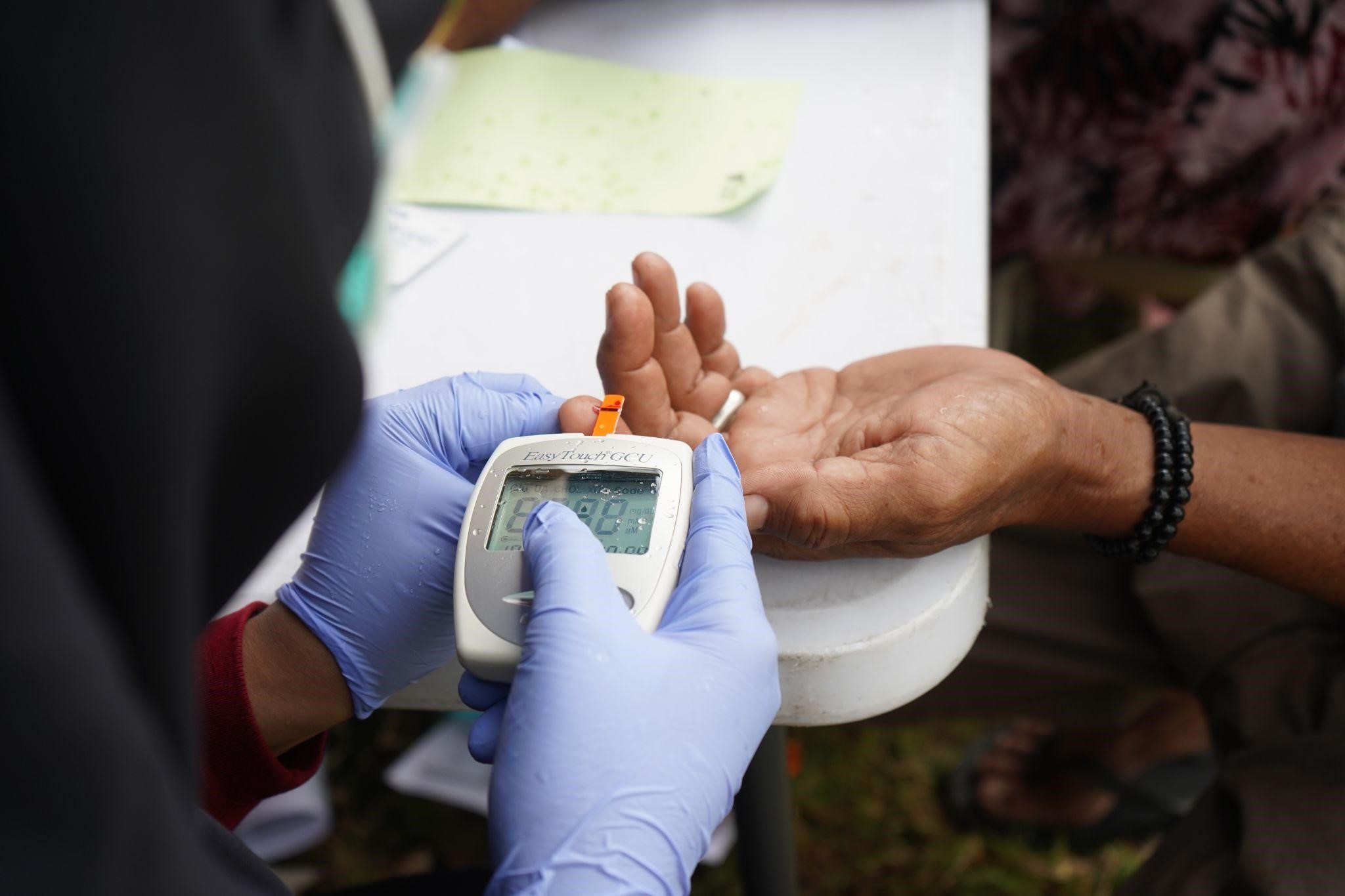
Empowerment in the field of health for the underprivileged has strategic significance and has been LKC’s main task all this time, as well as assisting the government, namely:
Reducing access gaps. Many poor families delay seeking medical treatment due to costs and lack of information. Empowerment helps them recognize early symptoms, understand their rights as citizens, and access available services.
Preventing disease early. Health education, clean living, balanced nutrition, and awareness of regular checkups have proven to be much cheaper and more effective than the cost of treatment.
Increasing the independence of families and communities. When communities are given knowledge and guidance, they can become agents of change in their environment—promoting healthy lifestyles, monitoring the environment, and building a culture of mutual care.
Strengthening social protection. Awareness of healthy living—from maintaining hygiene, eating habits, early check-ups, to reminding each other—must grow from families, homes, to communities.
A healthy culture not only reduces illness, but also strengthens the value of togetherness that we take care of each other. When communities make health a daily habit, our empowerment efforts will be stronger and produce more lasting results.
Ladies and gentlemen,
Health is a basic right of every citizen. And this right should not be determined by income. A great nation is one that ensures the most vulnerable receive the best protection. We want to see mothers from modest families give birth safely, children from vulnerable families grow up healthy, the elderly receive proper care, and people with disabilities receive full attention.
On this National Health Day, let us strengthen our collaboration: the government, medical personnel, the business world, community organizations, and volunteers. By working together, we can build an inclusive, responsive, and empowering health system.
May the momentum of National Health Day serve as a reminder that health is not only for those who can afford it, but for all Indonesian citizens. May God Almighty always provide guidance, strength, and health to us all.
Thank you.
Wassalamualaikum wr.wb.
A Makmur Makka,
Board of Trustees of the Dompet Dhuafa Republika Foundation
Curator of the Sasana Budaya Rumah Kita Dompet Dhuafa