


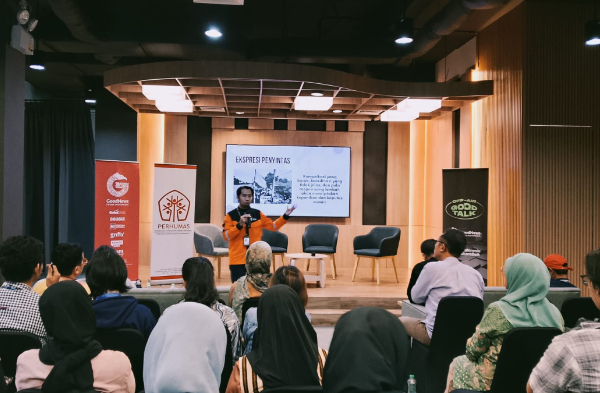
JAKARTA —-— Indonesia experienced a series of disasters at the end of 2025. These events added to the pessimism that had been building among Indonesians since the beginning of the year due to ongoing economic and political uncertainty throughout the year. Even so, Indonesians still had an optimistic spirit. This was evident from a survey conducted by Good News From Indonesia (GNFI) in 2025.
“We have an optimism survey. When we survey Indonesians, there is always a sense of optimism. We ask, ‘Are you optimistic that the economy will improve next year?’ Optimistic. ‘Are you optimistic about the national team against Japan?’ Optimistic. Optimistic about winning gold at the SEA Games? Optimistic. Even though the results were the opposite,“ explained GNFI CEO Wahyu Aji during the Good Talk Off Air event titled ”Responding to Disasters Appropriately and Empathetically” at the Sasana Budaya Rumah Kita Dompet Dhuafa in Jakarta on Wednesday (12/17/2025).
Aji believes that this optimism does not arise because Indonesians want to please others. Rather, this optimism arises as an effort to overcome the problems that lie ahead.
“Optimism is not just a feeling of optimism, but it comes from people who want to overcome problems. Thinking hard about how to overcome unemployment,” he said.
Responding to this, Dompet Dhuafa’s GM of Marketing Communication, Suci Nuzleni Qadarsih, said that communication during a disaster must not only be accurate and responsible, but also empathetic.
“Information must not only be accurate and responsible, but also empathetic,” she said.
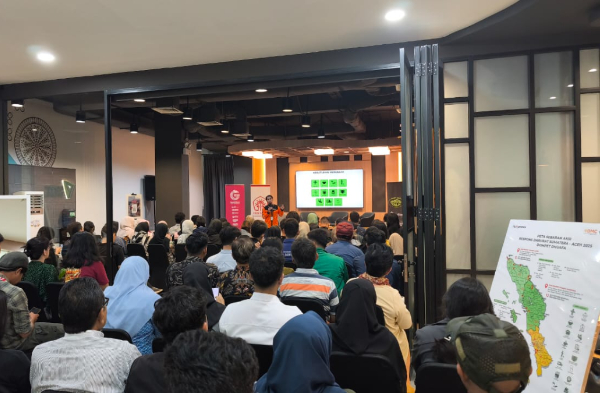
Communication aspects during disasters
Disaster Communication Expert and LSPR Lecturer, Muhammad Hidayat, stated that in communication science, there are three stages of communication during a disaster. Namely, before the disaster, during the disaster, and after the disaster.
However, according to Hidayat, disaster communication carried out by stakeholders has only been active when a disaster occurs. In fact, when a disaster is about to occur, panic sets in, so information does not get through properly.
“Don’t just stand by when an emergency occurs. Because when an emergency occurs, everyone is confused and panicked,” he said.
For this reason, Hidayat explained that the presence of a spokesperson is very important and crucial when a crisis occurs, especially in the event of a disaster. This ensures that the information released by each agency is consistent with that of other related agencies.
He also hopes that the government will be more honest when facing a crisis, so that the public does not have false expectations. Hidayat also requested that there be no information gap between the field and the central government.
“Don’t let uncertainty run high, and then we give false hope. If there is a problem in the field, let’s just be honest. We all know what the situation is like in the field,” he explained.
The Government Against Reality
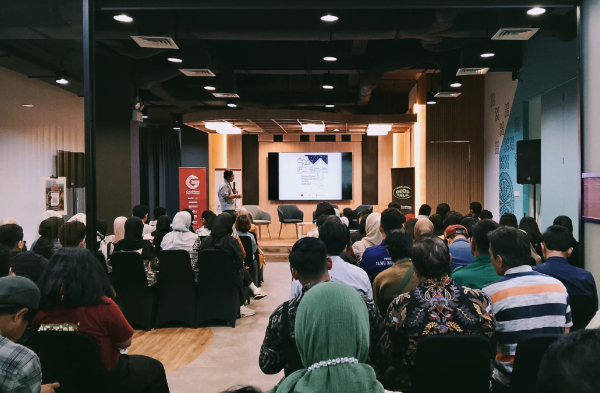
An interesting point was also raised by the Head of the Dompet Dhuafa Disaster Crisis Center, Udhi Tri Kurniawan, who assessed that the government has not only been opposing its political opponents, but more than that, it has been opposing reality.
Udhi highlighted statements made by government officials that did not match the situation on the ground, such as claims that electricity would be restored soon but this has not happened, disasters that were considered frightening on social media but in reality were not, and claims that the government’s disaster response had been praised by the world.
“The government is opposing reality,” he said.
Therefore, he is not surprised that the public is angry. Especially considering the slow response of the government in dealing with the post-disaster conditions in three regions, namely Aceh, North Sumatra, and West Sumatra.
“The messages and symbols from the grassroots that have emerged, pessimism, anger too, in Aceh the community has raised white flags. In some tents, they have raised the flags of other countries,” he explained.
“This is an expression of anger. The white flags are an advocacy effort. They hope the government will take the necessary action immediately,” he said.
Read also: When Disaster Strikes Sumatra, Are We There for Our Brothers and Sisters in Need?
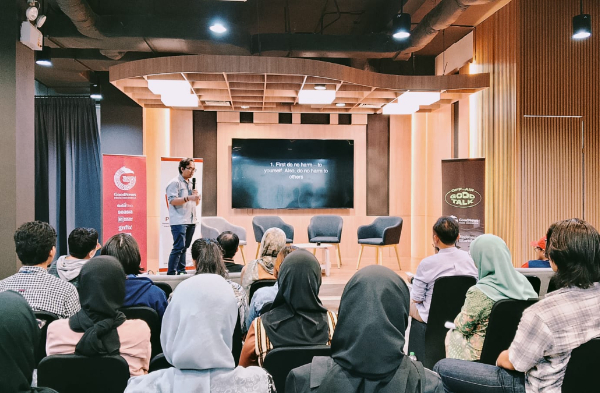
From the mass media perspective, Kompas Senior Journalist Ahmad Arif said that when a disaster strikes, there is a challenge, namely the emergence of hoaxes. But the most sad thing, Arif explained, is that these hoaxes do not only come from the public, but also from the government.
“The problem is that these hoaxes are not only spread by the public, but also by the government. This is a challenge. Hoaxes are used when they are issued by the public. But what if the hoaxes come from the government?” he explained.
Therefore, he encouraged the mass media to continue to monitor disaster management. Arif assessed that many mass media outlets no longer highlight disasters in an area after the emergency is over.
Therefore, he emphasized that the role of the mass media is not only to attract traffic from stories about disasters that occur in the community. But also as a watchdog that needs to remind the public of the importance of disaster mitigation and post-disaster management.
“The media tends to fail in monitoring post-disaster efforts. Disasters are a long process. We are active at the beginning but forget about it afterward,” he remarked. (Dompet Dhuafa)
Text and photos: Bani K
Editor: Ronna