



The month of Ramadan is a special month for all Muslims in the world. Apart from being the month in which the Al-Qur’an was revealed, Ramadan is also a means of purifying oneself from all bad things. One of them is fasting.
Not only in spiritual terms, fasting also has many benefits for the body. What are the benefits? Dr. Aisah Dahlan, a doctor and neuroparenting practitioner, will explain them.
In addition to the health sector, Dr. Aisah Dahlan has also been active in da’wah activities. In various activities, she has collaborated medical knowledge with religious knowledge. As a Muslim, for her these two things are interlinked.
Together with Dr. Aisah Dahlan, the Dompet Dhuafa Team will explore the impact of brain and body health on someone who performs the act of fasting, especially in the month of Ramadan.
Read also: Which is Better, Fasting Tarwiyah or Arafah?
What is the condition of our digestive system during fasting?
Every day our digestive system contracts continuously without any time to rest. However, when fasting, from imsak to Maghrib time, the stomach will have a break from working and will reduce the production of acid which will prevent the erosion of the stomach wall.
So, what about the other digestive organs? Quoting the official website of HaloDoc, digestive organs such as the liver will play a role in breaking down the glucose stored in the liver. Thus, the body will have enough sugar content.
Likewise, the small intestine will absorb fewer nutrients, so that the intestine can move normally and shrink. Then moving to the large intestine, which will absorb less fluid. This makes the work of the large intestine more controlled. The body will still have enough fluid.
Likewise, each other digestive organ will have a time lag to cleanse its part, also balancing fluids when one is fasting.
“This also needs to be considered when fasting. Of course, each region and even country has a different fasting time. It just needs to be supervised and adjusted to local customs,” said Aisah Dahlan, who is familiarly called Bunda.
Read also: Does Crying Invalidate Fasting? Let’s Find Out the Answer!
So, what happens to our brain?
Some say that fasting has the potential to increase stress levels in the brain. However, according to Dr. Aisah, this can be the opposite. An increase in feelings of happiness and peace can actually increase when performing the act of fasting. How can this be explained?
With the intention of fasting in order to seek the pleasure of Allah SWT, the hypothalamus in the middle brain will produce the hormone dopamine or the happy hormone. In addition, the pituitary gland, which functions to regulate the body’s response to physical and emotional stress as well as body temperature, hunger and thirst, will also work. It will produce the hormone endorphin which gives people a feeling of comfort and peace. This makes the human body work more relaxed.
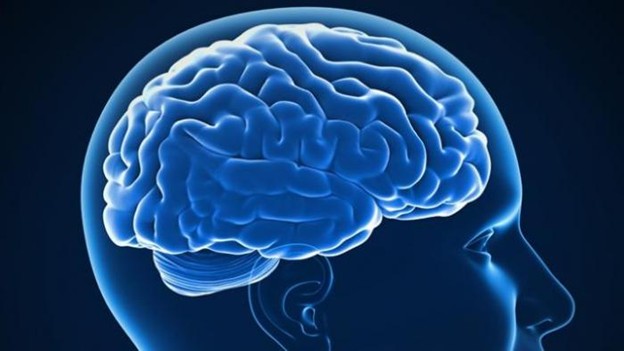
Dr. Aisah explained that the cause of stress during fasting is none other than making fasting only an obligation that must be carried out without giving it deeper meaning. As a result, a person will fast under duress and become stressed.
“So fasting is not just a trend, but a spiritual preparation accompanied by knowledge of health. So that when fasting, a person will carry it out regularly, starting from suhoor to breaking the fast. It does not cause GERD or excessive stress. Then regulate what is consumed. Not too much and not too little,” explained Dr. Aisah.
When someone is forced to fast, the adrenal glands will work to produce the hormones adrenaline, cortisol, and norepinephrine which cause physical and emotional stress. This makes the heart beat faster and increases the production of acid in the stomach.

Read also: Here are 8 rules of Ramadan fasting that are actually wrong, check it out!
Therefore, continued Dr. Aisah, Muslims need to deepen their spiritual and health knowledge about fasting. Of course, the Ramadan fast will be interpreted as a momentum to get closer to Allah SWT as well as being beneficial for the body. Moreover, this month is synonymous with self-purification and can be a means of training to avoid bad behavior.
“Why be happy? Because we have purified ourselves, drawn closer to the Creator. A person who fasts armed with knowledge will be different from someone who fasts out of necessity,” he explained.

Ramadan can be a month in which a believer refreshes the soul and body. Dr. Aisah advised that as Muslims we must never stop learning. The elaboration between religious knowledge and other sciences is a necessity so that humanity can live well and bring blessings.
“Why are there so many studies during the month of Ramadan? Because this is a good momentum to trigger us to keep learning. Whatever the field, it is beneficial. One more thing, if we are spiritually and scientifically prepared, fasting in the month of Ramadan is not a torment, but a blessing,” concluded Dr. Aisah. (Dompet Dhuafa)
Text and photos: Hany Fatihah Ahmad
Editor: Dhika