


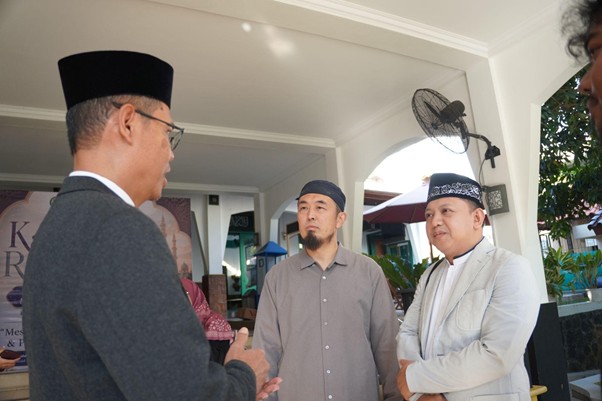
DEPOK, WEST JAVA —-— Islam in Japan is currently experiencing rapid growth. However, behind this positive development lie significant challenges for Muslims—particularly new converts—in maintaining their faith whilst living in a minority community.
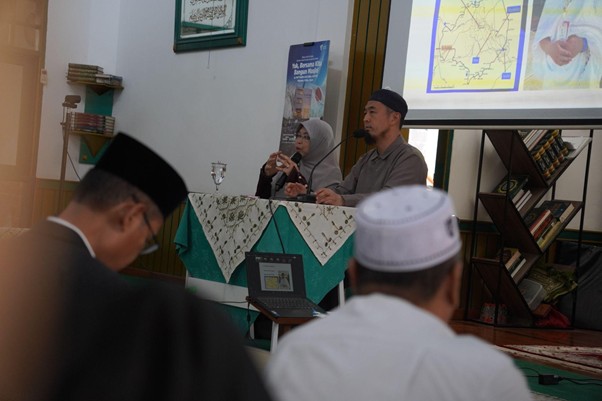
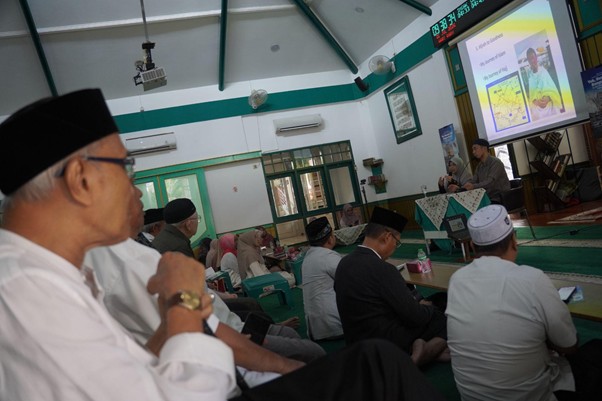
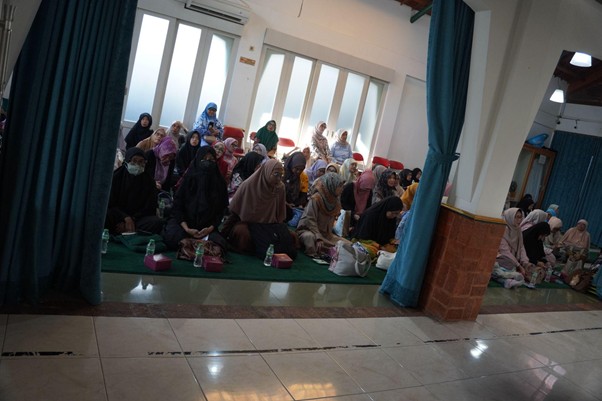
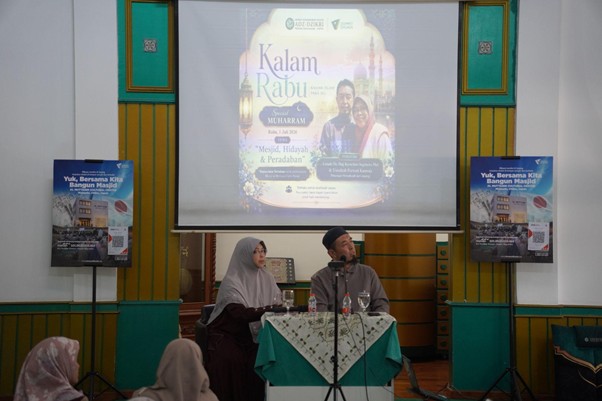
It is this reality that has prompted the husband-and-wife team of preachers, Sensei Sugimoto and Ustazah Purwati, to resume their Da’wah Tour in Indonesia. On Tuesday (1 July 2026), they addressed around a hundred worshippers who had gathered at the Adz Dzikri Mosque in Pesona Khayangan, Beji, Depok.
In his sermon, the preacher from the Land of the Rising Sun shared profound spiritual stories on the essence of hijrah, the philosophical meaning of the Hajj, and the key to maintaining steadfastness—as experienced by him personally as a convert.
The Meaning of the Hajj: A Replica of Humanity’s Journey of Repentance in This World
A solemn atmosphere enveloped the congregation as Sensei Sugimoto linked the month of Muharram—as a month of migration from darkness to light—with the spiritual experience he had recently undergone whilst performing the Hajj last Zulhijah. He posed a reflective question: “Why is Arafah located outside the grounds of the Masjid al-Haram?”.
Sensei Sugimoto then invited the congregation to recall the story of the creation of Prophet Adam (peace be upon him). When Iblis refused to prostrate before humankind and the angels wondered why Allah had created humankind, Allah replied, ‘I know better than you’.”
“If the Masjid al-Haram is like Paradise, then Arafat is the world. When Prophet Adam (peace be upon him) committed a mistake in Paradise, he was sent down to earth and repented continuously. Similarly, for those who come to Arafat, the essence is to repent. Allah knows that humans repent, whereas the devil does not,” explained Sensei Sugimoto.
For Sensei, this is where the answer to the mystery of Allah’s words lies. Humans are indeed prone to error, yet Allah has great trust in His servants and always awaits their return. This meaning is beautifully manifested in the words of the Talbiyah: labbaik allahumma labbaik—Here I am, O Allah, I come to answer Your call; here I am, I return to You.
Furthermore, he likened the ritual of stoning the Jamrah to a symbol of struggle. Stones are like weapons. Humans need weapons to combat the devil’s deceptions, and the best weapons are faith and good deeds, which are capable of erasing evil.
Maintaining Istiqomah by Remaining ‘Vigilant’ Against Satan
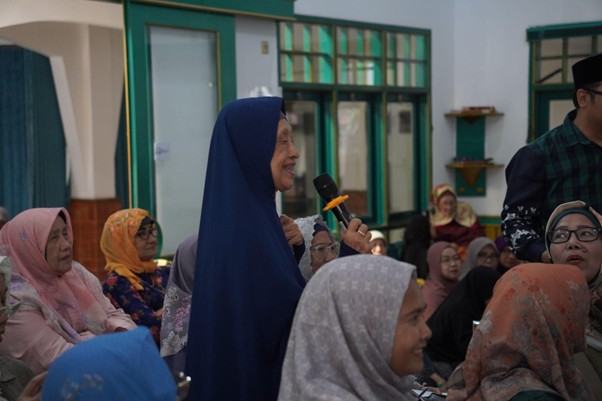
For a Muslim, particularly a new convert, maintaining one’s faith (istiqomah) is a lifelong struggle. Satan will never give humans a chance or opportunity to do good until death comes.
Sensei Sugimoto reminded us of one of the key points from the Prophet Muhammad’s (peace be upon him) Final Sermon (Khutbatul Wada’). The Devil may give up on tempting those with strong faith regarding major matters, but Satan will infiltrate and sow division through minor matters, including provoking domestic disputes that may lead to divorce.
“We must know Allah, but we must also know who the devil is. In this way, we can always remain vigilant against his deceptions. It is this sensitivity that is one of the ways to maintain steadfastness, namely by avoiding harmful deeds and increasing acts of goodness,” he explained.
He also added that faith alone is not enough. Islam—which derives from the root word ‘aslama yuslimu’—demands total submission and obedience to Allah, and this is realised through genuine righteous deeds.
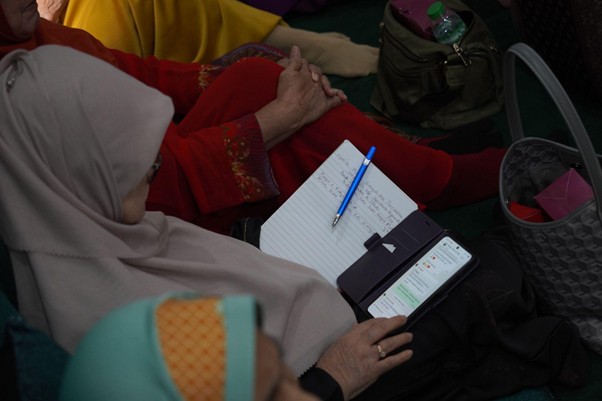
Challenges Following the Shahadah and the Mission to Establish a Centre for New Muslims and an Islamic Cultural Centre in Japan
Culturally speaking, the Japanese people generally possess traits that align with Islamic values, such as politeness, punctuality, discipline and putting others first. However, when they decide to choose Islam as their way of life, the greatest challenge lies in life after the shahadah. They require a supportive ecosystem, whether in the form of religious guidance or facilities for da’wah.
Under Islamic law, new converts are in fact entitled to special attention as they form one of the eight categories (asnaf) eligible to receive zakat.
“The Shahadah is merely the beginning; steadfastness is what truly matters. That is why we have taken the initiative to establish the Al-Muttaqin Mosque in Chiba as a centre for new converts and an Islamic Cultural Centre in Japan,” concluded Sensei Sugimoto at the end of his sermon.
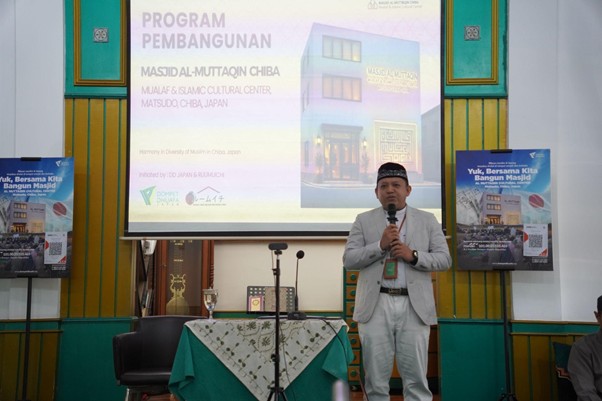
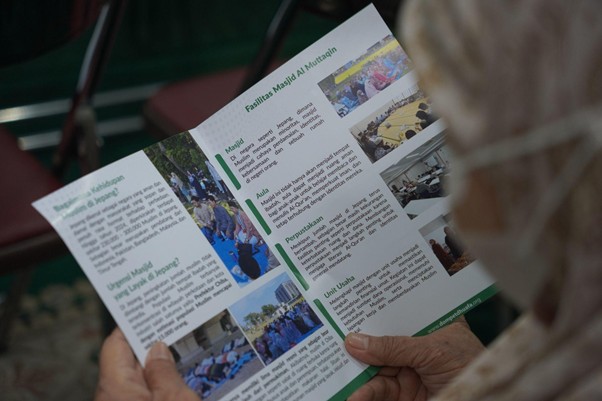
The Al-Muttaqin Mosque in Chiba, Japan, is envisaged not only as a place of worship, but also as a shelter, a support centre for new converts, a hub for the halal economy, and a centre for Islamic education for the younger generation of Muslims in Japan.
The journey to help new converts in Japan remain steadfast is a call for us all to support one another. Let us spread kindness across national borders to establish a house of Allah in Japan. Be part of bringing the Al-Muttaqin Mosque to Chiba. Click Build a Permanent Mosque for Muslims in Chiba, Japan now! (Dompet Dhuafa)
Text and photos: Dhika, Ronggo
Editor: Dedi Fadlil