


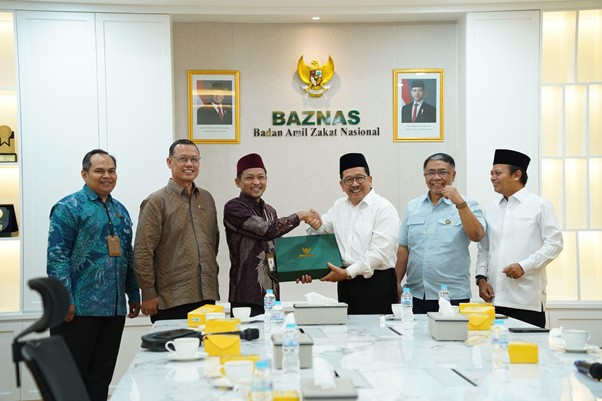
JAKARTA —-— On Wednesday (April 8, 2026), Dompet Dhuafa visited the Jakarta office of the National Zakat Agency of the Republic of Indonesia (BAZNAS RI). Dompet Dhuafa accepted an invitation to a meeting to strengthen brotherhood in the spirit of Eid al-Fitr 1447 H and to enhance collaboration in the management of zakat in Indonesia.
Present at the gathering were Dompet Dhuafa officials, including Ahmad Juwaini as Chairman of the Board, Herdiansyah as Vice Chairman of the Board, Dian Mulyadi as Deputy Corporate Secretary, Ahmad Faqih Syarafaddin as General Manager of Resources Mobilization, and Widodo as Program Manager.
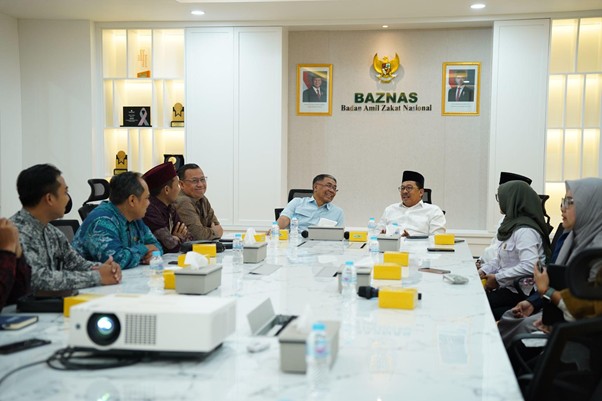
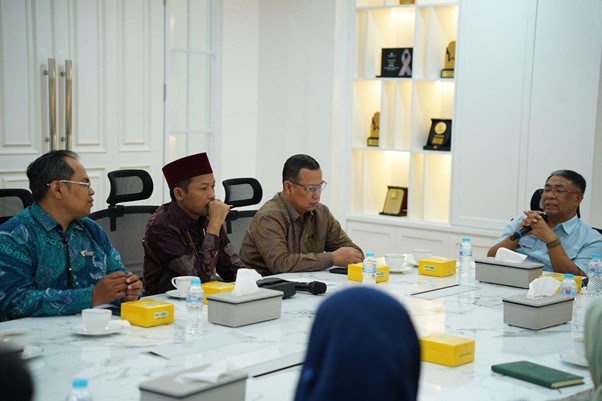
In addition to the gathering, Dompet Dhuafa and BAZNAS RI also held discussions on proposals for synergies to strengthen the national zakat ecosystem, particularly regarding the enhancement of collection, governance, transparency, and the optimization of zakat utilization for the welfare of the community. This meeting is expected to serve as a strategic forum for discussion between the institutions to strengthen the role of zakat as an instrument of social and economic development, particularly in Indonesia.
Read also: Conducting Factual Verification of LAZ Licenses, BAZNAS Commends the Role of Dompet Dhuafa Sumsel
Welcoming this gathering, Sodik Mudjahid, Chairman of BAZNAS RI, extended a warm welcome back to BAZNAS and opened the event by stating that zakat administrators are the champions of Islamic zakat; they must be united, competent, dedicated, and trustworthy.
“We will address the enhancement of zakat mobilization (collection), utilization, and empowerment (distribution). I have been reflecting deeply: does zakat actually reach the eight categories of recipients in a meaningful way? What if we established specialized divisions for these eight categories? Similarly, we need research divisions focused on beneficiaries, donors, and evaluation,” he said.
Sodik also emphasized the need to consistently pursue mobilization and utilization through digitalization. He noted that the potential for zakat in Indonesia is Rp327 trillion, aiming to drive this toward a target of Rp160 trillion by 2031. As mobilization increases, ensuring fairness and effectiveness remains a key challenge.
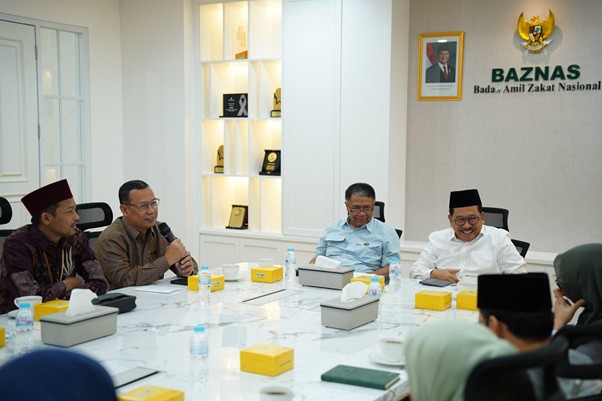
In line with this, Rizaludin Kurniawan, Head of BAZNAS RI, stated that Dompet Dhuafa and BAZNAS share the same vision and maintain a complementary and mutually reinforcing coordination.
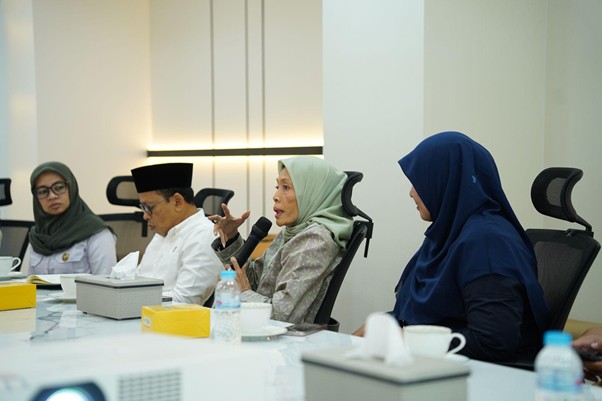
“I respect LAZNAS. It is our shared duty to transform the eight categories of recipients into concepts within the economic framework of empowerment programs. We need to better integrate data so that program collaboration is more practical. What is even more important is how to strengthen our bonds to maximize service to the community,” he explained.
Read also: 30 Years of Consistently Eradicating Poverty, Dompet Dhuafa Got Awarded Baznas Award 2023
Dompet Dhuafa Board Chairman Ahmad Juwaini also presented several strategic proposals regarding the development of zakat mobilization, including research on zakat potential, success measurement, and program coordination management.
“There is research on zakat potential, which estimates the potential at around Rp327 trillion. BAZNAS has also developed a tool to measure the impact of zakat, which can be used by all LAZs, as BAZNAS serves as the benchmark for us LAZs. Thus, when all LAZs submit their reports, BAZNAS can aggregate all that data and manage the coordination of zakat utilization programs in a more technical manner,” explained Ahmad Juwaini.
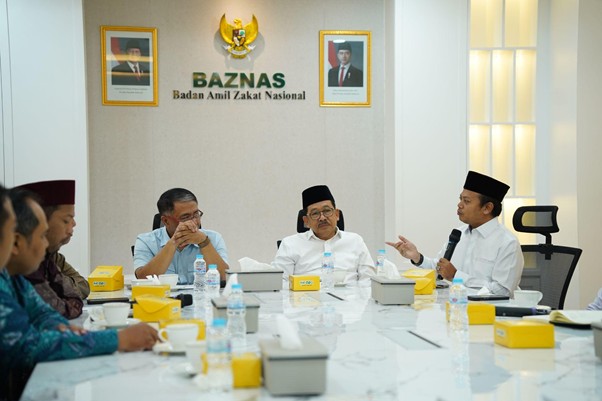
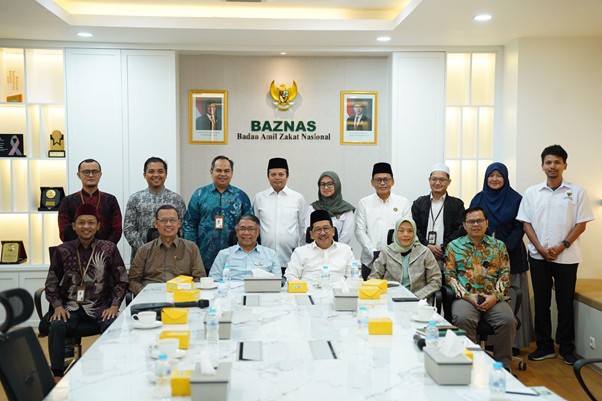
BAZNAS RI officials in attendance: Sodik Mudjahid as Chairman, Muzayyad, Syarifuddin, Neyla Saida Anwar, Rizaludin Kurniawan, and Saidah Sakwan as BAZNAS RI Executive Directors.
In response, Neyla Saida Anwar, a BAZNAS RI Executive, stated, “I have great respect for Dompet Dhuafa. Every time I visit to see the program outcomes, Dompet Dhuafa’s programs are truly excellent. In accordance with the Constitutional Court’s mandate, we will be making amendments; therefore, we must work closely together—there is no point in competing over the utilization of zakat. LAZ instruments are crucial because they possess capabilities that BAZNAS lacks. We must meet more frequently to discuss the roadmap and grand design for the future of national zakat.”
She continued, “The Chairman has consolidated BPS and Bappenas. Moving forward, there will be factual socio-economic surveys. There needs to be synergistic follow-up from this consolidation.”
Closing the discussion, Syarifuddin, Head of BAZNAS RI, stated, “We, as zakat administrators, serve as a means; administrators are one of the categories that strengthen the other categories.” (Dompet Dhuafa)
Text and photos: Dhika
Editor: Dedi Fadlil