

EAST NUSA TENGGARA -— This Quality Control (QC) story comes from Bajawa, Ngada Regency, East Nusa Tenggara (NTT). In anticipation of the 2025 Qurbani Animal Distribution Program (THK), Dompet Dhuafa remains committed to promoting qurbani across the country.
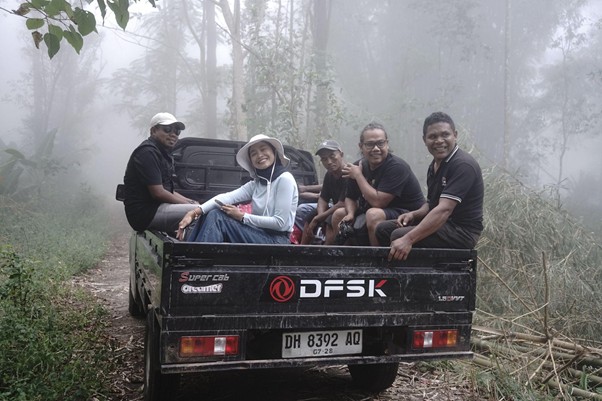
On Wednesday (May 14, 2025), the Dompet Dhuafa QC Team departed from the capital city of Kupang and took a one-hour flight to Larantuka, East Flores. To reach the QC location in Bajawa, we continued our journey by land for over 12 hours. The journey was challenging, as the mountainous roads were filled with sharp turns.
Upon arriving in Bajawa on Thursday (May 15, 2025), we conducted the QC process at the first location, Langagedha Village. The Dompet Dhuafa Corps Dai (Cordofa) NTT, Muhidal Bukhori or Ustaz Muhidur, and Dompet Dhuafa volunteer Miya Sriwinarti also participated in the QC process.

Unique Tradition of Bajawa Cattle Farmers
Bajawa, known as a mountainous region with high rainfall, naturally influences soil fertility, including its lush pastures. It is often referred to as the “Cold City.” This has shaped the livelihoods of its people, who are predominantly farmers and cattle breeders. Vast fields of coffee, soybeans, and corn stretch across the landscape, appearing incredibly fertile.
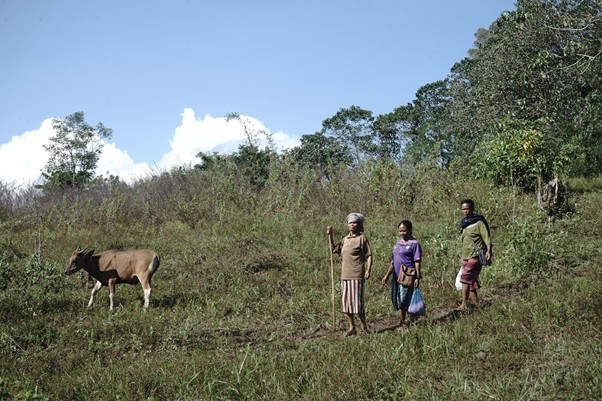
Bajawa has a unique tradition in its livestock sector. While most livestock are raised in pens, Bajawa cattle are allowed to roam freely on the grasslands. The same applies to the goats.
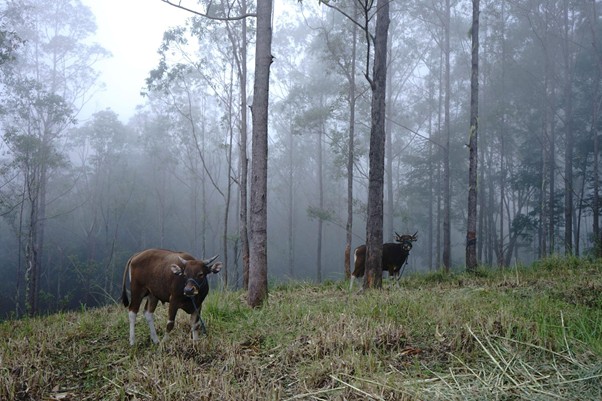
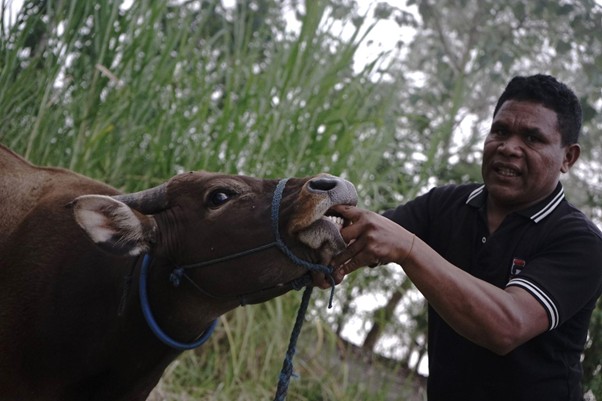
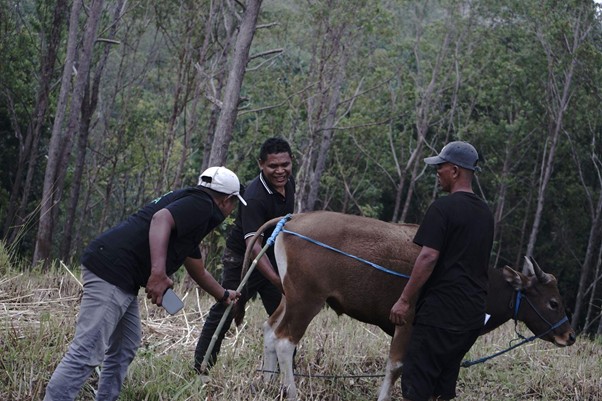
Uncle Sintus, one of the farmers, shared about the traditional way of raising cattle in Bajawa. Bajawa cattle are never kept in barns. They are allowed to graze and live on grasslands while tethered. Even during rain.
According to him, this method makes the cattle healthier with stronger immune systems. With the natural, nutrient-rich wild grass as their feed, farmers don’t need to add concentrates to make the cattle fatter. No doubt, Bajawa cattle are renowned for being superior to other breeds.
“My cattle don’t know vitamins or medicine, because they never get sick. They grow naturally in their habitat, in this mountainous region (Bajawa). Here, this is the traditional way of doing things—no barns. Villagers work as farmers, owning 3–5 cows. Every day, they simply move from one grassland to another. The cows are tied up, but the ropes are long, so they can move or walk freely. The meat is indeed better and more tender, naturally fatty,” explained Uncle Sintus.
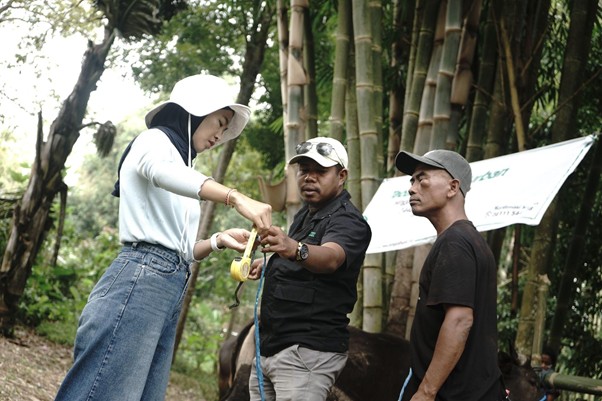
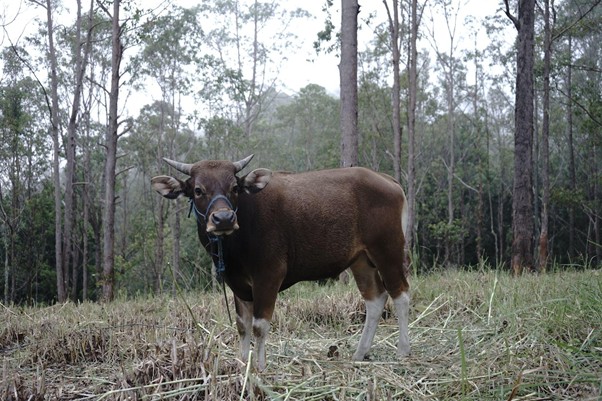
Ustaz Muhidur also confirmed this. This is why Dompet Dhuafa chose to source the cows from Tanah Bajawa, he said. Their high quality ensures that the sacrificial animals are distributed in good health, well-cared for, and in accordance with Islamic law.
The sacrificial animals that meet Dompet Dhuafa’s criteria are those that have undergone the replacement of their upper and lower incisor teeth; show no signs of illness such as weakness, loss of appetite, sunken eyes, dull fur, or diarrhea; and are not underweight or deformed.
He mentioned that approximately 70 cows will be distributed across the Flores mainland, including Ende Regency, Sikka Regency, and East Flores Regency. Indeed, Ustaz Muhidur added, these areas are predominantly inhabited by communities with economically challenging conditions. This includes the evacuation sites around Mount Lewotobi Laki-Laki.
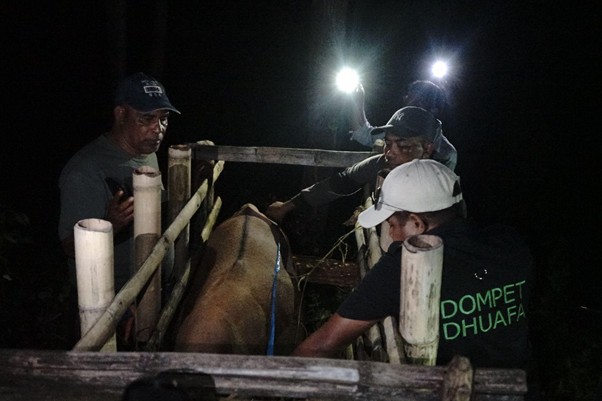
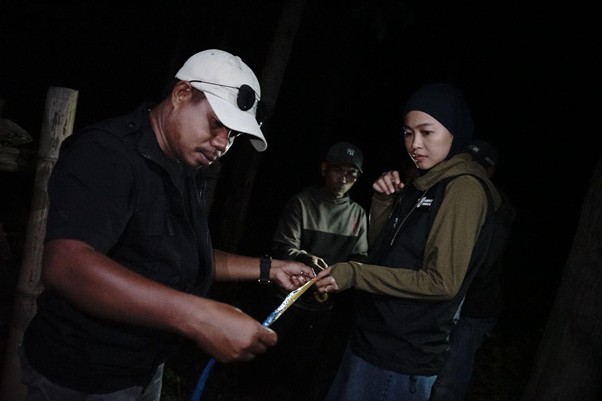
The sun began to set in the western sky. Fog started to thicken. We paused to perform Maghrib prayer, then moved on to the next location, Kelimolo Village, Golewa Subdistrict. Armed with flashlights, we continued the quality control process alongside Ustaz Muhidur and volunteer Miya.
Read also: Fighting Social Inequality: Kurban Controls His Consumption Ego and Becomes More Wise
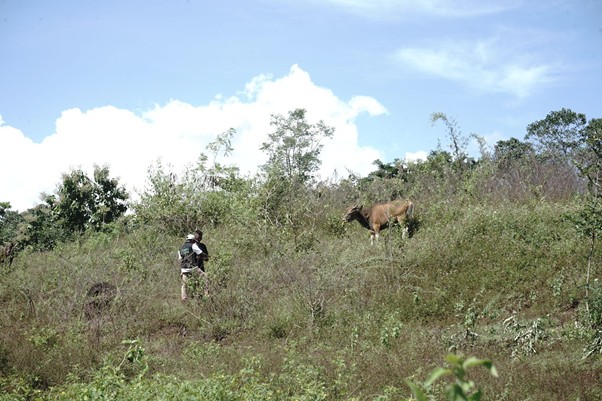
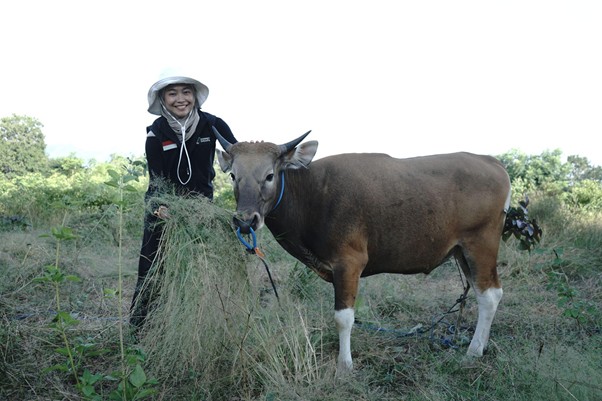
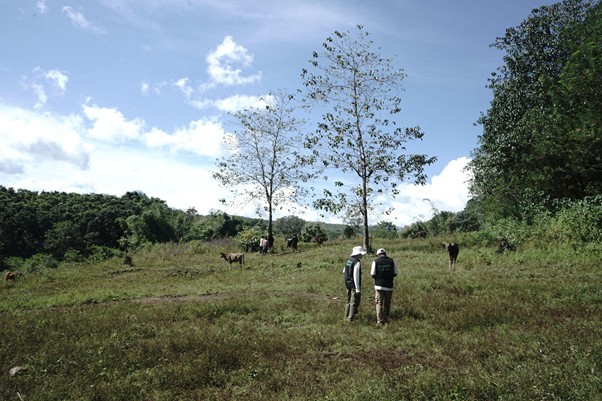
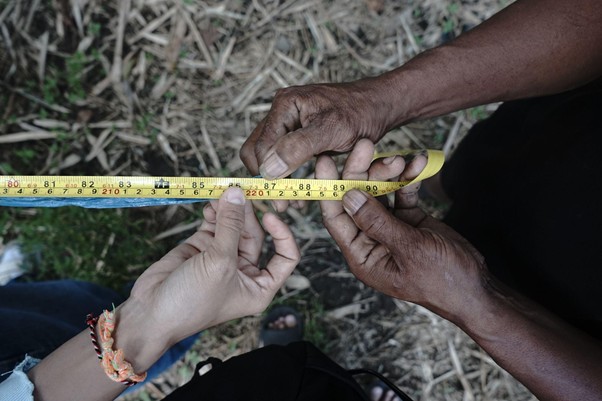
On every trip, we are always amazed by the traditional methods that are still consistently practiced by the farmers there. In Kelimolo, cows are measured using a pin-up pen. The cows, which are tied up in the fields, are moved into a pin-up pen that is the same size as their bodies. This method makes it easier to measure the cows with limited visibility at night.
“This is my first time conducting Quality Control for the sacrificial process. Every time I get the chance, I’m always amazed. For me, this is a profound experience. Especially when presented with traditional methods that produce one of the best types of cattle in Indonesia,” said Miya.
The Lengthy Quality Control Process: The Key to the Sacrificial Animal Distribution Program
The reason cattle must be measured at night is that those passing QC must be transported immediately to one of the distribution points in East Flores, located on the island of Adonara within the Flores archipelago. Ustaz Muhidur’s brow furrowed as he considered the distribution strategy. Crossing between islands means the cattle must be loaded onto a ship one by one, taking into account the tides.
“Besides tonight, we will head to the next QC point tomorrow morning. The challenge for QC in the eastern region is that the distances between points are far. Since the cows are not gathered in a pen but scattered across fields or grasslands, they must be loaded onto trucks by Friday night to head to Larantuka Port,” explained Ustaz Muhidur.
Read also: Imagining Nurman in Jumbo Film Performing Kurban
After the entire process, 24 cows that passed quality control will be transported by truck from Bajawa to Larantuka Port, located in East Flores Regency, on Friday (May 16, 2025).
The journey takes the entire day. The descent from the mountain, combined with numerous winding roads, requires the trucks to travel at approximately 40 km/h. Caution is necessary to prevent the cows’ legs from cramping. During the journey, the cows also undergo health checks by the local Health Department. This is a requirement for transporting cows between islands.
Upon arriving at the port, Miya and Ustaz Muhidur had to wait for the tide to rise. This allows the ship to dock and depart more easily. During high tide, the water around the pier rises, making it easier for the ship to float and avoid colliding with the pier walls. This condition is safer for loading the cows onto the ship.
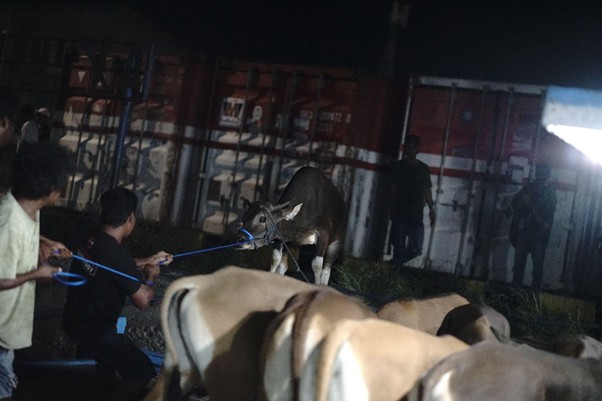
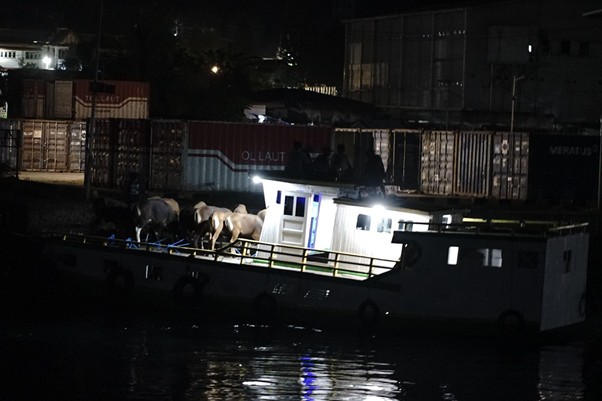
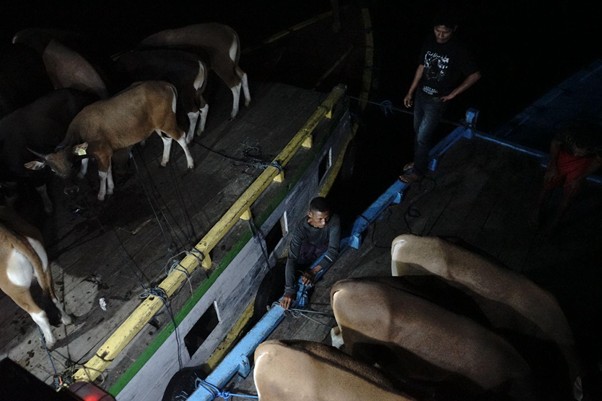
On Sunday (May 18, 2025), at 12:30 AM, the cattle could finally be loaded onto the ship. The process took 30 minutes to load 24 cattle onto two ships. The ships then sailed for one hour toward Adonara Island.
Read also: Kurban Helps Somalia Overcome a Prolonged Hunger Crisis
The lengthy journey and rigorous quality control process are integral to the success of THK Dompet Dhuafa. Reaching every corner of the country, particularly the 3T regions (remote, frontier, and outer islands), we ensure that every sacrificial animal is healthy, of sufficient weight, male, and in accordance with Islamic law.
Performing qurban at Dompet Dhuafa is very easy. It can be done digitally through digital.dompetdhuafa.org/kurban or the Dompet Dhuafa App. A notification of the sacrifice report will be sent to the donor immediately after the animal is slaughtered. Let’s spread the spirit of sharing to the remotest corners of the country through Dompet Dhuafa’s Animal Sacrifice Program! (Dompet Dhuafa)
Text and photos: Hany Fatihah Ahmad
Editor: Dhika