


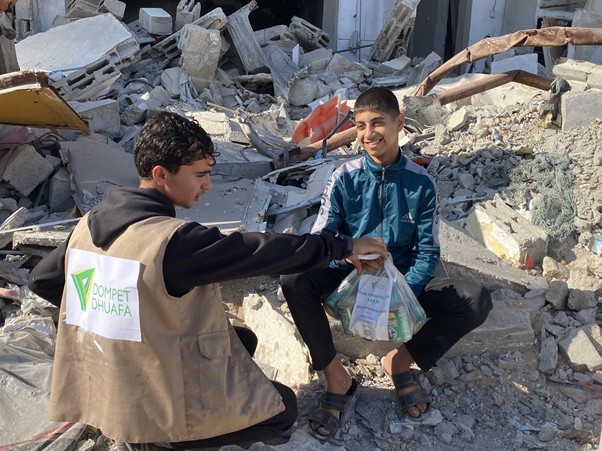
JAKARTA — – Since March 2, Israel has closed all crossing points for the distribution of food, medicine, and other humanitarian aid to the Gaza Strip, Palestine. The situation has worsened, with 57 Gazans dying from starvation since the October 7, 2023, attack.
In the ongoing genocide in Palestine, starvation has often been used as a systematic weapon. Civilians are the primary victims of Israel’s grip on the region.
The United Nations Office for the Coordination of Humanitarian Affairs (OCHA) reports that 69 percent of Gaza is now designated as a buffer zone or evacuation zone under Israeli orders. This means nearly the entire Gaza Strip is at risk of being destroyed, including agricultural land.
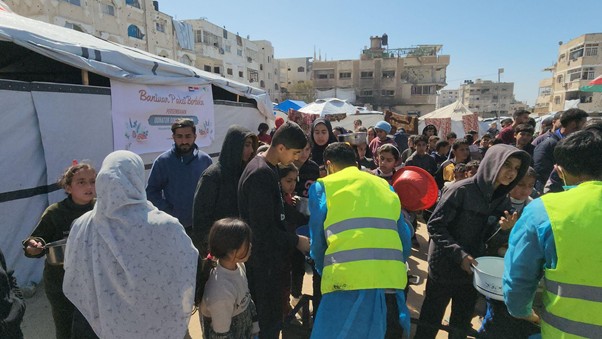
In Rafah itself, 100 percent of the area has been declared a restricted zone. This obviously complicates the distribution of humanitarian aid. The situation has long-term implications. Adnan Abu Hasna, spokesperson for the United Nations Relief and Works Agency for Palestine (UNRWA), explained in an interview with Al-Ghad TV that 66,000 children in Gaza are suffering from acute malnutrition.
Currently, Israel only allows 60 aid trucks to enter Gaza each day. Prior to the October 2023 attacks, 500 trucks were distributing humanitarian aid daily to Palestinian residents. Currently, 2.4 million Palestinians are at risk of acute starvation.
Various efforts are being made by humanitarian organizations worldwide to continue distributing aid, including Dompet Dhuafa. Ahead of Eid al-Adha 1446 H, Dompet Dhuafa initiated the Tebar Hewan Kurban (THK) program for Palestine. Every year, THK is organized with the aim of distributing sacrificial meat equitably to those in need.
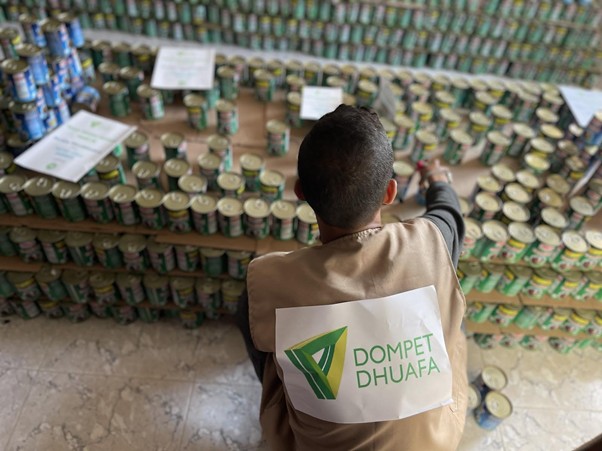
In addition to frozen meat Dompet Dhuafa also initiated the packaging of canned corned beef
Read also: Knitting Solidarity for Palestine, Emergency Mosque Begins Operation in North Gaza
According to the Chairperson of THK Dompet Dhuafa 2025, Dwi Tanty Kurnianingtyas, she explained the strategic mechanism for the distribution of sacrificial meat to Palestine. This is because the situation in Gaza is very complicated.
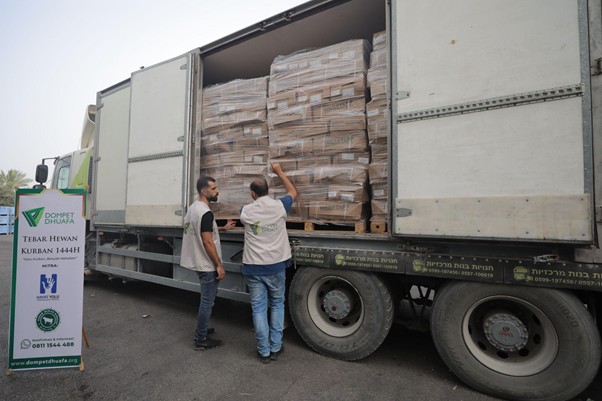
The sacrificial meat will be distributed in the form of frozen meat and corned beef in canned packaging. The sacrificial animals will be slaughtered at other locations. Buffaloes will be slaughtered in India, while cows will be slaughtered in Egypt.
The canned meat will be sent to the Gaza Strip. Meanwhile, the frozen meat will be distributed to Palestinian refugee camps in Egypt, Lebanon, and Jordan.
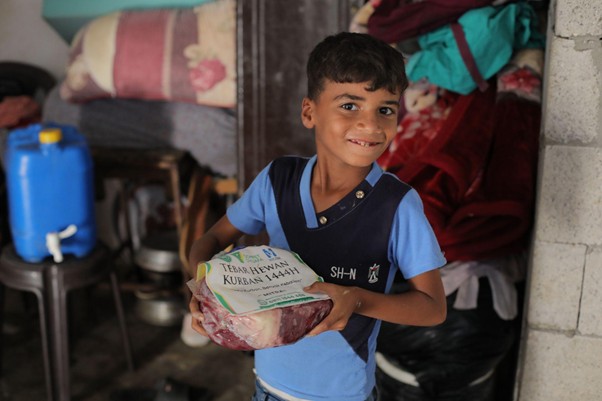
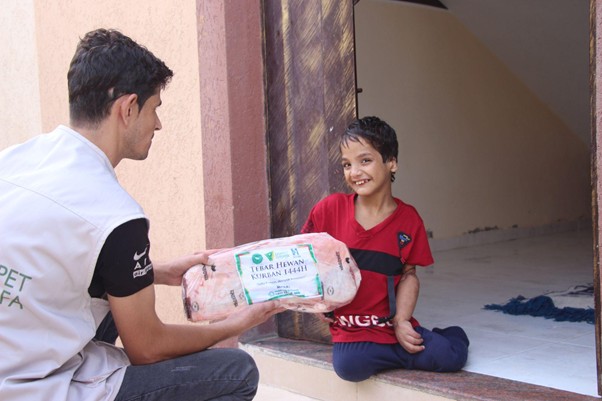
Beneficiaries of frozen sacrificial meat from THK Dompet Dhuafa 1444 H
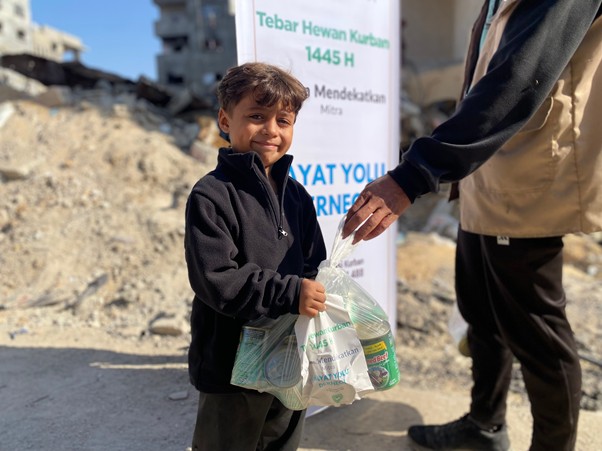
Victims of Israeli attacks who also received canned corned beef as part of the THK Dompet Dhuafa 1445 H program
Read also: Indonesian Ambulance Society Serves Fallen Victims in Gaza
Victims of Israeli attacks who also received meat donations in the form of canned corned beef through the Dompet Dhuafa THK program in 1445 H.
Dompet Dhuafa chose this strategy considering the long shelf life of canned processed meat, explained Tanty. Given the uncertain distribution channels for sending humanitarian aid amid the Gaza hunger crisis.
“For canned packaging, the processed meat is buffalo. The meat will be processed into full-meat, and some will be meat+ingredients. For canned sacrificial meat, each 1/7 of a buffalo will yield 49 cans, with each can weighing 360 grams. May this effort help our brothers and sisters facing the threat of starvation there,” said Tanty with hope.
Additionally, there will be live cattle for sacrifice that will be slaughtered in the West Bank or the city of Al-Quds, Palestine. The distribution will be in the form of fresh meat. For the sacrifices in the West Bank itself, Dompet Dhuafa will collaborate with local volunteers for the distribution.
For those who wish to contribute and help our brothers and sisters facing a hunger crisis there, you can visit the page digital.dompetdhuafa.org/kurban now! (Dompet Dhuafa)
Text: Hany Fatihah Ahmad
Photo: Dompet Dhuafa
Editor: Dhika