


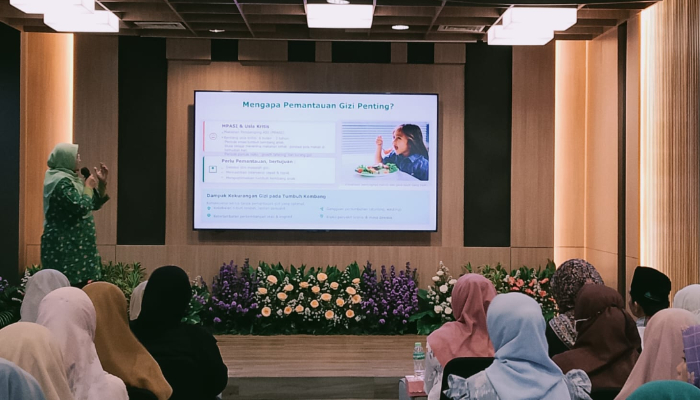
JAKARTA —— Dompet Dhuafa’s Free Health Service (LKC) held a hybrid Nusantara Healthy Culture Seminar with the theme “Optimizing Local Food Ingredients, Nutritious Complementary Foods, for Child Growth and Development.” The event took place on Wednesday (November 12, 2025) at the Sasana Budaya Rumah Kita, Philanthropy Building, South Jakarta.
The seminar featured professional speakers in their respective fields, including Dr. Ika Nurillah Satriana, IBCLC, a General Practitioner & International Lactation Consultant; Dr. Hani Purnamasari MsiMed, SpA, IBCLC, a Pediatric Specialist & International Lactation Consultant; Meyta Winduka Alexandriana A.Md. Gz as a Nutritionist at LKC Dompet Dhuafa, and Dr. Martina Tirta Sari as Head of LKC Dompet Dhuafa.
Based on data from the 2024 Indonesian Nutrition Status Survey (SSGI), the national prevalence of stunting is still at 19.8 percent. Worryingly, the highest cases were found in the 24-35 month age group, which is the phase where children are fully dependent on complementary foods. This fact confirms that the quality of complementary foods plays a crucial role in preventing stunting.
Ismail Agus Said, Director of the Dompet Dhuafa Health Program, hopes that this initiative can encourage mothers and food to play a role in raising healthy babies. Good and proper MPASI management can result in children who grow up healthy and develop well.
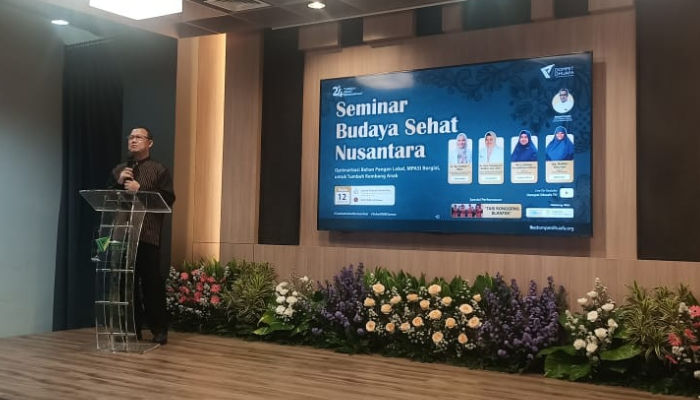
On the other hand, Ahmad Juwaini, Chairman of the Dompet Dhuafa Republika Foundation, said, “Based on the results of the 2024 Indonesian Nutrition Status Survey (SSGI), the national prevalence of stunting in Indonesia in 2025 is around 19.8 percent, with a target reduction to 18.8 percent in 2025. This figure shows a decline from previous years, but there are high disparities between regions, with several provinces still recording figures above 30 percent. Several provinces are above the national average, such as West Papua, West Sulawesi, and NTT, which have the highest rates. Many babies in Indonesia are not getting good nutrition.”
Ahmad Juwaini further stated, “Breastfeeding is very important for the Indonesian people. At the very least, it raises awareness of our nation’s reality and encourages improvement. Since its inception, Dompet Dhuafa has focused on nutrition and breastfeeding. The Free Health Service (LKC) continues to develop a culture of health throughout the archipelago. This seminar reminds us of the importance of local foods in meeting nutritional needs. Many communities utilize local wisdom, such as moringa leaves, pureed chicken liver, and corn porridge.“
Ahmad hopes that ”our consumption culture will utilize the resources we have to meet our food security needs. We hope that the legacy of our ancestors can be strengthened and developed with current innovations and technology.”
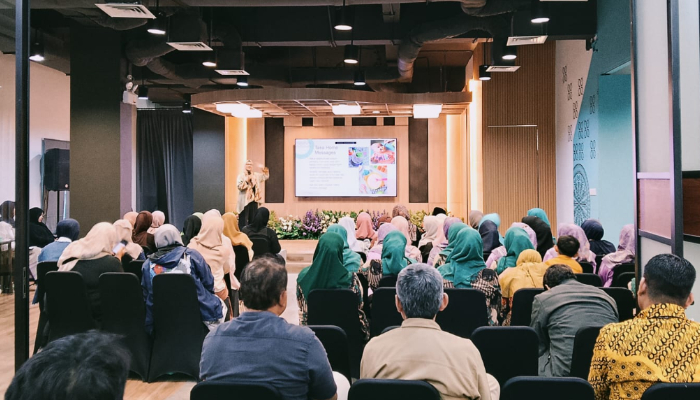
This seminar was attended by 80 offline participants consisting of posyandu cadres, facilitators, program managers from LKC Jakarta, West Java, and Banten, as well as representatives from community organizations and the media. Online, the event reached 800 participants through a live YouTube broadcast.
“Health post cadres are the spearhead of change in the community. Through this seminar, we hope to not only increase the capacity of cadres, but also encourage the creation of recipes and complementary foods made from local ingredients that can be directly applied in health posts,” explained Dr. Martina Tirta Sari.
In complementary feeding, according to Dr. Ika Nurillah Satriana, diet is important in meeting complementary feeding needs. Eating is a process of child growth and development; children need to learn to eat, encouraged with love and patience. Introduce various types of food to babies from an early age (at least 6 months) so that they get used to chewing and are introduced to a variety of food flavors.
Read also: Toddler Survivors Become Vulnerable, LKC Delivers MPASI to Residents’ Homes Affected by Flooding
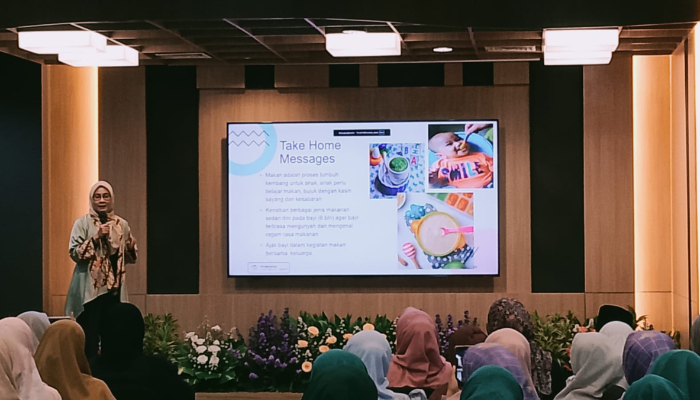
On the same occasion, Dr. Hani Purnamasari said, “Complementary foods are ready to be given to babies aged 6 months to 2 years, which is the golden period of child growth and development. Complementary feeding patterns must be monitored in order to detect nutritional problems early, ensure quick and appropriate intervention, and optimize child growth and development.”
“This is to reduce the impact of malnutrition. If malnutrition occurs during growth and development, it will result in low immunity and susceptibility to disease, delayed brain and cognitive development, growth disorders, and the risk of chronic diseases,” added Dr. Hani Purnamasari.
LKC Dompet Dhuafa invites all parties to collaborate in supporting every family in monitoring children’s growth and development and promoting the implementation of nutritious complementary feeding based on local food ingredients. Together, we can achieve healthy Indonesian children free from stunting, toward Indonesia Emas 2045. (Dompet Dhuafa)
Text and photos: Bani Kiswanto
Editor: Ronna