


JAKARTA —-— Over the past 32 years, Dompet Dhuafa has consistently served as a mediator of goodwill. Each year, more than 3 million people have benefited from various programs covering education, economics, health, social welfare, religious outreach, and culture.
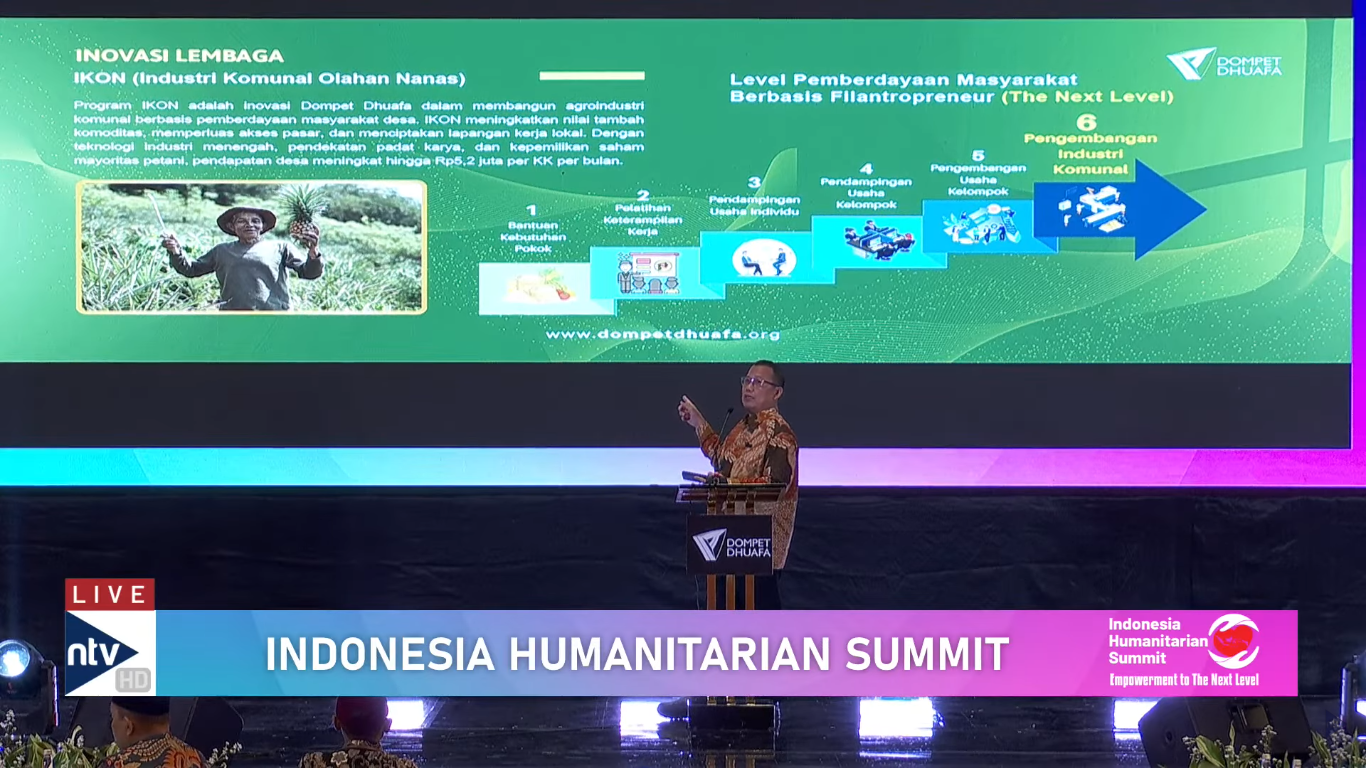
“The number of beneficiaries will continue to grow over time,” said Ahmad Juwaini, Chairman of the Dompet Dhuafa Republika Foundation, when delivering the 2026 Public Expose on the 2025 Performance Report at the Indonesia Humanitarian Summit (I-HitS) with the theme “Empowerment to the Next Level,” at the Nusantara TV Tower, Pulomas, East Jakarta, Thursday (01/15/2026).
However, this support does not stop at the program level. Dompet Dhuafa intends to expand to the empowerment stage, so that mustahik can become muzaki.
“There are children of factory workers who study abroad, become lecturers, and have a big impact. There are young college graduates who return to their hometowns to help improve the welfare of farmers,” said Ahmad, recounting how the transformation took place.


The factory worker’s son that Juwaini referred to is Koko Iwan Kurniawan. He is an alumnus of Padjadjaran University (Unpad) in Bandung and a recipient of the BAKTI NUSA Dompet Dhuafa scholarship. This program provides character building, leadership training, and networking opportunities that broaden his horizons and boost his confidence.
Since his college days, Koko’s commitment to community empowerment has been evident through the publication of his book entitled Sociopreneur Millenial. His dream continued abroad. He had the opportunity to study for his master’s degree in Thailand and his doctorate in Japan. In both countries, he was actively involved in leading social actions and innovative research, such as biofuel from algae and reforestation projects.
Currently, Koko is a lecturer at Unpad as well as a sociopreneur focused on developing a sustainable agro-industry ecosystem. He has initiated projects such as co-food and the innovative Rice ATM to respond to community needs.
Unlike Koko, Ramli chose to become a farmer. While his peers decided to try their luck in the big city after graduation, he chose to return to his hometown and assist coffee farmers. Ramli developed effective coffee harvesting techniques, thereby improving coffee quality. This small change had a significant impact on the selling price of coffee, which rose from Rp2,500 to Rp8,500.
Now, there are 59 farmers who have joined the Sinjai Coffee Innovation program that he established. The movement has evolved into the Madaya Sinjai Area program in collaboration with Dompet Dhuafa South Sulawesi. The highlight was when Inovasi Kopi Sinjai won the Gold Award in the Inclusive Economy category at the InTecSEA 2025 event, a national recognition of the success of empowerment born from collaboration and long-term commitment.
“Philanthropic empowerment must ultimately measure benefits like these. It’s not just about reaching the beneficiaries or increasing the number of beneficiaries, but also about the changes brought about by the assistance,” Juwaini explained.
Read also: Synergy KLC and Umar Usman Launch Womenprenenur Growth Academy Program for Women Entrepreneurs


In addition, Dompet Dhuafa also pays serious attention to Eastern Indonesia as a form of commitment to empowering communities in areas that still face inequalities in access to education, health, economy, and religious guidance. Through collaboration with various parties, Dompet Dhuafa presents programs that are targeted, sustainable, and in line with the needs of the community.
These programs are realized in the form of scholarships for outstanding students, Free Health Services (LKC), Midwives for the Country, DD Farming, Kahayya Coffee, Tebar Hewan Kurban (THK), and Corps Dai Dompet Dhuafa (Cordofa).
“This remains our priority. We know that Eastern Indonesia is still lagging behind in several aspects and in terms of access. Therefore, we invite everyone to participate in the empowerment of Eastern Indonesia,” said the Chairman of Dompet Dhuafa.
Dompet Dhuafa’s humanitarian support extends beyond Indonesia to several other countries. These programs include international da’wah initiatives, such as Dai Ambassador, which is present in various countries in Europe, Asia, and Oceania, as well as Islamic Online Courses organized for Muslim communities in the Netherlands, the Philippines, Malaysia, and Korea. In addition, Dompet Dhuafa also implements social programs, including Tebar Hewan Kurban (THK) in Myanmar, Somalia, and Palestine, as well as humanitarian aid, such as Respons Palestina and Jaga Palestina.
“All of these programs demonstrate Dompet Dhuafa’s commitment to promoting humanitarian values, strengthening the role of global da’wah, and providing access to humanitarian aid to international communities in need,” said Ahmad Juwaini.
Read also: Indonesian Ambassador to the Philippines Praises Dai Ambassadors English Proficiency in Preaching


However, more important than all of this is Dompet Dhuafa’s long-term goal of gradually increasing community empowerment. According to Juwaini, there are six levels that need to be achieved in order to encourage local communities to compete at a global level. These stages include: basic needs assistance, job skills training, individual business assistance, group business assistance, group business development, and communal industry development.
“If China can eventually export cars to various countries, it started with small industries owned by communities, owned by the people, owned by citizens who worked on car parts. Empowerment institutions can also be involved in the development of communal or community industries,” he concluded.
For your information, also present at the event were the Director of Zakat and Waqf Empowerment of the Ministry of Religious Affairs of the Republic of Indonesia, Waryono Abdul Gofur; Deputy Minister of Foreign Affairs of the Republic of Indonesia, Anis Matta; Entrepreneur, Sandiaga Uno; Rahmad Riyadi, Member of the Board of Trustees of Dompet Dhuafa, Member of the Board of Trustees of Dompet Dhuafa, Yudi Latif; Ahmad Juwaini, Chairman of Dompet Dhuafa, Director of IDEAS, Agung Pardini; Head of Innovation and Literacy at the Zakat Forum, Eko Muliansyah; Commercial Director of NTV, Dede Apriandi; Owner of Batik Trusmi, Sally Giovanny; Founder and CEO of Agradaya, Andhika Mahardika; and Beneficiary of Dompet Dhuafa, M. Atiatul Muqtadir. (Dompet Dhuafa)
Text: Aji Pangestu
Photos: Anndini, Aji, NTV.
Editor: Dhika