

MALUKU TENGGARA, MALUKU -— The Jelajah Tebar Hewan Kurban (THK) Dompet Dhuafa always leaves unique and touching stories in its journey. Last year, the THK Dompet Dhuafa team had the opportunity to land on Kei Kecil Island, located in Southeast Maluku, Maluku Province.
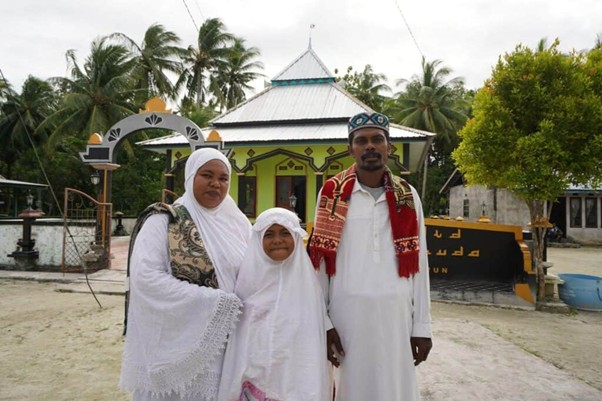
Besides being surrounded by beautiful seas, Kei Kecil Island has the largest human population among the islands in the Kei Archipelago. However, Ahmad Albar, a Muslim religious leader from Ohoidertawun Village, shared that the local residents’ circumstances make the sacrifice ritual very rare throughout the year.
Albar is not complaining; instead, he understands the situation. Besides economic factors, the majority of the residents are not practicing Muslims. Additionally, the island’s remote location further complicates matters.

“It is very rare to have sacrificial animals here. Perhaps people are not very aware of the tradition. In addition, the economic conditions of the community are poor. Even if there are sacrificial animals, they are usually donated by the local government. And that is not every year. Last year, we received one goat from the government. Since it wasn’t possible to divide the meat, it wouldn’t be enough, so we all cooked together. After that, it was distributed in bowls to the homes,” he explained.
Read also: THK Dompet Dhuafa Distributes Qurbani to Afghanistan
Indeed, there are only 37 Muslim families living in 27 houses in this village. This is because one house can be occupied by more than one family. Despite this, religious tolerance among the villagers is very high. Even the Ministry of Religious Affairs has dubbed it a village of moderation.
Meeting Albar gave us more strength to continue striving through the various processes involved in implementing THK. It is not easy, but realizing the dream of sacrificing animals for those in need is what drives us forward.
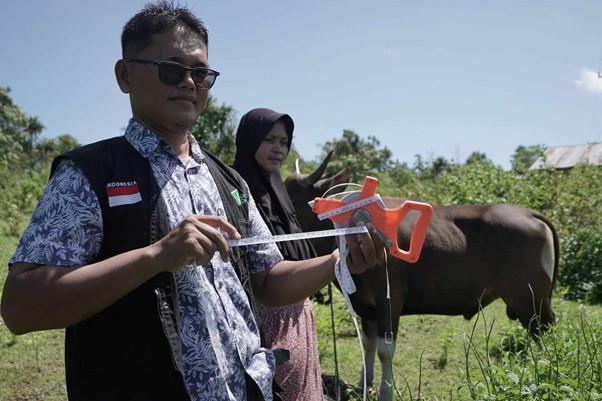
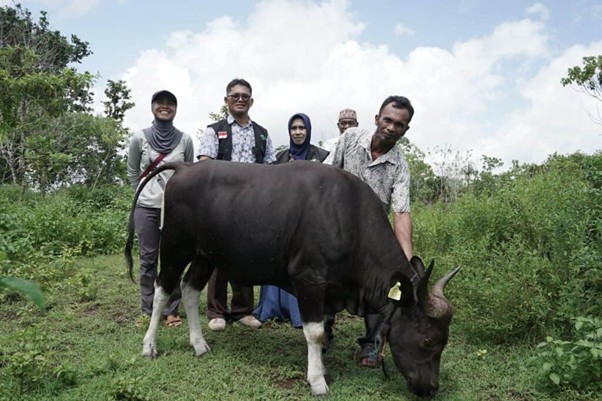
Accompanied by partners from Dompet Dhuafa, the THK team visited several villages on the outskirts of the district. The objectives were twofold: conducting Quality Control (QC) on the livestock that will be sacrificed and beginning assessments of potential beneficiaries of the sacrifices.
The experience here differs from most THK teams in western and central regions, where livestock are cared for in plasma barns or DD Farm livestock centers.
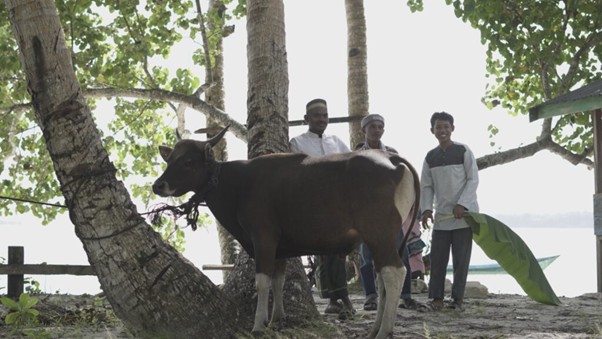
In eastern Indonesia, the team typically conducts QC in open fields. This is because it is not a local custom to tie livestock in barns. Cattle are allowed to roam freely in open areas, though they are occasionally tied to trees or large rocks.
Read also: A Warm Touch Marcella Zalianty, Chef Amanda, and Darling Dompet Dhuafa After the Jakarta Floods
Dompet Dhuafa implements this procedure to ensure that sacrificial animals meet the established criteria, namely that they are male, healthy, and of sufficient weight. For sheep (doka), the minimum weight for economical doka is 21-22 kg, while premium doka must weigh 33 kg. Similarly, cattle must weigh between 250-300 kg.
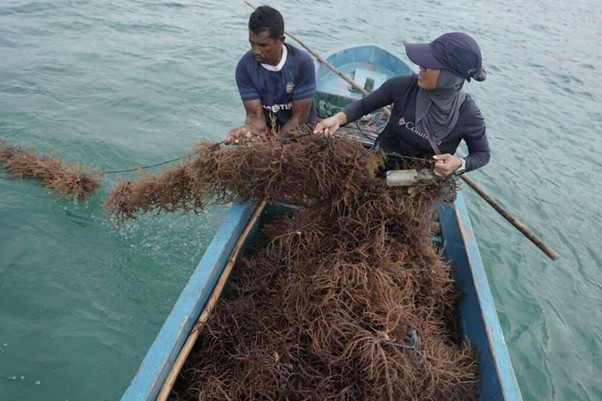
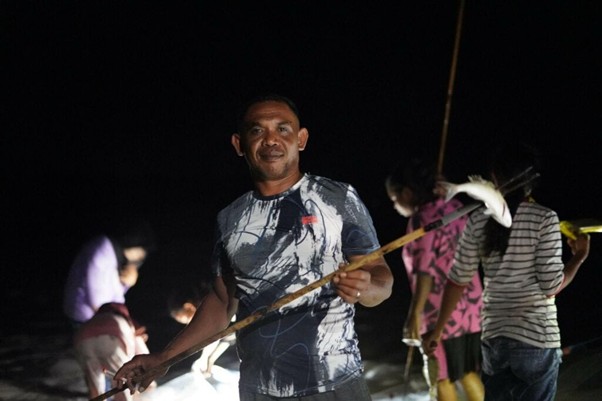
The daily life of the people of Kei Kecil Island is to go to sea to fish. In addition, they sow seaweed seeds as another way to earn money. Some may choose to become casual laborers. Mulyadi Kilmas (52) is one of them.
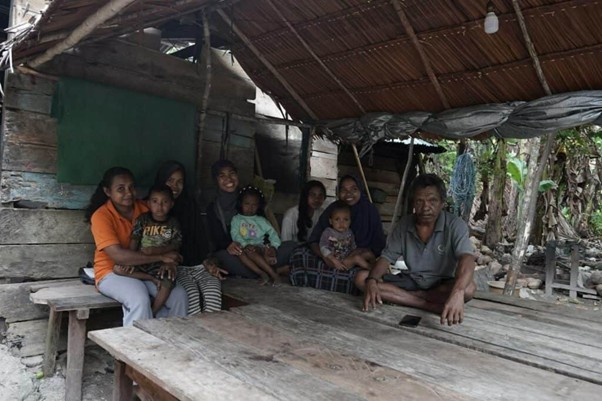
Mulyadi lives in a small wooden house. It is home to 10 people from four families. There is nothing wrong with their lives. Nor do they have any great ambitions. They are people who are grateful for their simple lives.
“No one eats meat here. There are no animals. People here eat fish. Sometimes corn, sometimes cassava. There was once goat meat because someone gave a sacrifice last year. But it wasn’t much. Just a bowl for the whole family,” said Mulyadi.
Celebrating Eid al-Adha with a Unique Tradition
When Eid al-Adha arrives, the village of Ohoidertawun is one of many communities eligible to receive sacrificial meat from Dompet Dhuafa.
Accompanied by Mimi Campervan—her online nickname—a social activist, the THK in Ohoidertawun becomes more vibrant. She runs a campaign to donate sacrificial meat through Dompet Dhuafa with her followers.
Read also: Slaughtering Kurban Animals in the Midst of Islamic Minorities
The woman from West Sumatra has been traveling across eastern Indonesia for 13 months, engaging in social activities. This collaboration between Dompet Dhuafa and her is expected to further expand the benefits of THK in eastern Indonesia, particularly on Kei Kecil Island.
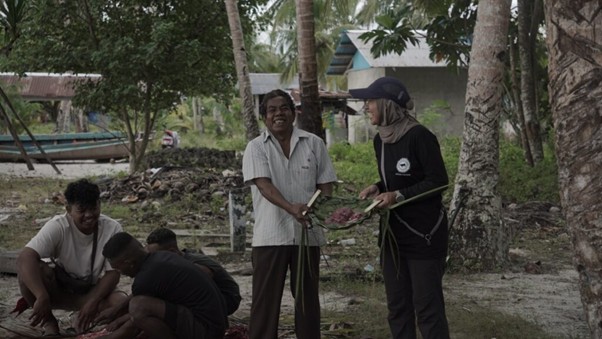
Mimi and the THK team distributed two cows to approximately 73 families. Mimi Campervan happily distributed the sacrificial meat to several recipient households.
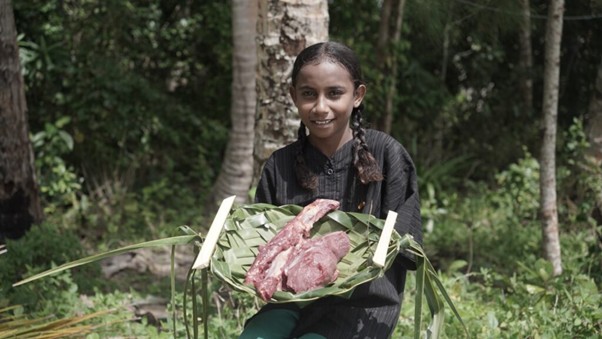
A young girl from Ohoidertawun received the sacrificial meat with a beaming smile. She couldn’t stop smiling.
“Sister, we are very grateful. It’s wonderful to have a cow sacrifice here. Finally, we can enjoy enough sacrificial beef for the entire village,” said one villager from Ohoidertawun Village to Mimi Campervan after receiving the sacrificial meat.
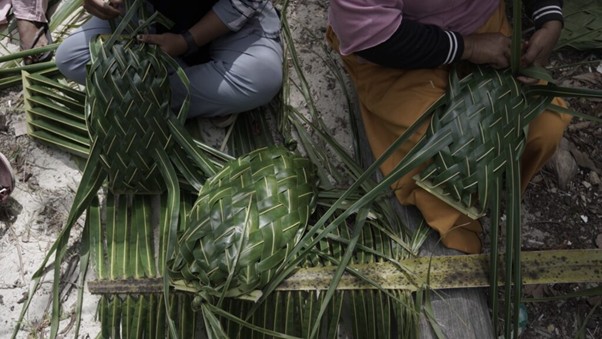
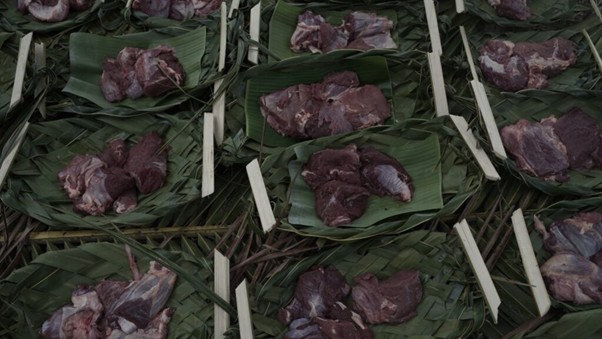
It looks unlike anything else. Instead of using plastic containers, the local community uses “Kamdada” as containers for the sacrificial meat that will be distributed to the residents. Kamdada is a traditional woven container made from young coconut leaves by the local community.
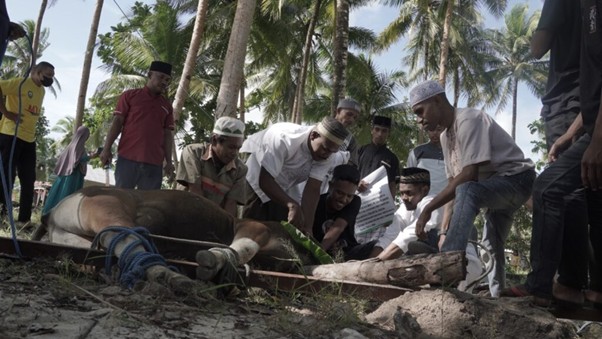
A mix of sadness and joy fills the air in Ohoidertawun. The sacrificial procession took place with great solemnity. Residents worked together, from the slaughtering, cleaning, to the distribution of the sacrificial animals.
That was the series of THK Dompet Dhuafa activities on Kei Kecil Island. Dompet Dhuafa holds THK annually as an effort to ensure equitable distribution of sacrificial meat for those in need. Every process is ensured to comply with religious guidelines and distributed to even the remotest parts of the country.
For those planning to perform the sacrifice this year, you can visit the website digital.dompetdhuafa.org/kurban. A post-sacrifice report will be sent two weeks after the sacrifice is carried out. Let’s perform the sacrifice and spread happiness evenly across the nation! (Dompet Dhuafa)
Text: Hany Fatihah Ahmad
Photos: Riza Muthohar and Ayudia
Editor: Dhika