


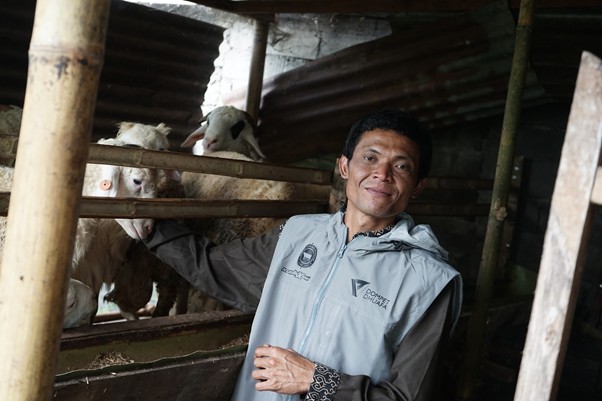
SEMARANG, CENTRAL JAVA —-— At an elevation of 1,800 meters above sea level in Dangklik Hamlet, Tolokan Village, Getasa Subdistrict—where fog often shrouds the landscape—lies a story of profound transformation. For the residents living on the slopes of Mount Merbabu, sacrificial animals are no longer merely a symbol of worship, but tangible evidence of economic self-reliance.
Heri Santoso, one of Dompet Dhuafa’s partner farmers, recalls the days before the collaboration began in 2021. In his hamlet, the sacrificial ritual was once a very rare event due to the community’s lack of awareness and economic constraints at the time.
“Community awareness back then was virtually nonexistent. In 2018, there wasn’t a single sacrifice at all in this Dangklik Hamlet (Tolokan Village). Even if some people ever received donated meat, the quantity wasn’t enough for all the believers here,” Heri explained when met by the Dompet Dhuafa team on Tuesday (May 12, 2026).
Now, through the Sacrificial Animal Distribution Program (THK) and the Nusantara Farmers and Livestock Network (Jantara), the atmosphere in the hamlet has completely changed. Heri now manages 20 male sheep in his pen, which were entrusted to him by Dompet Dhuafa. Later, the sheep that he has fattened will be repurchased by Dompet Dhuafa to be distributed as sacrificial animals for residents in Dlangklik Hamlet, Tolokan Village, as well as other areas.
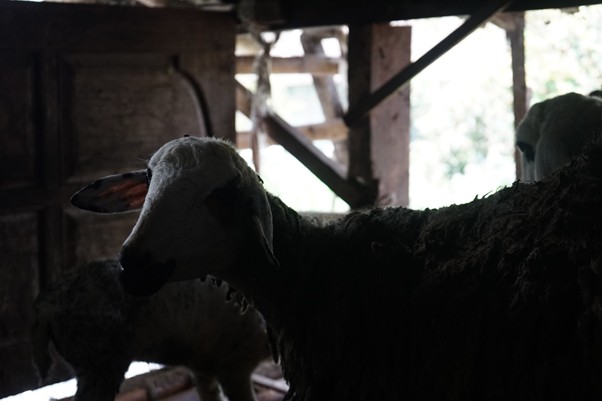
For Heri, the biggest challenge for farmers on the mountain slopes isn’t just the weather, but the grip of middlemen. Until now, farmers have often been powerless as middlemen arbitrarily set selling prices, especially when the farmers are in desperate need of money.
The presence of Dompet Dhuafa provides a solution to this concern. Through a partnership system, farmers receive fair prices and market certainty.
“My hope is that all the farmers in Tolokan Village can collaborate to put pressure on the middlemen who often manipulate selling prices. The difference is very noticeable; the presence of Dompet Dhuafa has been a huge help to our economy,” Heri emphasized.
Raising sheep in the highlands presents its own unique challenges. Heri explained how the sheep brought in from warmer regions require a full month to adapt to the temperature.
“These sheep come from warm climates to the cold highlands; the difference has a significant impact. Initially, during that first month, the sheep were a bit unwell due to environmental adaptation, but alhamdulillah, they’ve been healthy and thriving ever since,” he explained.
Read also: For the First Time, Dompet Dhuafa Introduces a Camel Sacrifice Program for Eid al-Adha 1447 H
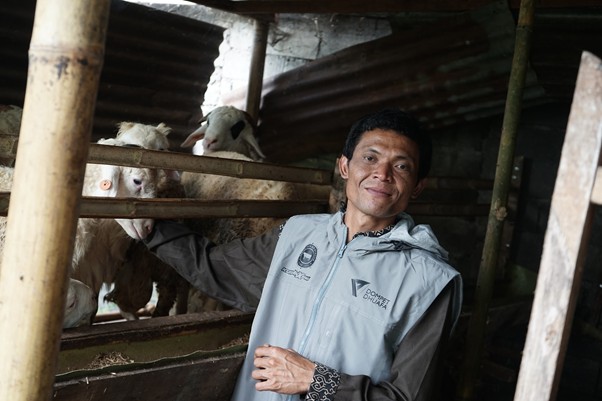
Heri manages the livestock together with his wife using a structured system. He prefers to organize the farmers into small groups so that each farmer feels a strong sense of responsibility and is motivated to produce the best results for the donors.
In addition to livestock, Dompet Dhuafa has also addressed the basic needs of residents through a clean water pipeline program, which is crucial for life in the mountains. The synergy of these various programs has transformed Tolokan Village from a mere isolated village into a vibrant center of empowerment.
Heri Santoso’s story is proof that professionally managed zakat and qurbani can transform a village from a remote hamlet with few qurbani offerings into a self-reliant region capable of countering market price injustices. Expand the benefits of qurbani through digital.dompetdhuafa.org/kurban. (Dompet Dhuafa)
Text and photos: Roseta
Editor: Dhika