

SORONG, PAPUA —- Eid al-Adha is the second major holiday after Eid al-Fitr, and the moment of Eid al-Adha is eagerly awaited by all Muslims. The celebration of Eid al-Adha is inseparable from the story of the Prophet Ibrahim and his son. There is a story of obedience from the Prophet Ibrahim and the Prophet Ismail that can be used as an example behind the celebration of Eid al-Adha.
Although celebrated annually, Eid al-Adha always holds deep meaning for Muslims. Eid al-Adha teaches the values of sincerity, patience, obedience, sharing, and sacrifice all at once.
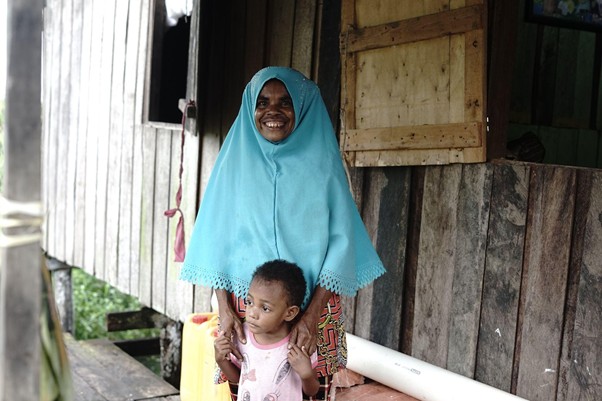
These values are not only alive in the story of Prophet Ibrahim, but are also clearly reflected in the lives of people who must endure the harsh realities of life to ensure that their children can eat and go to school, such as Amsiah (22), who lives in a remote corner of Kurowato, Aimas District, Sorong Regency, Papua.

Every day, Amsiah has to travel quite a distance, walking through rough terrain for one purpose: to earn a living for her two children. Every morning, her destination is the coral reef, which is Amsiah’s main source of income. She splits the coral using a pickaxe.
“I go just to split coral rocks. I leave around seven or eight in the morning and return home around four or five in the afternoon in Klaleng Ampat. It’s quite far, so I walk there and back. If there’s a truck, we hitch a ride,” Amsiah explained.
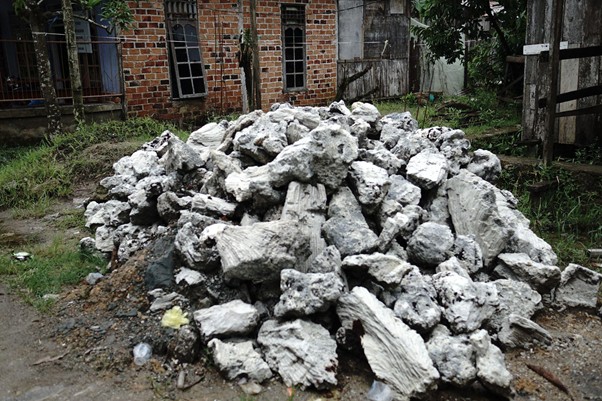
In addition to distance and time, the process he undertakes is also physically demanding.
“Underneath that, we move it, then lift it up, and only then can we get the rock and use our crowbar to split the coral rock,” added Amsiah.
Every individual faces choices in life, ranging from simple matters to major decisions such as career, relationships, and life goals. In society, the role of the family head is typically held by men. However, not all stories follow this norm. Amsiah, for example, must take on the dual role of both mother and father for her children, as her husband passed away in 2023 due to an illness he had been suffering from.
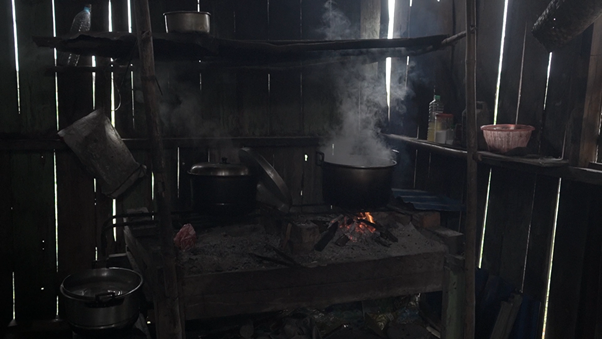
It wasn’t out of choice, but because circumstances demanded that she be strong and become everything to her family. It wasn’t an easy decision, but she accepted it gracefully, because love and responsibility often enable people to surpass their own limits.
“My husband passed away, so I had no choice but to find work to support our children,” said Amsiah firmly.
Now she lives with her mother and must support her children on her own. Her morning routine begins with cooking rice, ensuring the children don’t come home from school hungry.
Read also: Fighting Social Inequality: Kurban Controls His Consumption Ego and Becomes More Wise
In a day, if she is lucky, Amsiah can bring home half to one load of stones. However, this work is not always certain. Often she has to wait a long time until there is a truck that can transport the stones.
“If we get it, alhamdulillah, we can go home,” explained Amsiah.
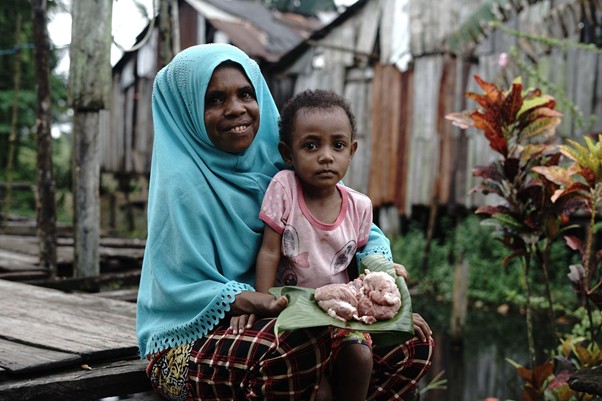
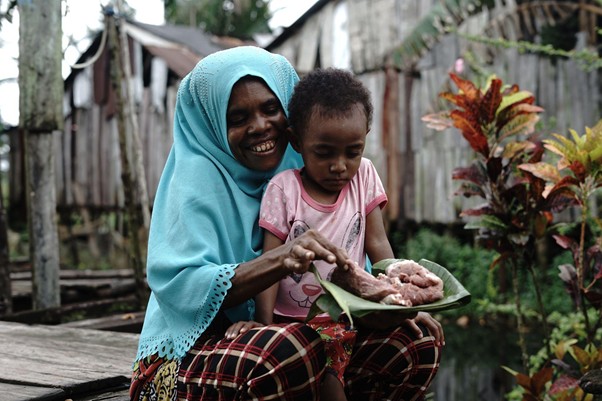
However, amidst this struggle, moments like Eid al-Adha bring tears of joy and gratitude. Despite the hardships Amsiah faces, she can bring happiness to herself and her children, as she can enjoy sacrificial meat during the festive occasion.
“If we have enough money, we buy fish too. If not, we eat water spinach with the children,” she explains.
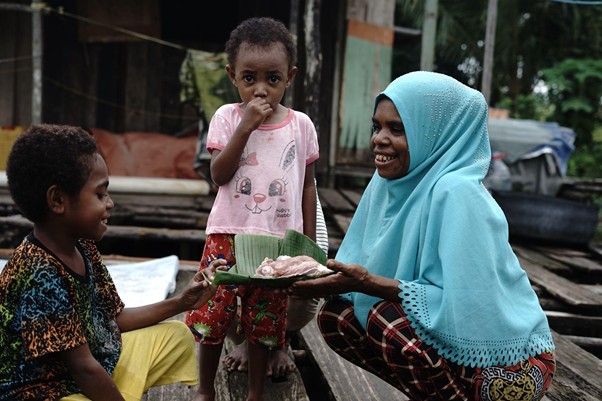
The sacrifice of Suhte is also felt by Amsiah, who can bring simple happiness to Amsiah and her small family.
“Alhamdulillah, during Eid al-Adha this year, we were able to receive sacrificial meat. It’s a joy, especially eating it with rice. The children also ate, and they were happy to receive the meat. Thank you, Dompet Dhuafa,” she said with a smile to her child.
Now, Amsiah’s only hope is to send her children to school. This hope is also the last dream of her husband.
“He wanted to send the children to school, but it requires money for their education,” Amsiah revealed.
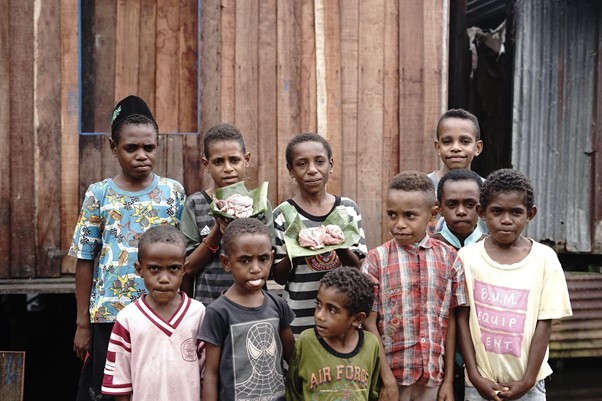
Amsiah remains steadfast, her struggle and sacrifice serving as a symbol of women’s resilience for a better future for her children. Continue to share happiness through sacrificial meat to those who are struggling amid limitations through digital.dompetdhuafa.org/kurban. (Dompet Dhuafa)
Text and photos: Anndini Dwi Putri
Editor: Dhika