

Global warming is now an issue that is increasingly close to people’s daily lives. Changes in the Earth’s temperature are no longer perceived as merely scientific discourse. The impact is evident in the form of unpredictable weather, more frequent ecological disasters, and environmental damage that makes it difficult for humans to meet their daily needs.
Read also: Climate Change and Signs of Damage to the Earths Surface
What is Global Warming?
The phenomenon of global warming occurs because the Earth’s average temperature continues to increase from year to year. This rise in temperature is largely influenced by human activities, such as the burning of fossil fuels and deforestation. These activities produce greenhouse gases that are released into the air.
Greenhouse gases are gases that trap heat around the Earth, similar to the glass roof of a greenhouse.
The sun’s heat, which should return to space, is instead trapped in the atmosphere. As the amount of greenhouse gases in the air increases, gases such as carbon dioxide, methane, and nitrous oxide retain heat around the earth for longer, causing temperatures to rise. The burning of fossil fuels, deforestation, and large-scale industry accelerate the accumulation of these gases. If this condition continues, the Earth’s temperature will increase and the climate balance will begin to be disrupted.
Data from the Intergovernmental Panel on Climate Change shows that the global average temperature has increased by about 1.1 degrees Celsius since the pre-industrial era. This figure may seem small, but its impact is far-reaching. Even this small increase in temperature can change weather patterns, melt polar ice, and raise sea levels.
Read also: Is it permissible to distribute zakat for climate change programs?
The Impact of Global Warming on Life
Global warming affects many aspects of human life. The agricultural sector faces unpredictable planting seasons. Fishermen experience changes in fish migration patterns. Coastal areas are at risk of flooding due to rising sea levels.
The World Meteorological Organization has recorded an increase in extreme weather events in the last two decades. Heat waves, intense rainfall, and tropical storms are occurring more frequently in various parts of the world. These conditions increase the risk of disasters for vulnerable communities.
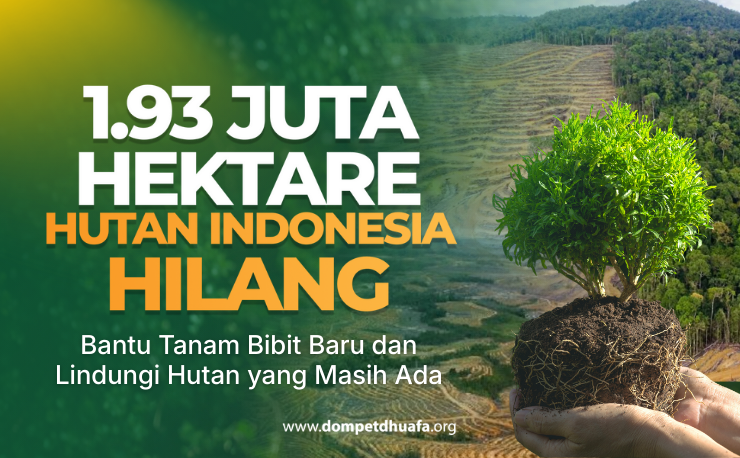
Global warming does not occur in isolation. It is closely related to environmental damage caused by humans. Forests, which absorb carbon, continue to decline due to logging and land conversion. When forests disappear, the earth’s ability to balance its temperature weakens.
In the Qur’an, Allah reminds humans of the impact of their actions on nature. Allah says, “Corruption has appeared on land and sea because of what the hands of humans have done. (Through this) Allah makes them taste some of the consequences of their actions so that they may return (to the right path).” (QS. Ar-Rum: 41). This verse emphasizes that environmental damage is inseparable from human behavior. When humans exploit nature without limits, the impact is felt by humans themselves.
Read also: Free Palestine, Is it Really a Sign of the Apocalypse?
The Impact of Global Warming in Indonesia
Climate change due to global warming can affect the water cycle in nature. Warmer air can hold more water vapor. This condition increases the intensity of rainfall at certain times. In other periods, the same area can experience prolonged drought.
NASA reports show that extreme rainfall is increasing in many parts of the world as global temperatures rise. Rainfall falls in a short period of time with a large volume. Land that has lost its vegetation cover is unable to absorb water optimally, causing flooding and landslides.
Indonesia is one of the regions that has been significantly affected by global warming. Changes in rainfall patterns have impacted economic and social activities in many areas. Shorter but more intense rainy seasons can increase the risk of flooding and landslides. Global Forest Watch data shows that millions of hectares of forest have been lost in Indonesia since the early 2000s. This loss of forest reduces the soil’s ability to absorb rainwater. When heavy rains fall, water flows quickly into rivers and settlements.
Read also: Disaster, Warning, or Punishment for humans
Islam’s View on Preserving Nature
Islam views humans as caliphs on earth. This duty includes the responsibility to maintain the balance of nature.
The Prophet Muhammad said, “The world is green and beautiful, and Allah has made you its stewards.” (HR. Muslim).
The command to manage the earth as best as possible is also explained by Allah in the Quran, Surah Al-A’raf, verse 56, which reads, “Do not cause corruption on earth after it has been set in order. Pray to Him with fear and hope. Indeed, Allah’s mercy is very close to those who do good.”
The two arguments above teach us that protecting the environment is a trust. Destroying nature means neglecting this responsibility. Conversely, efforts to care for nature are part of social worship that has a broad impact.
Read also: The wisdom behind natural disasters in Islam, Muslims must know!
Preventing Global Warming Starting from Yourself
Preventing global warming can indeed start from yourself, but it cannot stop there. Individual behavioral changes such as saving electricity, reducing the use of private vehicles, and managing waste are still important as initial steps. If done together by many people, these habits can gradually reduce greenhouse gas emissions. However, the impact will be limited if it is not supported by broader changes.
Prevention efforts also require public policies that favor the environment. The government has a major role in regulating land use, protecting forests, and limiting activities that damage nature. Strict regulations on logging, mining, and land conversion can prevent damage that accelerates global warming. Clean energy and environmentally friendly transportation policies also help reduce emissions in the long term.
In addition, cooperation between the community, government, and social institutions is key. Tree planting, forest restoration, and ecosystem improvement programs cannot be carried out by one party alone. The involvement of local communities ensures that the environment is sustainably preserved. Public support in the form of participation and donations also helps environmental programs run more widely and consistently.
Read also: Zakat for the Environment Helps Restore Damaged Ecosystems
The Role of Humanitarian Institutions in Environmental Restoration
Efforts to prevent global warming require collaboration between many parties. Humanitarian institutions play a role in bridging public awareness with concrete action. Dompet Dhuafa has developed various environmental programs that focus on ecosystem restoration and disaster risk reduction. The tree planting program not only increases green cover but also involves the communities surrounding the forests.
Planting trees is a simple step with long-term impacts. Each tree helps absorb carbon, preserve water sources, and protect biodiversity. This effort is part of humanity’s endeavor to keep the earth livable.
Allah says, “… Indeed, Allah will not change the condition of a people until they change what is in themselves.
If Allah wills evil for a people, no one can repel it, and there is no protector for them other than Him.” (QS. Ar-Ra’d: 11). This verse reminds us that change begins with concrete human action. Through support for Dompet Dhuafa’s tree planting program, the community can contribute directly.
Every contribution is part of the effort to protect the earth, reduce the impact of global warming, and leave a healthier environment for future generations.Global warming is already being felt in our daily lives. Weather changes, floods, and droughts show its current impact. Human actions today will affect the condition of the earth in the years to come. If many people are willing to get involved in protecting the environment, the balance of nature can still be restored.